
























Munich Flights Leave About 500 Passengers Stranded Overnight — Who Was Hit First and How

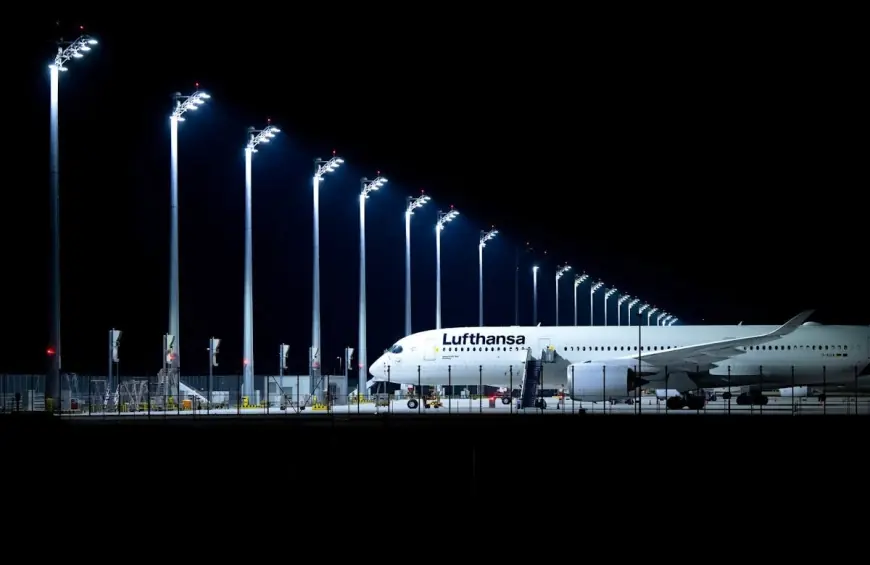
For roughly 500 travelers the immediate consequence of heavy winter weather was not a diverted hotel room but a night spent inside parked aircraft. The disruption to munich flights hit passengers and crews first: flights that had boarded were canceled and, with no buses or terminal parking available, people were confined to planes on the apron until morning. That gap between airborne readiness and ground capacity shaped the ordeal.
Immediate impact: passengers, crews and local schedules
Snowfall forced wide operational disruption at Munich Airport. Around 500 passengers involuntarily spent the night in airplanes in the middle of winter after flights scheduled for Thursday evening were canceled following heavy snow the next night, a Lufthansa spokesperson said. Passengers and crews could not return to the terminal and had to remain on aircraft parked on the apron because parking spaces at the terminal were already occupied and bus capacity on the aprons was limited, the airport said.
That strain extended across several services: three Lufthansa flights to Singapore, Copenhagen and Gdansk plus two Air Dolomiti flights to Graz and Venice were identified as affected. Buses did not begin picking up passengers again until early in the morning, leaving airline crews to manage an overnight stay on aircraft.
Munich Flights: the LH2446 Copenhagen case and the aircraft involved
One highlighted example was Lufthansa flight LH2446 from Munich to Copenhagen. The short service, operated by an Airbus A320neo, had been scheduled to depart at 9: 30 PM and arrive at 11: 05 PM; the aircraft type and the roughly 504-mile routing meant the flight normally runs at regional lengths (about 90 minutes). Passengers were bused out to a remote stand and boarded the A320neo, which is typically configured for short-haul Euro service and carries limited onboard provisions.
The flight experienced a rolling delay and was ultimately canceled just before midnight because the airport enforces a night curfew. Crew updates continued for hours while staff tried to arrange buses; at around 2: 00 AM the crew informed passengers that Munich Airport had closed and that bus drivers were no longer available, a passenger named Søren Thieme said. Onboard supplies were limited: the A320neo involved had only small quantities of food and drink stocked and lacked pillows or blankets suited for an unplanned overnight.
What went wrong on the ground
Snow during the day caused widespread delays and cancellations on Thursday, with 100 flights canceled as operations were affected. In the evening some flights had obtained special permission to operate after 1: 00 AM despite a normal night-flight ban, but those permissions were later reversed for some services; flights that had already been dispatched and were ready to take off were not allowed to do so, the Lufthansa spokesperson said.
The airport described a situation in which terminal gate parking was full and apron bus capacity was constrained. The Lufthansa spokesperson was unable to explain why buses were not available to return passengers to the terminal, and noted the airport is responsible for organizing that ground transport. The spokesperson could not initially be reached for further questions on Sunday.
Aftermath, rebookings and timeline
Passengers were eventually transported back to the terminal in the early morning and many were rebooked on later flights. Several passengers were placed on the first available morning services; some of those flights experienced additional delays. One set of passengers was rebooked onto a 6: 40 AM flight that was itself delayed by roughly an hour.
- Feb 19, 2026 — LH2446 scheduled to depart Munich at 9: 30 PM for Copenhagen, scheduled arrival 11: 05 PM (scheduled times quoted in coverage).
- Late evening — the flight showed a delayed departure time of about 11: 56 PM on the status display but ultimately did not depart.
- Around 2: 00 AM — crew informed passengers the airport had closed and bus drivers were gone, per a passenger account.
- Early morning — buses returned, passengers disembarked and many were rebooked; some were placed on a 6: 40 AM service that ran roughly an hour late.
- The sequence highlights how curfew rules, remote-stand boarding and ground-transport limits combined to keep people on planes until daybreak.
Operational responsibility and unanswered questions
Recent coverage noted that similar hold-overs occurred on other services as well; that pattern appeared to affect multiple flights. The key logistical questions remain unresolved: why buses were not available on the apron that night and how responsibility for bus coordination was handed off between airline and airport. The Lufthansa spokesperson could not initially explain the lack of buses, and the airport said it regretted the inconvenience.
Here’s the part that matters: passengers ended up in an environment designed for short hops rather than long-haul comfort, and the combination of a curfew and constrained ground transport turned regional aircraft into overnight shelters. What’s easy to miss is how a full set of terminal parking positions plus limited apron bus capacity can cascade into an airline and airport-wide accommodation problem rather than an isolated delay.
The real question now is whether airport operations or airline procedures will change to prevent similar situations on subsequent munich flights; early signs to watch would be any adjustments in remote-stand protocols, curfew exemptions handling, or apron bus staffing for severe-weather periods.