


















How Mencho's Fall Hits Jalisco First: The immediate impact on communities, forces and regional security

The death of mencho matters first to local communities and the security forces that confronted him: families near Tapalpa, troops flown to receive the wounded, and cities across western Mexico facing a sudden spike in violence. Removing a 59-year-old leader whose mobility and protection networks spanned rural and urban Jalisco creates immediate operational gaps, rapid reinforcement needs and the real risk of violent reprisals across neighboring states.
Mencho's networks and who feels the impact immediately
Nemesio Oseguera Cervantes — known as "El Mencho" and 59 years old — had been the most wanted narcotrafficker by Mexican and U. S. authorities and had escaped multiple capture operations for more than a decade. His presence and protection networks in rural and urban areas of the state of Jalisco meant that local populations, delivery lines and security deployments were directly exposed when the operation unfolded.
What the Tapalpa operation involved (embedded details)
The army-led operation located him in the municipality of Tapalpa, a mountainous area about 130 kilometers south of Guadalajara. The Secretariat of National Defense (Sedena) says a Special Forces command executed the operation with support from Air Force aircraft and the Special Reaction Immediate Force of the National Guard. Confronting the security forces were members of the Cartel Jalisco Nueva Generación (CJNG) using armored vehicles and heavy weaponry, including rocket launchers with the capacity to bring down aircraft.
During the clash, military personnel were attacked and responded in self-defense. Four alleged CJNG members died at the scene; three people wounded in the engagement later died while being transported by air to Mexico City. Nemesio Oseguera Cervantes was among the wounded who were captured and died during transfer to the capital. Two other CJNG members were detained. The army reported three of its personnel were seriously wounded and were taken to hospitals in Mexico City.
U. S. cooperation, naming and forensic steps
Sedena described the operation as having been carried out with "complementary information" from the U. S. government within a bilateral coordination framework. The White House spokeswoman Karoline Leavitt wrote on X that the U. S. provided intelligence support for the operation and praised the Mexican military for its execution. In one official statement tied to the operation the name Rubén "N" (a) Mencho was used as an initial identifier; authorities will conduct forensic identification activities to confirm identities.
Seizures, reinforcements and the security posture after the raid
Two additional detainees were taken and diverse armament and armored vehicles were secured; the material seized included rocket launchers described as capable of downing aircraft and destroying armored vehicles. Elements of the National Guard and army units from the center of the country and states neighboring Jalisco were moved in to reinforce security in the state following the operation. The army also confirmed its wounded personnel were transported to medical facilities in Mexico City for urgent attention.
Immediate violence and regional ripple effects
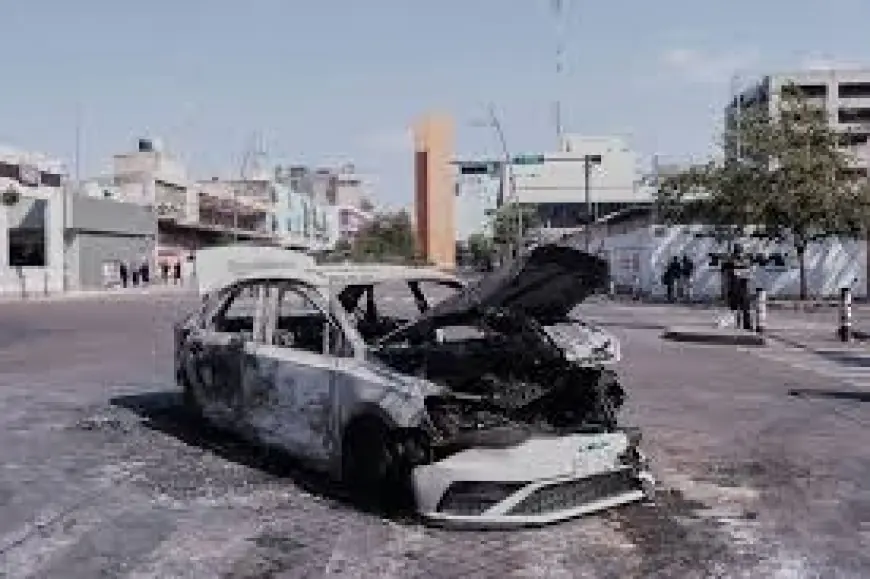
The removal of the CJNG leader triggered a wave of violence in western Mexico — more than 60 violent incidents were recorded, including narcoblockades, burned vehicles, shootouts and attacks on convenience stores, prompting reinforced federal and state operations. Initial unrest concentrated in Jalisco and then extended to neighboring states such as Guanajuato and Michoacán. One sensitive episode was reported in Lagos de Moreno where unofficial accounts pointed to an attack against a National Guard base.
What's easy to miss is how those reprisals are often tactical responses by local cells testing security gaps rather than centralized, immediate reorganizations.
For more than a decade, Oseguera Cervantes built a survival system based on constant mobility, strategic refuges and information networks that enabled repeated evasion of authorities. Security circles described him as a capo "a salto de mata, " forced to change location permanently yet often a step ahead of operations. Federal forces had located the CJNG leader more than 20 times in prior efforts; a closing sentence in the record is incomplete and unclear in the provided context.
Here’s the part that matters for readers tracking next moves:
- Immediate operational change: local security deployments in Jalisco were reinforced and troops moved from center and neighboring states.
- Communities affected: residents near Tapalpa and urban areas served by Mencho’s networks face short-term instability and increased military presence.
- Law-enforcement signals to watch: forensic identification of those killed or captured, and official confirmation of identities will clarify next legal steps.
- Regional spillover: more than 60 violent incidents across western Mexico show the rapidity of reprisals and the need for coordinated federal-state response.
The real question now is how long the immediate security surge will remain in place and whether federal forensic work and arrests stabilize the situation in Jalisco and neighboring states.