




















DHS Abruptly Reverses Tsa Precheck Suspension After Chicago Chaos and Nor’easter Disruptions

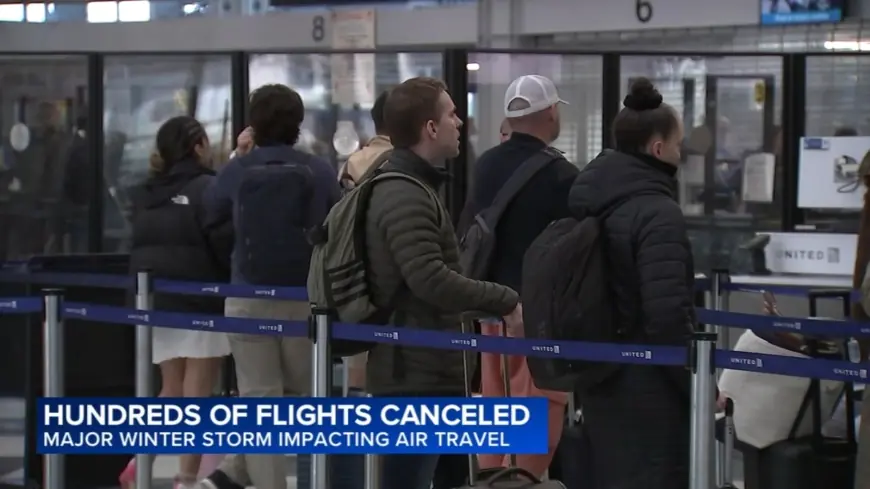
The Department of Homeland Security reversed a plan to suspend tsa precheck and Global Entry on Sunday, restoring the programs hours after an initial announcement forced travelers into general security lines. The move unfolded as a major nor'easter produced hundreds of flight cancellations and state emergency declarations, amplifying disruption at Chicago airports and along the East Coast.
Tsa Precheck and Global Entry: announcement, timing and rollback
Late Saturday evening, DHS announced it would suspend TSA PreCheck and Global Entry beginning at 5 a. m. local time Sunday. The suspension was later rescinded: after 9: 30 a. m. PreCheck "remains operational with no change for the traveling public" and would be evaluated on a case-by-case basis if staffing constraints emerged. At one point, two DHS there were no changes to Global Entry, though the initial notice had included both programs.
Chicago airports: cancellations, delays and passenger impact
Chicago’s airports experienced long lines and confusion when PreCheck lanes were briefly closed and many passengers were routed through general security. One traveler, Jason Hahn, who travels weekly, said he arrived 45 minutes earlier than usual at O’Hare after learning of the announcement and that "not having Global Entry can be the difference between two hours. " As of 5: 30 p. m. Sunday, O’Hare had 133 cancellations with average delays of 16 minutes, while Midway recorded 23 cancellations and average delays under 15 minutes.
Department of Homeland Security actions and official statements
Homeland Security Secretary Kristi Noem framed the suspension as a consequence of the partial government shutdown, saying "shutdowns have serious real world consequences" and that "TSA and CBP are prioritizing the general traveling population at our airports and ports of entry and suspending courtesy and special privilege escorts. " DHS also suspended courtesy escorts for members of Congress to allow officers to focus on screening operations. TSA later issued a statement that it would "evaluate on a case by case basis and adjust operations accordingly. "
Nor'easter: weather-driven cancellations, warnings and state actions
Complicating the travel picture was a major nor'easter moving up the Northeast Coast Sunday into Monday. The storm prompted the first blizzard warning for New York City in nearly a decade, with at least a foot of snow expected in some areas. Overall, 40 million Americans were under blizzard warnings and another 14 million faced winter storm warnings. Governors in Connecticut, Delaware, Massachusetts, New Jersey, New York, Pennsylvania and Rhode Island declared states of emergency; Maryland’s governor declared a state of preparedness. Several states, including New York, Connecticut and Rhode Island, implemented travel bans and urged residents to stay off roadways.
Operational and workforce consequences tied to the partial shutdown
The partial government shutdown began on Feb. 14 after lawmakers failed to pass DHS funding amid disputes over immigration operations. The shutdown has already caused operational strains: TSA workers missed one paycheck, while air traffic controllers were not impacted. Officials stated that the suspension of escorts and potential adjustments to screening operations were intended to prioritize core security responsibilities as staffing and funding questions persisted.
Traveler and expert reactions
Passengers and travel experts voiced frustration at the sequence of announcements. Hahn said he suspected the move felt punitive and noted his belief that staffing levels were likely unchanged. Travel expert Peter Greenberg questioned the logic of the action, calling it "more of a political act, " and warned that the measure would primarily lengthen lines without resolving the underlying shutdown. What makes this notable is the confluence of policy decisions and severe weather: the DHS announcement produced immediate operational ripple effects while the nor'easter independently drove cancellations that affected millions.
In the hours after the reversal, travelers and airport employees described relief that tsa precheck lanes were back open, but many said the episode underscored how quickly federal decisions and extreme weather can combine to disrupt travel across major hubs.