
















Violence Erupts in Mexico After El Mencho Killed in Tapalpa Operation

The leader of the Jalisco New Generation Cartel, Nemesio Ruben Oseguera Cervantes, known as "El Mencho, " was wounded in a military operation to capture him in Tapalpa and later died while being flown to Mexico City. The killing has prompted a wave of retaliatory violence that has disrupted travel, closed services and drawn international involvement.
El Mencho killed in Tapalpa operation
Mexican special forces carried out an operation in Tapalpa on Sunday aimed at arresting El Mencho. Troops came under fire during the operation and engaged with cartel members; the defence department said four people were killed in the firefight. Three others were wounded, including Oseguera Cervantes, and he later died in transit to Mexico City. The defence department also confirmed that armoured vehicles, rocket launchers and other firearms were seized and that two more people were arrested during the action. Three members of the armed forces were wounded in the clash.
Retaliation across Mexico: burning vehicles and roadblocks
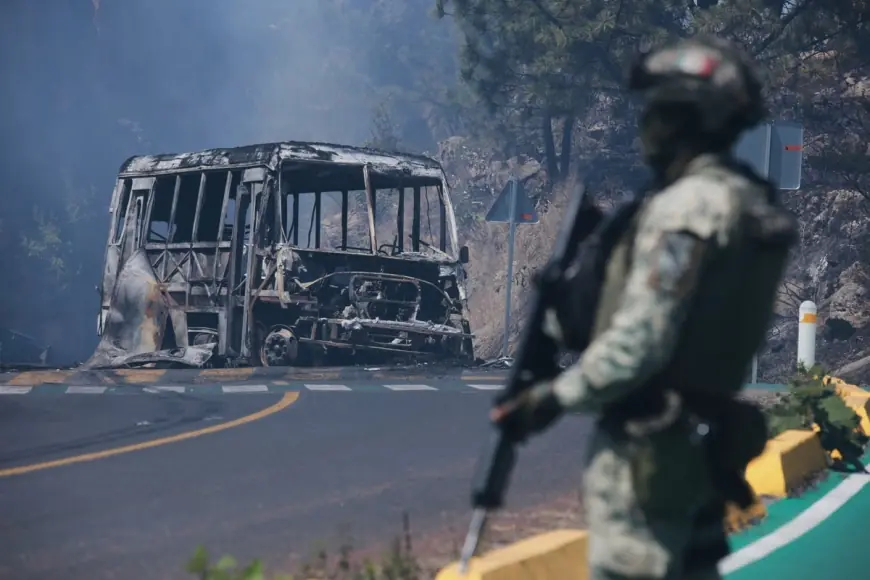
Following news of the operation and El Mencho's death, cartel supporters mounted widespread reprisals. CJNG henchmen blockaded highways with burning cars and torched businesses in several states, paralysing parts of the country and producing plumes of smoke over multiple cities. At least a dozen states saw episodes of violence. Some 250 roadblocks were put in place nationwide, with 65 in Jalisco; the Mexican security cabinet later said four blockades remained active in Jalisco. Shops were on fire and about 20 bank branches were attacked during the unrest.
Governor Pablo Lemus Navarro declares code red in Jalisco
Jalisco's governor, Pablo Lemus Navarro, declared a code red in the state and ordered public transport paused while mass events and in-person classes were cancelled. Reports of gunmen on the streets persisted throughout Sunday in Jalisco and other areas. The security cabinet said 25 people have been arrested in the disturbances, with 11 detained for alleged participation in violent acts and 14 arrested for alleged looting and pillaging. Schools in various states also cancelled classes for Monday as a protective measure.
Travel disruption and shelter warnings in Puerto Vallarta and beyond
Tourists described the resort city of Puerto Vallarta as a "war zone" as cars were set ablaze and dark smoke rose from around the bay; American visitors said they were locked in hotels awaiting guidance on when it would be safe to leave. Plumes of smoke were also filmed over Guadalajara, a host city for the forthcoming FIFA World Cup. Several airlines suspended flights to Jalisco, including Air Canada, United Airlines, American Airlines and Aeromexico. The US State Department urged US citizens in multiple Mexican states to remain indoors, and the US government warned people to shelter in place in five areas: Jalisco, Tamaulipas, parts of Michoacán, Guerrero and Nuevo Leon. The UK Foreign Office advised Britons in Mexico to stay indoors and avoid non-essential travel, warning of "serious security incidents" in Jalisco.
US involvement, legal history and international reaction
Mexican special forces carried out the operation within the framework of bilateral cooperation, with US authorities providing complementary intelligence, the US embassy stated. The White House press secretary, Karoline Leavitt, confirmed US intelligence support and described Oseguera Cervantes as "one of the top traffickers of fentanyl. " US deputy secretary of state Christopher Landau called the killing a "great development" for the US, Mexico and the region. The operation follows mounting pressure from Washington to intensify actions against cartels blamed for producing and smuggling fentanyl — a drug that former President Donald Trump has said has been "killing hundreds of thousands of our citizens and... destroying families. " Earlier this month the Trump administration designated the Jalisco New Generation Cartel as a foreign terrorist organisation.
El Mencho's role, indictments and cartel capacity
Nemesio Ruben Oseguera Cervantes, aged 59, had been the leader of the Jalisco New Generation Cartel, which formed in 2009 and became one of Mexico's most powerful criminal organisations. He was reportedly a former police officer who rose to run a vast trafficking operation. Under his leadership the cartel was implicated in numerous homicides targeting rival groups and Mexican law enforcement and faced alleged assassination attempts on government officials. Since 2017 he had faced multiple indictments in the US District Court for the District of Columbia, including a superseding indictment on April 5, 2022, that charged him with conspiracy and distribution of controlled substances for unlawful importation into the US and the use of firearms in drug trafficking; he was also charged under the Drug Kingpin Statute. The cartel is widely associated with trafficking large quantities of fentanyl and other drugs into the United States.
What makes this notable is the swift, nationwide retaliation and the simultaneous political and operational coordination between Mexican and US officials; the death of a cartel leader triggered immediate, measurable disruptions—250 roadblocks, dozens of arson attacks and 25 arrests—that have reshaped security and travel across multiple states.