

















Final Medal Count Olympics 2026: Johannes Høsflot Klæbo Leads Norway to Record Haul

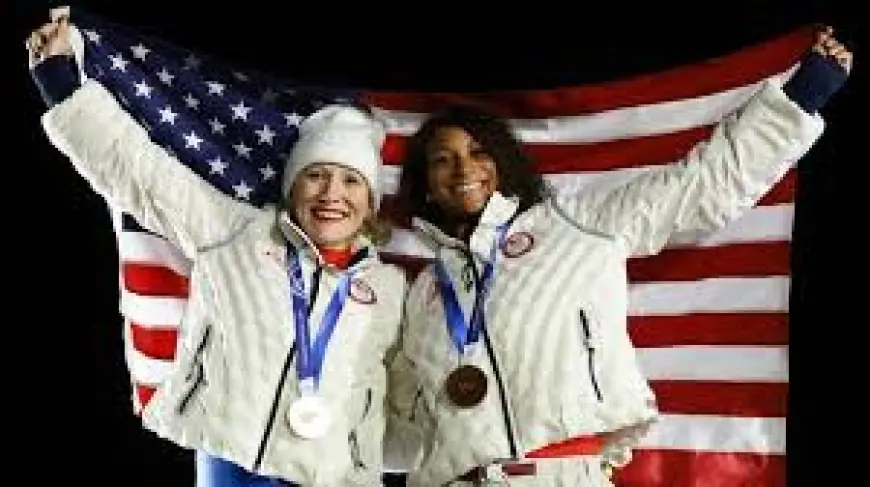
The final medal count olympics 2026 confirms Norway's dominance at the Milan Cortina Games: a record 18 gold medals and 41 total medals, capped by Johannes Høsflot Klæbo's six cross-country golds that pushed him to 11 Olympic golds overall. This haul continues a streak that began in 2018 and underscores a national model that other nations are now studying.
Final Medal Count Olympics 2026: Norway's Record Breakthrough
Norway closed the Italian Games with 18 golds and 41 total medals. The figure completes a sequence that stretches back to Pyeongchang 2018, a span in which the Norwegians have finished at the top of the Winter Games podium every time. Team leadership celebrated repeatedly during the fortnight: Norway's director of elite sport, Tore Øvebrø, sounded hoarse when he took a celebratory call, saying he had caught a cold and that his raspy voice might also be the result of cheering. He chuckled that it "didn't help, " adding that he had to cheer when Norway won another gold in the Nordic Combined and noting that they had reached 16 at one point, calling that the Olympic record and hoping for a couple more.
How a Small Nation Outpaces Giants
A tiny nation of roughly five-and-a-half million people—about the same population as the U. S. state of South Carolina—has outpaced countries many times its size. Norway beat nations with vastly larger populations, including China (1. 4 billion), the United States (342 million), Germany (84 million), Italy (59 million) and Canada (40 million). The scale of the achievement highlights a concentrated effort across summer and winter sports, not just traditional Nordic disciplines.
Grassroots Policies and the Emphasis on Fun
Central to Norway's system is an emphasis on fun and enjoyment that begins at the grassroots. Until age 12, youth sports in Norway do not keep score and there are no league standings. That approach reduces destructive pressure, discourages early specialization and encourages children to try multiple sports. When one player receives a trophy, everyone gets a trophy—an effort to ensure as many children as possible return the following season.
Selection Versus Development: A Deliberate Choice
Norwegian coaches prioritize development over early selection. Øvebrø has criticized major sporting systems for focusing on eliminating young athletes rather than cultivating them, calling selection "another way of getting rid of people" and stressing that Norway, being small, must take care of everybody. The logic is simple: a small country cannot afford to lose athletes whose talent may only emerge in later adolescence.
Star Pathways and Cross-Discipline Success
Norway's success is visible beyond skiing. The country has recently produced Olympic champions in beach volleyball and multiple champions in track and field, showing depth in summer sports as well. The triathlon program is widely celebrated, and Norwegian athletes have risen to the top in individual global sports: Viktor Hovland has emerged as one of the top golfers, Casper Ruud reached world No. 2 in the ATP rankings, Erling Haaland became one of the game's most feared strikers, and Ada Hegerberg won football's Ballon d'Or.
Domestic development practices underpin those achievements. Erling Haaland spent his formative years in a mixed development group at Bryne FK composed of 39 boys and one girl up to age 16; the group was never split into first, second and third teams, nobody was dropped, and a handful of players from that group turned professional. Similarly, Johannes Høsflot Klæbo once expected to be a soccer player, only to realize his potential in cross-country skiing—at the Milan Cortina Games he won six gold medals in cross-country events, bringing his Olympic gold total to 11 and surpassing three other athletes who had eight golds.
What This Means Going Forward
Norway's model—rooted in broad participation, delayed specialization, and athlete retention—offers a clear blueprint for sustained excellence. The final medal count olympics 2026 is both a milestone and a validation of choices made at the grassroots and elite levels. For nations seeking to close the gap, the Norwegians point to retention, enjoyment, and development as central priorities; precise policy transferability is unclear in the provided context, but the correlation between Norway's methods and its results is unmistakable.