




















Jack Hughes’ broken smile and a three-on-three finish define 2026 Winter Olympics hockey final

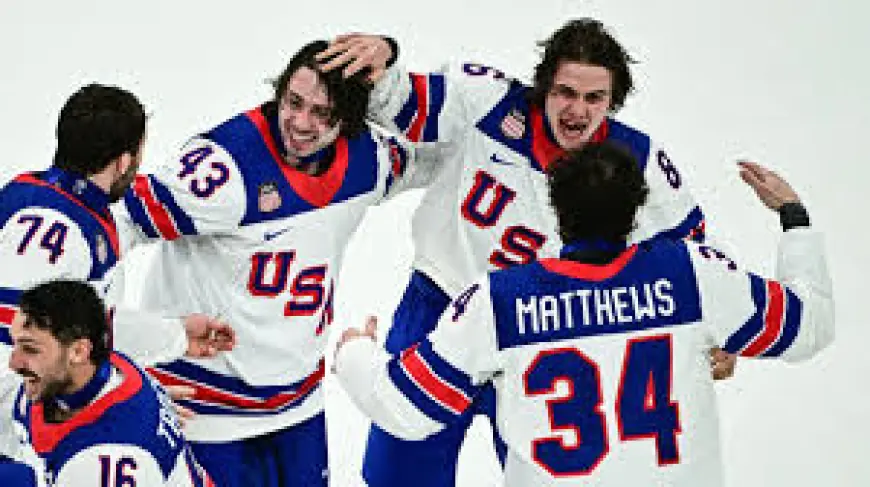
The men’s hockey gold medal ended in a 2-1 overtime victory for Team USA in Milan, and the match will be remembered as much for Jack Hughes’ game-winning goal as for the shattered smile he showed afterward. The outcome matters now because a three-on-three overtime format, a dramatic goaltending performance and a late-game exchange of high sticks all combined to produce a controversial, historic finish at the 2026 Winter Olympics.
Jack Hughes’ fractured teeth and decisive overtime goal
Moments after burying the winner in overtime, Jack Hughes stood draped in the American flag, fist raised, hair matted and his face bloodied. Hughes said his first thought was to draw the penalty and then that he had “looked on the ice and saw my teeth. ” His presence dominated the climax: he won two puck battles in his own end, accepted a feed from Zach Werenski and finished the play to deliver the gold.
The scoring sequence and the injury were linked by earlier contact: Canada’s Sam Bennett struck Hughes with a high stick that knocked out at least three teeth and produced a massive four-minute power play for the United States. Later during that sequence, Hughes high‑sticked Bo Horvat, which nullified the remainder of the extended man advantage.
Hughes did not miss a shift after the injury. Teammates framed the moment in blunt terms: Matt Boldy quipped, “Who cares at this point? To be honest, I think more people are looking at his medal than his teeth. ” Vincent Trocheck added, “It’s pretty easy (to move on). You lose a lot of teeth as an NHLer. They get straighter as you lose them more. ”
Connor Hellebuyck’s 41-save night under mounting Canadian pressure
Connor Hellebuyck carried much of the defensive burden for Team USA. He finished the game with 41 saves, posted an eye-popping 4. 6 goals saved above expected, and faced a reported 42-shot barrage through much of the contest. That performance limited Canada to a single regulation goal despite a sustained barrage of high-danger opportunities.
Those metrics imply Canada could have scored several more times without his play; advanced figures in the game suggested five or six additional goals were possible absent Hellebuyck’s intervention. His night is already being discussed among the greatest single-game goaltending efforts in international hockey history.
Overtime format at 2026 Winter Olympics and the roots of controversy
Controversy followed when the gold medal was decided not in a traditional five-on-five overtime but in a 20-minute three-on-three session. Canada had controlled much of the even-strength play, and many observers felt the momentum and the flow favored Canada had the game continued with full teams. Instead, the open ice of three-on-three played into the Americans’ hands, Hellebuyck remained dominant, and Jack Hughes found the lane to score the winner.
What makes this notable is that a change in overtime structure altered the balance of play at a decisive moment, turning prolonged Canadian pressure into a vulnerability that the United States exploited.
Matt Boldy’s early goal and the physical arc of the game in Milan
Team USA struck first when Matt Boldy opened the scoring six minutes into the opening period, giving the Americans an early lead that Canada chased for the remainder of the match. Canada’s sustained pressure produced the shots and scoring chances, forcing Hellebuyck into a standout performance that kept the game within reach for the United States until Hughes’ overtime finish.
Two Dallas Stars leave with medals: Thomas Harley and Jake Oettinger
The tournament closed with mixed outcomes for Dallas Stars teammates. Thomas Harley, a defenseman who played for Team Canada, logged significant minutes in the gold medal game and throughout the tournament. In the final he recorded 20: 33 of ice time and one shot on goal; over six tournament games he totaled one goal and three assists for four points while handling heavy assignments against top competition.
The other Stars player, 27-year-old goaltender Jake Oettinger, returned to Dallas with a gold medal as Team USA’s third netminder but did not see game action during the Olympics. The two left the tournament with medals for very different reasons. Harley and Oettinger, along with the rest of Dallas’ Olympic contingent, will return to NHL action on Wednesday when the Stars host the Seattle Kraken.
Hughes’ tournament arc, comparisons and wider reactions
Hughes began the event as a fourth-liner for Team USA. Before the Olympics he had scored one goal in his last 18 NHL games with the New Jersey Devils after returning from a hand injury suffered at a Chicago steakhouse. In Milan he finished the tournament with four goals and three assists, his final shot the biggest of them all.
Observers linked Hughes’ bloody image to past hockey lore: it was compared to a 2010 incident in which Duncan Keith lost seven teeth from a slap shot, missed seven minutes while receiving emergency repairs and afterward said, “Long way from the heart. ” Quinn Hughes, Jack’s brother, called him “a freaking gamer” and added that Jack is “mentally tough, been through a lot, loves the game. American hero. ”
Mark Lazerus, a senior NHL writer based out of Chicago who has covered the Blackhawks and the league for 13 seasons for The Athletic and the Chicago Sun‑Times, has been named one of the top three columnists in the country twice in the past three years by the Sports Editors. He is on Twitter as @MarkLazerus.