





















Qué se sabe de la operación que llevó a la muerte de Mencho (mencho)

Nemesio Oseguera Cervantes, known as "El Mencho" and aged 59, was the most wanted narcotrafficker by the authorities of Mexico and the United States; mencho was located in a mountain municipality and died after an operation that led to his capture. Mexican defence forces offered a sequence of operational details and quoted officials and a U. S. White House spokeswoman on the cooperation that supported the action.
Operativo en Tapalpa, Mencho herido
The army located Nemesio Oseguera Cervantes in the municipality of Tapalpa, a mountainous area about 130 kilometers south of Guadalajara. Sedena said the Special Forces commando carried out the operation with support from Air Force aircraft and the Guardia Nacional's Fuerza Especial de Reacción Inmediata. The operation resulted in the capture of individuals who were wounded; Nemesio Oseguera was among the injured captured and died during his transfer to Mexico City.
Fuerzas involucradas y apoyo
Sedena described the action as led by the Mexican army with assistance from the Air Force and the Guardia Nacional's special reaction force. The department said the operation counted with "información complementaria" from the U. S. government "dentro del marco de coordinación y cooperación bilateral". Karoline Leavitt, a White House spokeswoman, wrote on X: "EE. UU. brindó apoyo de inteligencia al gobierno mexicano para ayudar con una operación (... ) en la que fue eliminado Nemesio 'El Mencho' Oseguera Cervantes" and added that "El gobierno de Trump también elogia y agradece a los militares mexicanos por su cooperación y la exitosa ejecución de esta operación. "
Armamento y vehículos asegurados
Authorities said the criminals had armored vehicles and heavy weaponry, including rocket launchers capable of downing aircraft and destroying armored vehicles. The Defence statement also noted that diverse armament and armored vehicles were secured during the operation.
Bajas, heridos y detenciones
In the confrontation, Sedena said troops were attacked and, "en defensa de su integridad repelieron la agresión, resultando cuatro integrantes del grupo delictivo CJNG fallecidos en el lugar y tres heridos de gravedad, quienes perdieron la vida durante su traslado vía aérea a la Ciudad de México. " The Defence further stated that four presumed CJNG members died at the scene and that three who were gravely injured died during aerial transfer to Mexico City. One communiqué named Rubén 'N' (a) Mencho among those who were among the latter, and it added that "serán las autoridades correspondientes las que se encargarán de las actividades periciales para su identificación. " Two other CJNG members were detained. The Army had three personnel seriously injured who were transferred to hospitals in Mexico City for urgent medical attention.
Reacción y oleada de violencia
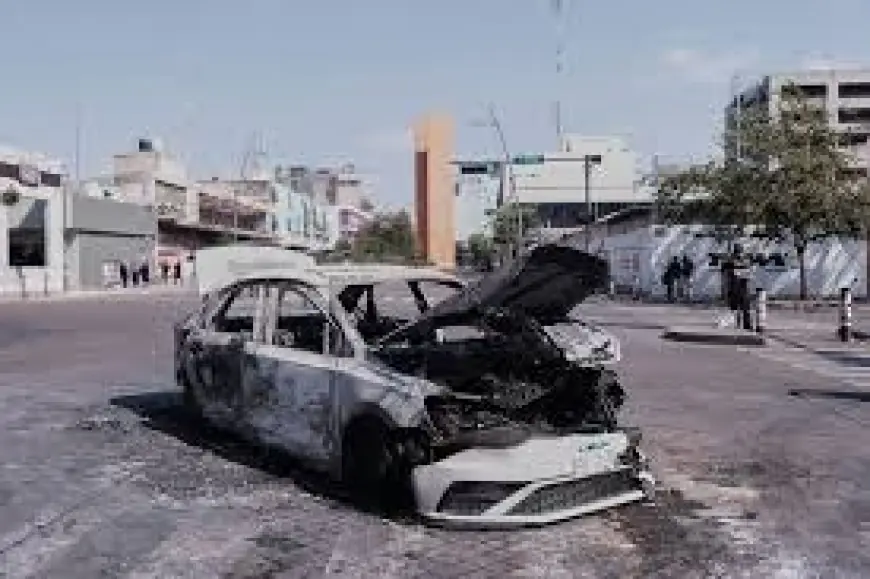
The fall of Nemesio Oseguera Cervantes, "El Mencho", unleashed a wave of violence in the west of the country. Authorities reported more than 60 violent incidents, including narcoblockades, vehicle burnings, shootouts and attacks on convenience stores, which forced the reinforcement of federal and state operations. The reaction attributed to cells of the Cártel Jalisco Nueva Generación concentrated at first in Jalisco and then extended to neighboring states such as Guanajuato and Michoacán. One episode considered especially delicate was reported in Lagos de Moreno, where unofficial sources indicated an attack against a Guardia Nacional base. Elements of the Guardia Nacional and Army troops from the central region and states bordering Jalisco were deployed to reinforce security.
Trayectoria y evasión del capo
For more than a decade Nemesio Oseguera Cervantes co‑founded and built the Cártel Jalisco Nueva Generación, an organization that expanded across Mexico since the previous decade and became one of the criminal groups most powerful and violent, alongside the Cartel de Sinaloa. The U. S. government had offered US$15 million for his capture and Mexico had placed the highest reward in its program at US$1. 75 million. More recently, the government of Donald Trump designated the CJNG as a terrorist organization for being a "cartel despiadado y violento responsable del tráfico de fentanilo, metanfetaminas, cocaína y otras drogas ilícitas hacia EE. UU. "
Security circles described Oseguera Cervantes as having built a survival system based on constant mobility, strategic hideouts and networks of information that allowed him to evade authorities repeatedly. He was characterized as a capo "a salto de mata, " forced to change location permanently but often a step ahead of operations. Security and military the CJNG leader had been located by federal forces on more than 20 occasions. The final sentence of one contemporaneous account is incomplete in the provided context: unclear in the provided context.
Closing: The Mexican Defence and federal security institutions provided the operational timeline: Special Forces located the target in Tapalpa with aerial and reaction‑force support, an armed confrontation left four CJNG members dead on site and additional injured who later died during aerial transfer to Mexico City, Nemesio Oseguera Cervantes was among the injured captured and died in transit, two others were detained, and army personnel with serious injuries were taken to hospitals in Mexico City. Sedena and a White House spokeswoman said U. S. intelligence support was part of the coordinated operation.