
















Canada Vs Usa Hockey — Americans Lead 1-0 as U.S. Pressure Rewrites the Gold Game

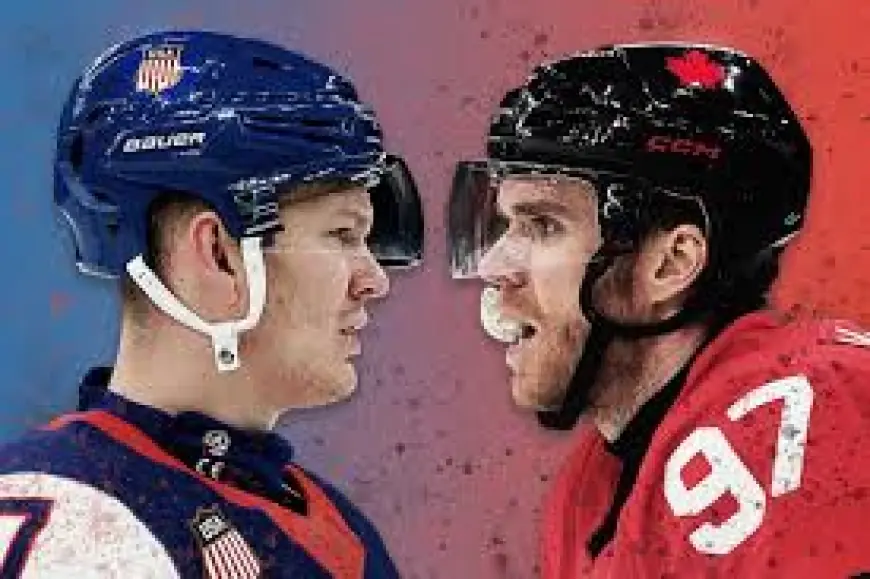
Who feels the immediate impact in this gold-medal moment is obvious: Canada’s top forwards are being squeezed by an American defensive structure that left virtually no space in the first period of the canada vs usa hockey final. Matt Boldy’s 6: 00 solo goal sent the U. S. into intermission up 1-0; Sidney Crosby is not playing because of an injury suffered in Wednesday's quarterfinal against Czech Republic. The U. S. is chasing a third Olympic men's title while Canada still seeks a 10th.
Canada Vs Usa Hockey: what’s different on the ice and who’s affected first
Team USA forwards are backchecking intensely and controlling the faceoff dot; the result has been a suffocating blue line that has repeatedly cut off Canada’s looks. Canada’s forwards manufactured decent looks but not Grade A chances against an oppressive American defensive push. The immediate effect landed on Canada’s attack and on goaltender play: Binnington faced quick traffic and made several key saves in the period described.
Game snapshot and pivotal plays from the first period
Matt Boldy opened scoring for Team USA six minutes into the game with a solo effort, the fastest goal to start a gold medal game in an Olympic Games that featured NHL players — bettering Tony Amonte’s 8: 49 mark from 2002. Quinn Hughes picked up a secondary assist on Boldy’s goal; that assist brought Hughes’s tournament totals to one goal and seven assists for eight points, tying the most points by a defenseman in a single Olympic Games with NHL players. He matched Erik Karlsson (4-4—8 in 2014 with Sweden) and Brian Rafalski (4-4—8 in 2010 with USA).
Auston Matthews might have been the best player on ice in the first 20 minutes, while general play tilted toward physicality and traffic in front of the nets. There was a quick sequence where Miller got a shot off following a faceoff win by Trocheck but Binnington stopped it; later Binnington blocked two jams during a sustained two-minute U. S. pressure until Theodore exited the box and the teams returned to full strength. Observers called it meat-and-potatoes hockey — a game likely to be decided amid net-front chaos rather than clean perimeter chances.
Atmosphere, context and small moments beyond the rink
Greetings from Verona, the site of the Milan Cortina Games closing ceremony later today. In one local sports bar, King Carlos da Barca, the gold medal game ran on two big screens; there wasn’t an empty seat as food and beverages flowed. A couple fans in Canadian jerseys watched nervously, emblematic of how the early U. S. lead tightened the room’s mood.
- U. S. edge in early momentum: Boldy’s 6: 00 opener and Hughes’s assist gave the Americans a tangible lift and historical mark.
- Canada’s uphill task: the absence of Sidney Crosby because of an injury from Wednesday's quarterfinal against Czech Republic changes Canada’s frontline calculus.
- Goalie interventions mattered: Binnington made multiple saves on close chances during U. S. pressure sequences.
- Style of the game: speed, physicality and tight defense dominated the first 20 minutes, with traffic in front of both nets expected to decide outcomes.
Here's the part that matters for fans and analysts: the U. S. defensive identity and faceoff control have already altered Canada’s usual routes to danger, and Quinn Hughes’s eight-point tournament places him in rare company among Olympic defensemen.
What unfolded earlier that ties into this game
Micro timeline: 2002 – Tony Amonte had opened a U. S. gold-game scoring in 8: 49; 2010 – Brian Rafalski posted 4-4—8 for USA; 2014 – Erik Karlsson posted 4-4—8 for Sweden. Also, an injury in Wednesday's quarterfinal against Czech Republic has left Sidney Crosby out of this final. These threads help explain both historical context and the present roster dynamics.
It’s easy to overlook, but Hughes tying the defenseman points mark underscores how playmaking from the blue line is shifting tournament narratives away from strictly forward-driven scoring. The real question now is how Canada will generate Grade A chances against a U. S. unit that has already shown it can choke space and win draws.
And breathe: after an electric, breathless first period, the Americans carry a 1-0 lead into intermission. The combination of speed, physicality and skill on display in this game makes the remainder feel decisive — and, for many viewers, hard to top after the final buzzer.