




















2030 Winter Olympics in the French Alps: Dates, Venues, New Sports and Organizing Turmoil

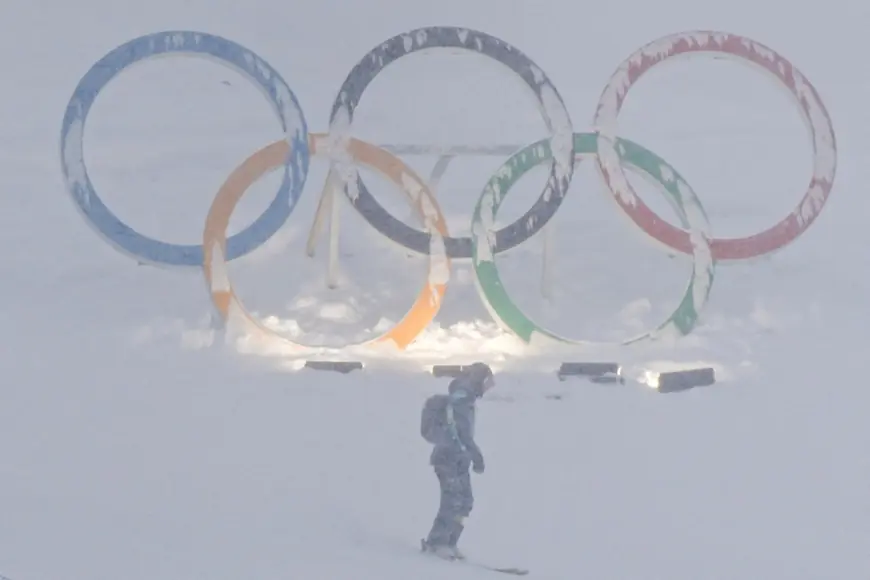
As the Milano Cortina 2026 Winter Olympics close on Sunday evening, the Olympic flag will pass to France for the 2030 Winter Olympics. The French Alps will host the Games from February 1 through February 17, 2030 — but a wave of leadership resignations, budget pressures, and unresolved venue decisions has cast uncertainty over preparations for the next edition of the Winter Games.
2030 Winter Olympics Dates, Location, and Format
The 2030 Winter Olympics — officially the XXVI Olympic Winter Games and branded as French Alps 2030 — will run from Saturday, February 1 to Sunday, February 17, 2030. The Paralympic Winter Games will follow from March 1 through March 10, 2030. France will host the Winter Olympics for the fourth time, following Chamonix 1924, Grenoble 1968, and Albertville 1992. The country also staged the Paris 2024 Summer Olympics, making this an unprecedented quick turnaround for the nation.
Unlike traditional single-city hosting, the 2030 Winter Olympics will adopt a multi-region format similar to Milano Cortina 2026. Events at the 2030 Winter Olympics will be spread across four clusters in the French Alps: Haute-Savoie, Savoie, Briançon, and Nice. The IOC approved the French Alps as the host during the 142nd IOC Session in Paris on July 24, 2024, with 84 votes in favor.
2030 Winter Olympics Venues Across the French Alps
The organizing committee for the 2030 Winter Olympics has designed a venue plan that relies on 93 percent existing or temporary structures, inspired by the sustainability model of Paris 2024. Several venues will be legacy sites from the Albertville 1992 Games, including La Plagne's sliding track, the Courchevel ski jump, and Méribel's Roc de Fer downhill course.
| Zone | Events | Key Details |
|---|---|---|
| Haute-Savoie | Cross-Country Skiing, Biathlon | La Clusaz, Le Grand-Bornand |
| Savoie | Alpine Skiing, Ski Jumping, Bobsled, Luge, Skeleton | Heart of the Alps; 1992 legacy venues |
| Briançon | Freestyle Skiing, Snowboard | Southern French Alps cluster |
| Nice | Ice Hockey, Figure Skating, Short Track, Curling | Closing Ceremony at Promenade des Anglais |
| Turin, Italy or Heerenveen, Netherlands | Long-Track Speed Skating | Held outside France to avoid new venue construction |
Five separate Olympic Villages will be built across the 2030 Winter Olympics footprint — in Saint-Jean-de-Sixt, Bozel, La Plagne, Briançon, and Nice — ensuring all athletes are housed within 30 minutes of their competition sites. The closing ceremony is planned for Nice's Promenade des Anglais, a waterfront setting that would be the first non-stadium Winter Olympics ceremony in history. The venue for the opening ceremony of the 2030 Winter Olympics has not yet been confirmed, though the Metropolis of Lyon is under consideration.
New Sports Proposed for the 2030 Winter Olympics
Seven core sports are confirmed for the 2030 Winter Olympics: biathlon, bobsled, curling, ice hockey, luge, skating, and skiing. However, the organizing committee and multiple international federations are pushing to add several new disciplines. Final decisions on additional sports and athlete quotas will be made in June 2026.
- Cyclocross — backed by the UCI; La Planche des Belles Filles proposed as venue
- Cross-Country Running — World Athletics pushing for its return after a 106-year absence
- 3x3 Ice Hockey — IIHF proposal; new €58 million arena in Chamonix could host
- Ice Climbing — calls from French athletes; Champagny-en-Vanoise has hosted World Cup events
- Ski Mountaineering — debuted at Milano Cortina 2026
- Speed Skiing, Telemark Skiing, Ice Cross — all mentioned by organizing chief Edgar Grospiron
The Winter Olympic Federations have pushed back against cyclocross and cross-country running, arguing they do not qualify as "snow and ice sports" under the Olympic Charter and risk diluting the identity of the 2030 Winter Olympics. Nordic Combined and Snowboard Parallel Giant Slalom also face possible elimination after the IOC delayed a decision pending audience and participation data from Milano Cortina 2026.
2030 Winter Olympics Budget and Organizing Committee Crisis
The total budget for the 2030 Winter Olympics is estimated at approximately $4.04 billion (€3.4 billion), split between roughly $2.5 billion for organizing costs and $1.54 billion for infrastructure. The French Parliament recently adopted the law governing the event's organization, but serious governance problems have rattled public confidence.
The organizing committee for the 2030 Winter Olympics has been plagued by internal conflict. An open feud between committee president Edgar Grospiron — the 1992 freestyle skiing gold medalist — and director general Cyril Linette led to a public acknowledgment of "irreconcilable disagreements" in early February 2026. Multiple senior leaders have resigned, including chief operating officer Anne Murac, communications director Arthur Richer, and remuneration committee head Bertrand Méheut. Etienne Thobois, the former general director of Paris 2024, has been brought in on a support mission to help stabilize operations. The French Senate's Culture Committee has summoned Grospiron to a hearing on February 25, 2026, expressing concern about the committee's ability to deliver the Games.
Despite the turmoil, Grospiron stated on Saturday, February 21, 2026, that the 2030 Winter Olympics would be ready on time. He reaffirmed the organizing committee's ambition to deliver Games that are "spectacular" and "deeply rooted in the local area" with a strong commitment to environmental responsibility.
Climate Change, Sustainability, and the Future of the 2030 Winter Olympics
Environmental sustainability sits at the center of the 2030 Winter Olympics vision. Organizers plan to invest in multimodal transit hubs — buses, trains, and valley lifts — rather than parking infrastructure that encourages private car use. A proposed gondola between the town of Aime and La Plagne could allow spectators traveling from Paris to reach competition venues without using a single car. The aim is to significantly reduce the carbon footprint compared to previous editions of the Winter Olympics.
Climate change poses an existential challenge for the 2030 Winter Olympics and the broader Winter Games future. The IOC has acknowledged that only 10 to 12 nations now have the climate conditions capable of reliably hosting Winter Olympics. A 2024 study found that of 93 mountain locations currently suitable for elite winter sport, roughly only 30 may remain viable by the 2080s. These pressures are already shaping planning for the 2034 Winter Olympics in Salt Lake City, Utah, and a potential 2038 bid from Switzerland.
A citizen opposition group in France has launched legal action demanding a public debate on the 2030 Winter Olympics, calling the event an "environmental aberration." The group argues that hosting the Games threatens water resources and fragile mountain ecosystems. A protest was staged in Grenoble on Saturday, February 22, 2026, coinciding with the final day of the Milano Cortina Games and the formal handover of the Olympic flag to France during tonight's closing ceremony at the Verona Arena.