

























Bucharest Flights Disrupted as OTP Records 68 Delays and One Cancellation

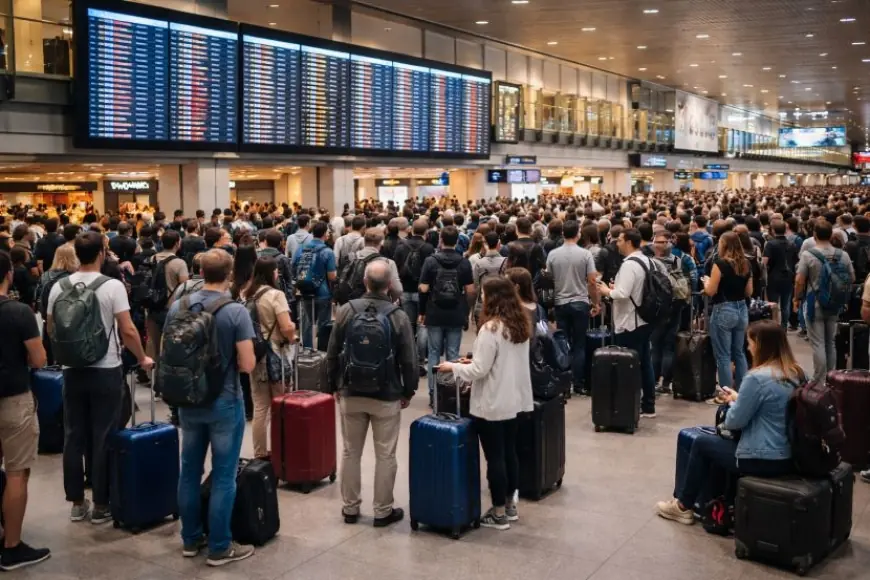
bucharest flights were thrown into disruption today after Bucharest Henri Coandă International Airport (OTP) recorded 68 delays and one cancellation, leaving thousands of passengers facing unpredictable schedules and extended waiting times.
Disruptions at Bucharest Henri Coandă International (OTP)
Bucharest Henri Coandă International Airport (OTP) logged 68 delays and one cancellation today; this is the first time OTP has opened today. OTP is the busiest airport in all of Romania, and the scale of the disturbance is affecting both departing and arriving passengers across domestic and international services.
Bucharest Flights to London, Paris and Milan affected
The delays and single cancellation are disrupting flights to major cities including London, Paris and Milan, and are affecting carriers named in local coverage: Lufthansa, Ryanair and Wizz Air. Thousands of passengers are grappling with unpredictable schedules as connections and onward travel plans are altered.
Airlines and passengers face ripple effects
Most of the delays are described as operational, with possible causes listed as weather, congestion of traffic, or some sort of technical difficulty; airport authorities have yet to confirm those causes. Airlines with flights scheduled to depart or arrive at OTP are adjusting schedules, and the logistical challenge of rescheduling can cause cascading delays that affect subsequent flights and connecting itineraries.
Passenger advice and the scale of impact
Passengers departing, arriving, and those with connections are being urged to stay informed through the airport’s official channels and check with their airlines for updated flight status. Families, solo travelers, business travelers and holidaymakers are all affected, and some tourists may need to reschedule or extend their stay. Airlines are working diligently to address the issue, but the scale of delays has stretched resources and led to delays in providing immediate solutions.
A note on accounts, data and services for travellers
When you use services run by major online providers, you are trusting those providers with your information. The providers say they work to protect that information and to put users in control. Their privacy material explains what information they collect, why they collect it, and how users can update, manage, export and delete information. If European Union or United Kingdom data protection law applies to processing, users can review a European requirements section for details.
Users can change privacy settings and the providers build a range of services used by millions daily. Those services can be used in a variety of ways: signing up for an account to create and manage content, using services while signed out, or browsing in private modes such as Chrome Incognito. Providers offer options to adjust privacy settings, and they include examples, explanatory videos and definitions for key terms.
The providers collect information to improve services; what they collect depends on how people use the services and how privacy controls are managed. When a user is not signed in, information may be stored with unique identifiers tied to the browser, application or device to maintain preferences across sessions. When signed in, information is stored with the account and treated as personal information. Creating an account typically requires personal information such as a name and a password, and users can choose to add a phone number or payment information. Even when not signed in, users might provide an email address to receive updates. Providers also collect the content users create, upload or receive—such as emails, photos and videos, documents and spreadsheets, and comments on video platforms—and information about apps, browsers and devices to enable features like automatic product updates and battery-saving dimming. The categories of collected information include unique identifiers, browser type and settings, and device type and settings; further specifics are unclear in the provided context.
Operational disturbances at OTP are flagged as having a ripple effect on airlines and on tourism. Bucharest hosts international conferences, cultural festivals and historical tours, and tourism is a crucial sector for Romania’s economy; prolonged disruptions could deter future visitors. The tourism sector is advised to remain updated and keep in touch with local authorities.
Passengers are encouraged to check the airport’s official channels and to communicate directly with their airlines for the latest flight status and rebooking options. Airlines are continuing recovery and rescheduling work for affected flights, and airport and industry officials have said that updates will be provided through their usual channels.