


















Wordle Answer Today Is “---” as Puzzle #1709 Tests Vowels and Repeats

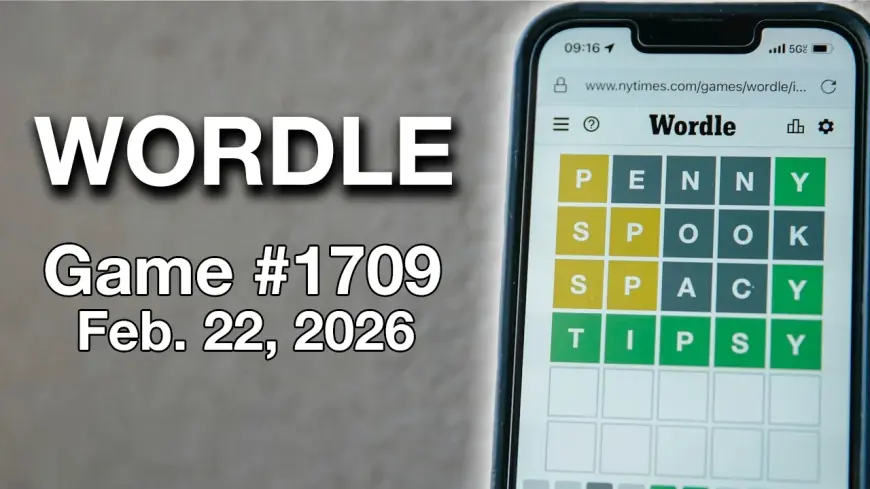
Sunday’s Wordle delivered a tropical turn: the answer for Feb. 22, 2026 (ET) is GUAVA, a five-letter word that blends an uncommon opening letter with a repeated vowel pattern. For many players, the challenge wasn’t obscure meaning so much as narrowing down a crowded field of plausible “GU—” starts without burning through guesses.
Today’s answer and why it matters
GUAVA lands as a classic Wordle curveball: it’s familiar enough to be fair, but structured in a way that can stall even strong openers. The word includes three vowels and a repeated “A,” which tends to create misleading feedback early—especially if a player’s first two guesses emphasize consonants and only one vowel.
The “GU” beginning also funnels guesses toward a tight cluster of options that look similar on the board. Once players lock in a G and U, it’s easy to drift into patterns like “GUMMY” or “GUPPY,” only to discover the puzzle is rewarding broader vowel coverage instead of double consonants.
How GUAVA plays on the grid
From a solving perspective, GUAVA is defined by two traits that routinely raise difficulty:
-
Repeated letters: Duplicates reduce the amount of new information each guess can generate, and they punish players who assume all letters are unique.
-
Vowel density: With U-A-A in three positions, the puzzle often turns into a vowel-placement exercise rather than a hunt for rare consonants.
That combination can create a “false certainty” moment: a player might feel close after seeing multiple yellows and a green, but still have several valid arrangements remaining. GUAVA also sits in the sweet spot of Wordle vocabulary—common in food contexts, less common in everyday conversation—so it’s recognized quickly once seen, yet not always top-of-mind under time pressure.
Common traps and the GU— cluster
The early game danger today came from committing too quickly to a single family of guesses. Words beginning with GU can branch into multiple patterns, and many of them share high-value letters that generate partial matches without solving the grid.
A typical trap looks like this: a player hits G and U early, then tries a guess with doubled consonants to “confirm” the shape of the word. That approach can backfire on a day like today, because the real constraint is vowel placement—particularly the repeated A. If the player doesn’t test A early, they may spend multiple guesses proving what the answer is not.
Strategy lessons from today’s puzzle
GUAVA rewards a flexible mid-game. Once the opening guess yields a couple of anchors, the fastest path often involves one “information” guess that introduces fresh letters and, crucially, tests multiple vowels. Today’s grid also highlights why it can be risky to save common vowels for later: a repeated vowel can hide in plain sight if you only test it once.
Another takeaway is the value of resisting “pattern lock.” When a solution family is crowded, the best move is frequently a guess that deliberately avoids the tempting letters you already have—aiming instead to eliminate whole branches at once.
Key takeaways
-
GUAVA is driven by vowel placement and a repeated A, which can slow momentum.
-
The GU— opening can lure players into similar-looking guesses that don’t add new information.
-
One mid-game “coverage” guess with multiple vowels can be more valuable than chasing a near-match.
What to watch for next
Late-February Wordle answers often feel like they’re balancing recognizable words with trickier letter behavior—repeats, uncommon openings, or tight solution clusters. If the next few puzzles continue that rhythm, players may want to adjust their routines: prioritize early vowel testing, keep an eye out for duplicates, and treat any two-letter start (like GU) as a warning sign that the remaining space could still be wide.
For streak-protectors, the practical move is simple: when you see strong early signals, pause before guessing the most obvious continuation. On days like today, the board is inviting you to solve a set of possible words, not just one—until the vowels force the final reveal.