






















Moldova to Modernize Veterinary Higher Education Through European EDUVET Project

The higher education system for veterinarians in moldova will undergo a coordinated modernization effort under the Erasmus+ KA2 project EDUVET, launched on 19–20 February 2026. Officials say the initiative aims to align training with European standards to strengthen food safety, public health and animal welfare.
Development details
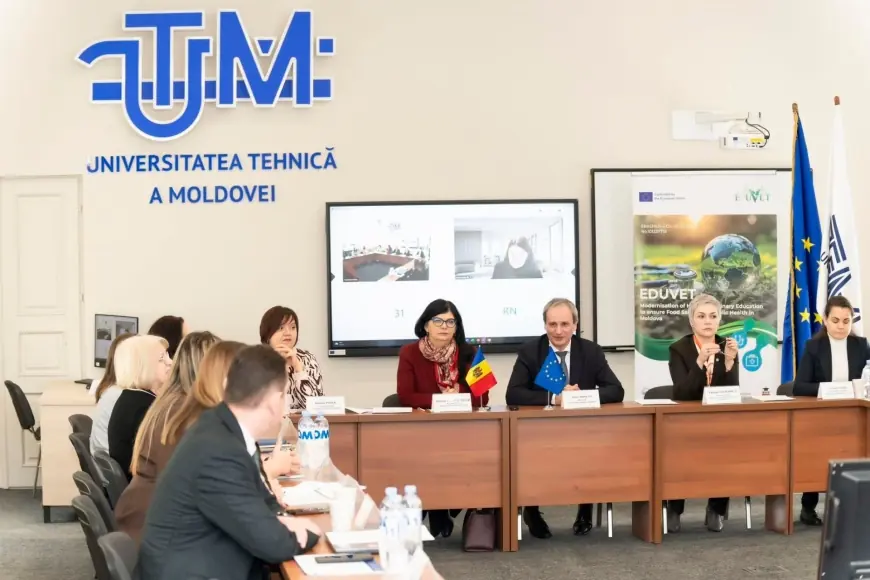
The project, formally titled "Modernisation of Higher Veterinary Education to ensure Food Safety and Public Health in Moldova" (EDUVET), held its launch meeting on 19–20 February 2026 with participation from academic institutions and national authorities. The Ministry of Agriculture and Food Industry (MAIA) was represented at the opening by Tatiana Nistorica, the ministry's secretary of state, who framed the project as consistent with ministry priorities in animal health, food safety, public health and sustainable development of the agro‑food sector.
Coordination of EDUVET in the country is the responsibility of the Technical University of Moldova (Universitatea Tehnică a Moldovei, UTM). The initiative is implemented in consortium with partner universities and organizations from Spain, Slovenia and Romania, together with Moldovan academic and research institutions. Project activities outlined for implementation include: revising and modernizing the integrated Veterinary Medicine study program to meet European requirements; developing continuous training courses in food safety and public health for veterinarians and agro‑food professionals; and consolidating the One Health approach to integrate animal, human and environmental health perspectives.
Moldova: Context and escalation
The drive to modernize comes amid a backdrop of uneven veterinary coverage and institutional capacity. National figures indicate roughly 625 active veterinarians in the country in 2025, with more than 30% concentrated in the capital, leaving many rural districts underserved. In some areas, such as Rezina, a single veterinarian serves multiple villages, while the Soroca region counts about 10 veterinarians for the entire district. Authorities estimate a shortfall of at least 200 veterinarians to meet the country's needs.
UTM's Faculty of Veterinary Medicine has trained more than 3, 000 veterinarians since its establishment, and student enrollment in the veterinary program exceeded 400 in 2025, a cohort that includes international students. The consortium model of EDUVET is intended to promote exchange of best practices, introduce modern teaching methodologies and design training programs aligned with contemporary market and regulatory demands in the EU.
Immediate impact
EDUVET's planned curriculum revisions and faculty training are meant to produce measurable improvements in graduate competencies and continuing professional development. By updating the integrated study program and delivering targeted continuous education, the project aims to equip current and future practitioners with skills directly tied to preventing risks to public health and ensuring food safety. As a direct effect, institutions expect stronger alignment between veterinary education outputs and national needs for animal health services across urban and rural areas.
What makes this notable is the combination of institutional coordination and international partnership: UTM's stewardship, MAIA's policy alignment, and collaboration with EU partner universities create a pipeline for both immediate capacity building and longer‑term harmonization with European standards.
Forward outlook
Having completed the launch meeting on 19–20 February 2026, the project will proceed with the planned curriculum review, teacher trainings and the rollout of continuous professional development modules. Implementation steps highlighted in the launch include adapting teaching methodologies, creating transnational training modules with partner institutions from Spain, Slovenia and Romania, and promoting the One Health framework across study and training activities. These milestones set the timetable for measurable academic and professional outputs tied to improving food safety and public health through strengthened veterinary education.
As the consortium moves from launch to delivery, institutional coordination under UTM and the expressed backing of MAIA are positioned to shape how quickly updated programs and trainings reach students and practitioners in both urban centers and underserved rural districts.