






















Kamila Sellier Recovering After Facial Injury in Olympic Short Track Crash

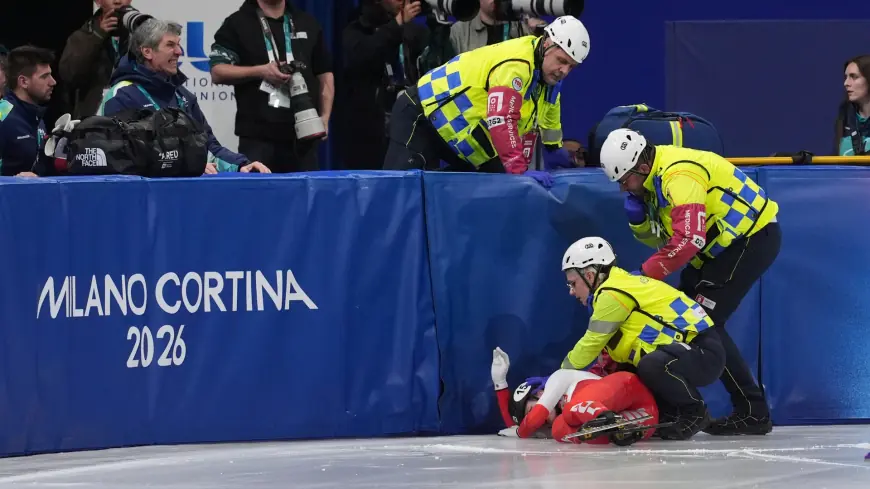
Polish short-track speed skater Kamila Sellier is recovering in hospital after a frightening pileup in the women’s 1,500 meters at the Milano Cortina 2026 Winter Olympics left her with a deep cut near her eye and a minor facial fracture. The incident, which halted the race and drew urgent medical attention on the ice, has renewed focus on safety in one of the Games’ fastest and most crowded events.
What happened on the ice
The crash occurred during a women’s 1,500-meter quarterfinal on Friday, February 20, 2026, when multiple skaters tangled at speed. In the scramble, a skate blade struck Sellier high on the face, producing heavy bleeding and prompting a prolonged on-ice response before she was taken off on a stretcher.
Medical staff treated her immediately at the venue before she was transported to hospital for further evaluation. Later imaging identified a minor facial fracture, and additional tests were ordered to check surrounding structures.
Kamila Sellier undergoes surgery
On Saturday, February 21, 2026, Sellier underwent surgery to address the fracture and facial injury. Team officials said she remained under observation afterward, with plans for continued monitoring through Monday, February 23, 2026.
In a brief social media update shared from hospital, Sellier reassured supporters that she was “doing quite okay,” while acknowledging the seriousness of the incident and thanking those who reached out.
Key takeaways so far
-
The injury was caused by a skate blade during a multi-skater fall in the 1,500m quarterfinal.
-
Doctors identified a minor facial fracture and performed surgery the next day.
-
Sellier is expected to remain under medical observation until at least Monday, February 23.
-
Her Olympic 1,500m campaign ended as a result of the crash and ensuing medical care.
Why short track carries unique risk
Short track is built around tight packs, quick lane changes, and split-second positioning—conditions that make falls more likely and injuries potentially severe. Blades are extremely sharp, and even routine contact can become dangerous when athletes lose balance at high speed.
While protective equipment is standard, the sport’s geometry—small oval, heavy traffic, and frequent overlaps—means athletes can be exposed in chaotic moments. Incidents like this typically trigger renewed discussion among coaches and officials about enforcement, spacing, and whether additional protective measures should be encouraged or required.
Impact on the event and the field
The stoppage disrupted rhythm for the remaining skaters, and the quarterfinal became as much about regrouping as racing. Race officials also reviewed the sequence of contact that preceded the fall, a routine step in short track when collisions affect outcomes.
Sellier’s withdrawal removed a key Polish competitor from the remaining rounds. For athletes who advanced, the incident served as an unsettling reminder of how quickly a medal chase can change, especially in longer short-track races where fatigue and crowding build late.
What comes next for Sellier
As of Sunday, February 22, 2026 (ET), the immediate priority is recovery and follow-up evaluation, particularly around swelling, vision checks, and healing of the facial fracture. Short-track athletes often return to training relatively quickly from cuts, but fractures can require a more cautious timeline depending on location and severity.
Looking ahead, decisions about Sellier’s next competitions will likely depend on medical clearance and how she responds over the next week. If swelling and pain remain controlled and tests stay normal, she may be able to resume light activity first, then rebuild speed and contact tolerance later—steps that matter in a sport where confidence in close quarters is essential.