
























2026 Winter Olympics Freestyle Skiing: Livigno Delivers Home-Hero Chaos, Surprise Medals, and a Weather-Disrupted Finale

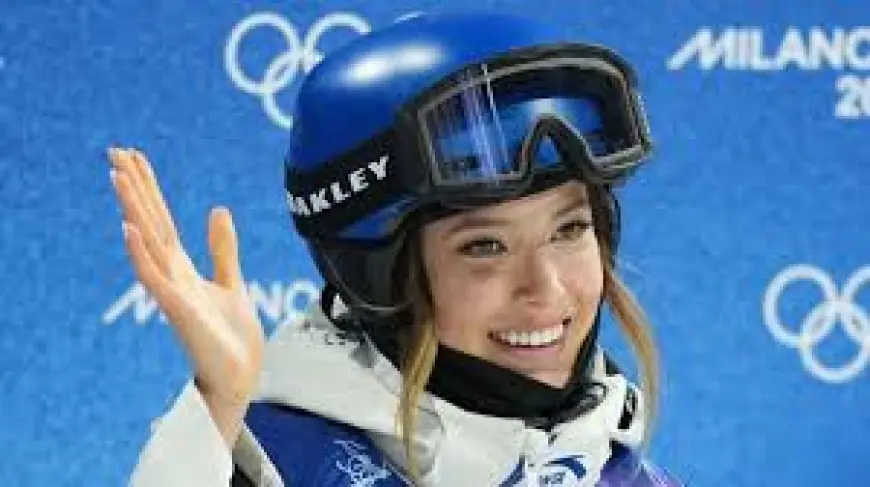
Freestyle skiing at the 2026 Winter Olympics has turned Livigno into a daily stress test for nerves, tactics, and course conditions, with medals decided by razor-thin margins and a late-week snowstorm reshaping the schedule. The headline so far is a mix of established stars finally sealing legacy moments and unexpected podiums that hint at a deeper, more global talent pipeline than the sport has ever had.
What happened: the biggest freestyle skiing results so far
Men’s freeski halfpipe produced the signature action-sports moment of the Games on Friday, February 20, 2026 ET. American Alex Ferreira won gold with a last-run score of 93.75, completing a rare Olympic medal set across three Games. Estonia’s Henry Sildaru took silver with 93.00 in a breakthrough result, and Canada’s Brendan Mackay earned bronze with 91.00.
Ski cross delivered a different kind of drama: four-across racing where contact, line choice, and split-second decisions can flip everything. On Saturday, February 21, 2026 ET, Italy landed a dream home one-two in the men’s ski cross, with Simone Deromedis winning gold and Federico Tomasoni taking silver. Switzerland’s Alex Fiva captured bronze. A day earlier, Germany’s Daniela Maier won the women’s ski cross title.
On the moguls side, the Games showcased both technical precision and survival under pressure. In men’s moguls, Australia’s Cooper Woods-Topalovic won gold, with Canada’s Mikaël Kingsbury earning silver and Japan’s Ikuma Horishima taking bronze. In women’s moguls, the United States went one-two as Elizabeth Lemley won gold and Jaelin Kauf claimed silver, while France’s Perrine Laffont secured bronze.
Aerials added a team narrative with the mixed team event on Saturday, February 21, 2026 ET: the United States won gold, Switzerland took silver, and China earned bronze.
The schedule twist: women’s freeski halfpipe pushed to Sunday
Heavy snow in the Italian Alps forced organizers to postpone the women’s freeski halfpipe final by one day for safety and course-prep reasons. The final is now scheduled for Sunday, February 22, 2026 at 4:40 a.m. ET, and it is set to be one of the last action-sports medal moments of the entire Olympics. Weather has already caused multiple disruptions in Livigno, underlining how much freestyle outcomes can hinge on visibility, speed, and how “true” the takeoffs and landings feel from run to run.
Behind the headline: what’s really driving these outcomes
Context matters in freestyle skiing more than most viewers realize. Livigno’s events compress preparation time, amplify fatigue, and reward athletes who can adjust instantly when snow texture changes. That’s why “final-run heroics” keep showing up: many athletes treat the first attempts as course reads, then unleash full difficulty only once they trust the pipe walls, landings, or snow speed.
Incentives are also shifting. In modern freestyle, winning is not only about throwing the biggest tricks or the fastest line. It’s about being “bankable” under Olympic pressure: clean execution, repeatability, and a routine that can survive small timing errors. That’s how veterans like Ferreira convert experience into medals, and it’s also how a surprise contender like Sildaru can break through when others tighten up.
Stakeholders extend beyond athletes. Coaches and national programs are effectively competing too, because access to elite training venues, data-driven video review, travel support, and sports medicine often decides whether an athlete arrives healthy enough to risk upgrades. Event organizers are in the spotlight as well, because weather delays can be perceived as fairness issues even when they are clearly safety-driven.
Second-order effects are already visible. A snow-affected week tends to push athletes toward slightly safer run construction, which can lower scoring ceilings and create openings for those who specialize in clean, high-amplitude basics. It also changes how federations plan future cycles, placing more emphasis on adaptability and contingency preparation rather than single “perfect conditions” routines.
What we still don’t know
Several key questions remain open as freestyle skiing closes out:
-
Whether the surprise podium performances become repeatable in future seasons or prove to be perfectly timed Olympic peaks
-
How judges and coaches collectively interpret “difficulty versus cleanliness” after a Games with uneven conditions
-
Whether multi-discipline schedules continue to expand, or if more athletes choose to specialize to protect their bodies
-
How much the weather disruptions will be remembered as a defining competitive factor in 2026
What happens next: realistic scenarios with clear triggers
-
A technical, clean-run champion wins women’s halfpipe if snowfall keeps the pipe slower and less forgiving, favoring consistency over maximum risk.
-
A late-upgrade winner emerges if conditions stabilize Sunday morning and athletes feel confident enough to chase higher difficulty.
-
National programs double down on ski cross development after home-crowd success and high visibility, triggering funding shifts toward head-to-head racing.
-
Moguls and aerials training becomes even more depth-driven as teams see medals spread across more countries, triggering a renewed focus on pipeline and junior progression.
-
The sport debates schedule and venue resilience after multiple weather disruptions, triggering calls for more flexible buffers and improved course-maintenance capacity.
Freestyle skiing in 2026 has been a reminder that the Olympics don’t just crown the most talented athletes; they crown the athletes and teams best prepared for chaos. The final Livigno medals will close the chapter, but the larger takeaway is already clear: the competitive field is widening, and the line between favorite and spoiler is thinner than ever.