
















Rajah Caruth’s Hometown Return: Why his Boys & Girls Club Visit Matters for Aspiring Young Drivers

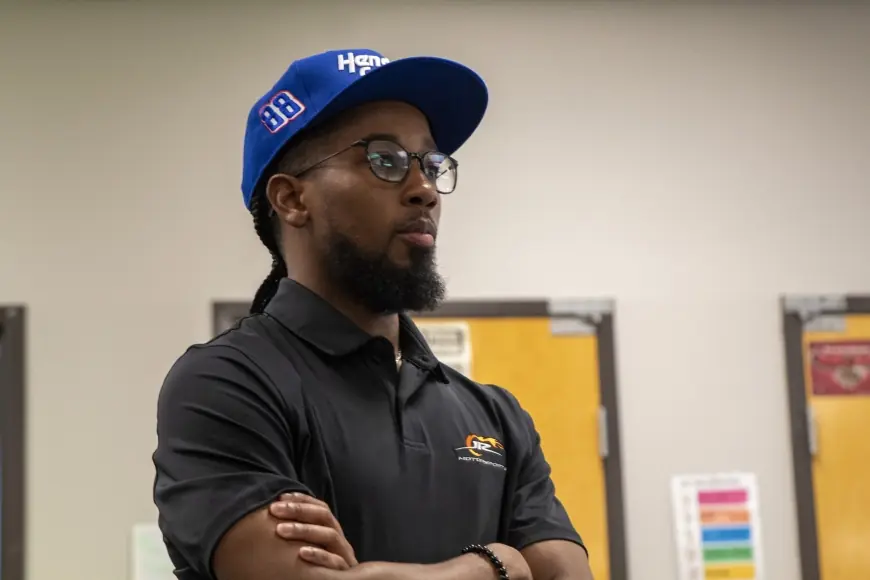
When rajah caruth walked into the Jesse Draper Boys and Girls Club, the immediate impact landed on middle-school students who heard a career map that didn’t begin in childhood karting but in video games and simulators. That shift in origin story matters for young people in communities without local tracks: it reframes how someone reaches professional racing and what practical steps feel within reach first.
Rajah Caruth’s message to students and local aspiring racers
Rather than focusing on race results or sponsorship mechanics, rajah caruth centered his talk on perseverance, resilience and the everyday work around the car. He emphasized that motorsports depend heavily on teams—engineers, pit crews, strategists and coaches—not just the person behind the wheel. For middle-schoolers who may see only drivers on TV, the takeaway was practical: there are multiple entry points into the sport beyond starting on a track as a child.
Here’s the part that matters: hearing a 23-year-old from an urban background describe learning to drive through online simulators and starting actual driving later than many peers changes the narrative about “the right” timeline for success in racing. The real question now is whether more programs will treat simulators and technical roles as valid pathways for talent from underserved areas.
- He explained his earliest connection to racing began with video games, which led him to use driving simulators to learn stick shifts and track layouts when local go-kart or dirt tracks weren’t available.
- He noted that he didn’t begin driving until his late teens, a nontraditional start compared with many drivers who begin very young.
- His career includes national-level victories in the NASCAR Craftsman Truck Series, with wins in Las Vegas and Nashville.
- He stressed approachability and encouraged students by framing his path as relatable and achievable through steady effort.
What’s easy to miss is that the emphasis on team roles subtly opens more realistic career options for students who may not become drivers but could contribute to winning programs as engineers, crew members or strategists.
Event specifics and the practical implications
The visit brought a straightforward, relatable account of how an Atlanta-born driver from a Washington, D. C. upbringing navigated barriers—limited local facilities and a later driving start—by leaning on simulation technology and persistence. At age 23, he used the presentation to remind students that pathways in motorsports can be built in unconventional ways and that wins at the national level are possible even when the early-life playing field looks different.
He also framed racing’s win-loss reality plainly: in a field of many competitors, victories are scarce and usually the result of coordinated team effort rather than individual heroics. That framing can change how young people evaluate success and manage expectations in competitive environments.
Micro timeline (milestone sequence):
- Early interest developed through video games and driving simulators.
- Actual driving began in his late teens after simulator practice.
- Progression led to national-level wins in the Craftsman Truck Series, including races in Las Vegas and Nashville.
Four practical signals that would confirm a broader shift: increased local access to simulators or training programs, more outreach visits like this one to youth organizations, visible growth in technical-role recruiting from urban areas, and pathway programs that recognize simulator experience as legitimate preparation.
It’s easy to overlook, but the bigger signal here is that narrative shifts—when someone publicly reframes how success can start—often precede structural changes in training and recruitment.
If you’re wondering why this keeps coming up, consider that a single visit can reframe dozens of students’ sense of possibility. For community programs and educators, the visit provides talking points and a concrete example to motivate curriculum that connects technology, teamwork and sports careers.