






Olivia Colman criticised by Scottish lesbian group after describing herself as 'gay man'

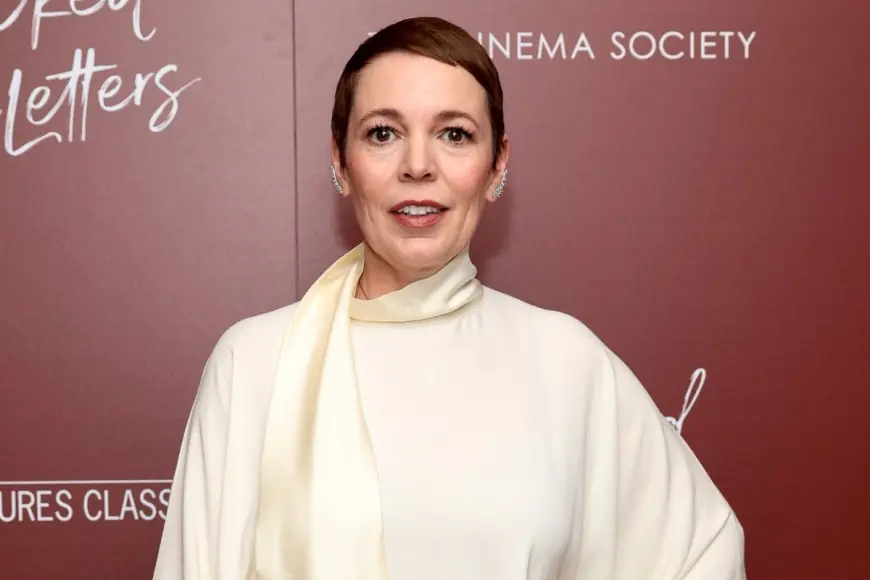
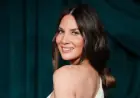
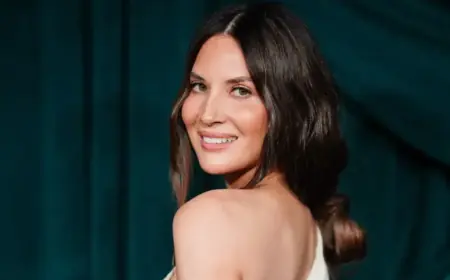
Olivia Colman has faced criticism from a Scottish lesbian group after saying she identifies as a "gay man" while promoting her upcoming film Jimpa. The exchange has sparked a public letter from the group outlining why the remark was hurtful to people whose lives have been shaped by being gay or lesbian.
Olivia Colman’s remark and immediate reaction
Earlier this month, Olivia Colman said she has "always felt sort of non-binary" and that she has "never felt massively feminine" while promoting Jimpa. The comment that she describes herself to her husband as a "gay man" went viral and prompted a strong response from a Scottish lesbian group called The Fantastic Lesbians.
Scottish lesbian group issues two-page social media letter
The Fantastic Lesbians criticised Colman’s comments as diminishing their struggle in a two-page letter shared on social media on Wednesday. A spokesperson for the group wrote that when a person who has lived openly and comfortably as heterosexual speaks about identifying as gay, it can be deeply painful for people whose lives have been shaped by the realities of actually being gay or lesbian.
The letter emphasised that, for many in the lesbian and gay community, sexuality has been a journey marked by confusion, fear, self-interrogation and profound alienation from family, faith communities or societies at large. It contrasted that experience with heterosexuality, which the group described as existing within a heteronormative framework that is affirmed in media, celebrated in family structures and reinforced by social expectations.
Why the group says the comments matter
The Fantastic Lesbians highlighted that many heterosexual people never have to question their orientation, never have to come out and are not typically asked to justify their relationships or prove the legitimacy of their families. The group concluded by saying the intent of the letter was not to accuse or attack, but to express the hurt that can arise when lived experiences involving marginalisation are treated as interchangeable with those that have not.
What Olivia Colman said in the interview
In an interview on 10 February, Colman said she feels "sort of non-binary" and that she has never felt massively feminine in her being female. Colman said she describes herself to her husband as a "gay man, " and that he replied that he understood. She said she feels at home and at ease with that description, that she has a foot in various camps and knows many people who do. Colman also described her dynamic with her husband as taking turns to be the strong one or the gentle one, and said that talking to a particular community made her feel less like an oddity.
Jimpa: the film at the centre of the discussion
The comments were made while Colman was promoting Jimpa, a drama that explores the dynamics of a family with multiple queer members. The film, which also stars John Lithgow and Kate Box, follows Colman’s character Hannah and her non-binary daughter Frances as they travel to Amsterdam to visit their gay grandfather, Jimpa. When Frances expresses a desire to stay with Jimpa for a year abroad, Hannah is forced to reconsider her parenting beliefs and the stories she has long told about her family.
Colman’s profile, personal details and next steps
Colman, described in the coverage as 52 years old, won an Academy Award in 2018 for her portrayal of Queen Anne in The Favourite. She is best known for starring as Queen Elizabeth II in The Crown and for roles in The Father and The Lost Daughter, which earned her Oscar nominations in 2020 and 2021 respectively. She has also won BAFTAs for roles in Broadchurch, Accused and the comedy Twenty Twelve. The context notes that Colman has been married to her husband Ed Sinclair since 2001 and that they have been married for over 25 years.
A news outlet has contacted Colman’s representatives for comment.