





















Poppy Playtime Chapter 5 Launch Sparks Player Surge as “Broken Things” Pushes the Horror Saga Into The Prototype’s Domain

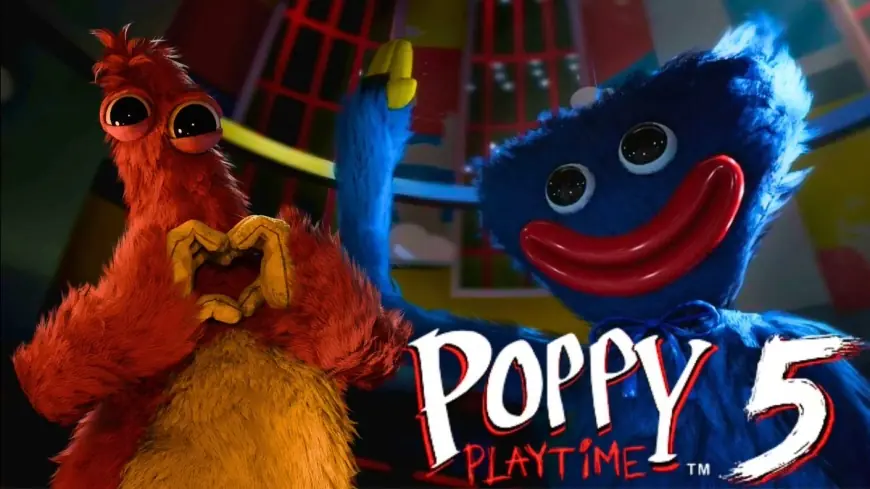
Poppy Playtime Chapter 5 is now out on PC, extending the episodic horror series with a new chapter titled “Broken Things” and triggering a sharp spike in player activity in the days following release. The latest installment drops players deeper into the factory’s most dangerous areas, reframing the central conflict around The Prototype and introducing new tools, new environmental hazards, and a fresh set of unsettling toy experiments that expand the franchise’s mix of puzzle-solving and chase-driven survival.
Released on Wednesday, February 18, 2026 ET, Chapter 5 arrived with a standalone price point around twenty dollars, a move that signals confidence in the series’ ability to keep converting interest into paid expansions rather than relying solely on the franchise’s wider internet footprint.
What happened in Poppy Playtime Chapter 5
Chapter 5 continues the story after the prior chapter’s escalation, pushing the player into territory described as The Prototype’s stomping grounds. The gameplay loop remains consistent with what has defined the series: solve mechanical puzzles under pressure, manage space and timing during pursuit sequences, and use an evolving grab-tool kit to interact with power systems and objects at a distance.
The new chapter also leans harder into “who can you trust” tension, presenting denizens of the facility who may help, hinder, or manipulate the player’s path. That narrative device matters because it lets the series add menace without constantly introducing bigger monsters: suspicion itself becomes a threat multiplier, shaping how players interpret every new face, voice, and environment.
Why Chapter 5 is suddenly everywhere
The immediate headline is scale. Chapter 5’s release coincided with the franchise hitting a new peak in concurrent players, more than doubling the prior high-water mark seen in earlier chapters. That kind of jump is not typical for late-series DLC unless a few factors align at once: accessible entry, clear “final arc” stakes, and a hype engine that reaches beyond traditional game marketing.
Poppy Playtime has those ingredients. Chapter 1’s easy onboarding pulls new players into the funnel. The episodic structure makes “catching up” feel doable. And the franchise’s character-driven horror design is inherently shareable: it generates clips, reactions, and theory threads that act like free distribution.
Behind the headline: incentives, stakeholders, and what Chapter 5 changes
Context is important. Episodic horror lives or dies on momentum. Every new chapter has two jobs: satisfy existing players and re-hook lapsed audiences who might have drifted after a previous release. Chapter 5 appears designed to do both by raising the narrative ceiling with The Prototype while also adding tangible gameplay upgrades so it doesn’t feel like “more of the same.”
The incentives are straightforward:
-
The developer needs Chapter 5 to function as a payoff chapter that validates earlier purchases and sets up whatever comes next for the brand.
-
Players want closure and escalation without losing the tactile puzzle identity that originally made the series sticky.
-
Creators and streamers benefit from a release that is both watchable and replayable, because that drives sustained attention rather than a single weekend spike.
-
Platform storefronts benefit when a new release triggers bundle sales and back-catalog catch-up purchases.
Stakeholders also include parents, schools, and community moderators, because this franchise sits in a tricky cultural zone: it looks toy-like and cute at a glance, but it is unapologetically horror. Each major release tends to reignite debates about age appropriateness, content warnings, and how quickly horror characters become kid-facing memes.
Second-order effects show up fast. A bigger launch typically drives more modding, more lore analysis, and more pressure on the developer to communicate roadmap decisions earlier. It can also push other indie horror titles to adjust timing, because a big DLC wave can dominate attention in the genre for days.
What we still don’t know
Even with Chapter 5 out, several practical questions remain open:
-
How quickly a console version will arrive, beyond the broad expectation of later in 2026
-
Whether Chapter 5 is the end of the mainline episodic story or a pivot point into spin-offs and broader media projects
-
How durable the player spike will be after the initial rush, once completion rates rise and spoilers spread
-
Whether the community coalesces around a single interpretation of The Prototype’s motivations, or fractures into competing lore camps
Those unknowns matter because they determine whether this release becomes a franchise peak or the beginning of a longer “post-arc” phase.
What happens next: 5 realistic scenarios with triggers
-
A sustained player base through March if patches land quickly and early complaints about difficulty, bugs, or pacing are addressed without major delays.
-
A rapid falloff if the chapter is short, too linear, or too reliant on chase sequences without enough puzzle variety to support replays.
-
A console timing announcement if the developer wants to stabilize the conversation and convert hype into a second launch wave.
-
A new merchandising push if the new characters in Chapter 5 prove as meme-ready as earlier mascots, triggering another cycle of viral visibility.
-
A broader story expansion if Chapter 5’s ending clearly leaves narrative doors open, triggering speculation about a sequel, prequel, or parallel storyline.
Why it matters
Poppy Playtime Chapter 5 is a stress test for the franchise’s long-term ceiling. It’s no longer just a viral horror concept; it’s behaving like a durable episodic product with the ability to re-ignite interest years into its run. If the player surge holds and the chapter lands as a satisfying escalation, the series strengthens its case as one of the defining horror brands of this era, not just a moment that was big on clips.