


















Antoinette Rijpma-de Jong’s Olympic gold reshapes family routines and Dutch 1,500m legacy

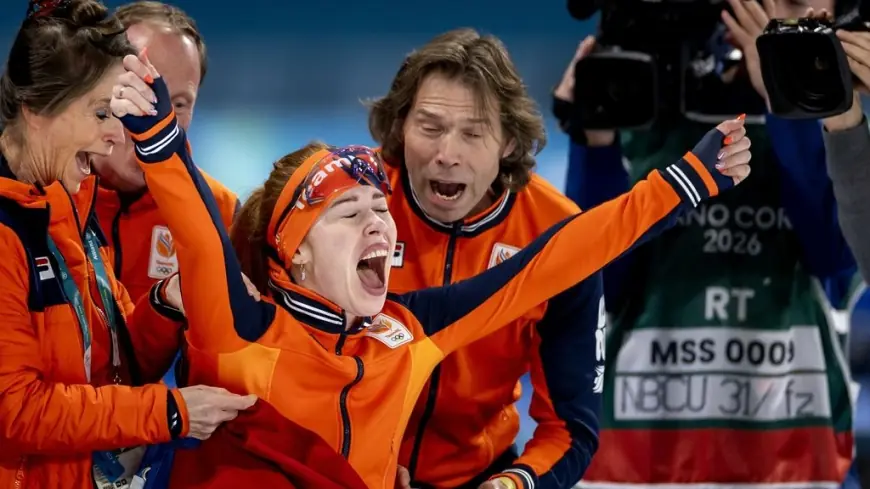
For fans, teammates and the household that keeps an elite skater steady, antoinette rijpma-de jong’s unexpected 1, 500m victory does more than add a medal to the cabinet: it alters routines, rewards tactical choices and extends a Dutch run at the distance. The win lifts a private exhaustion that had followed three previous Games and creates immediate ripple effects inside her team and at home with her husband, who engineered quiet breaks from the Olympic bubble.
Who feels the change first: family, teammates and national depth after Antoinette Rijpma-de Jong’s gold
At the smallest scale, the household benefits. Her husband Coen slept in a nearby apartment, cooked pancakes and handled laundry so she could step out of the Olympic village when needed. That practical support was part of an explicit plan to avoid feeling trapped, a lesson pulled from earlier Olympics. The immediate payoff is personal: a calmer race-day routine that helped produce the margins needed for gold.
Inside the team, the gold amplifies confidence. Rijpma-de Jong had already contributed to a silver in the team pursuit earlier at these Games; her individual title now reinforces the squad’s depth and suggests that teammates who trained with her—like the newcomer who raced well in her debut—benefit from having a proven clutch performer in their ranks.
Race essentials and the narrow math behind the result
Here’s the part that matters: the title was won by the slimmest of margins and by design. Rijpma-de Jong posted a 1: 54. 09 in the penultimate pairing, edging the Norwegian Ragne Wiklund by 0. 06 seconds; the bronze went to Valérie Maltais. Wiklund had set the target earlier with a 1: 54. 15, which forced the Dutch skater to race with both a fast opening and a disciplined finish.
Rijpma-de Jong gained most of her advantage in the opening 400 metres, clocking a 25. 26 opening that was almost half a second quicker than Wiklund’s. After laps of roughly 28. 0 and 29. 8 seconds, that cushion had nearly evaporated—down to a single hundredth entering the final lap—but a stronger closing kilometre pushed the gap to 0. 06 on the line. It was her fourth Winter Games and her first individual Olympic gold; earlier podiums include individual bronze finishes and medals from team events.
- Penultimate pair time: 1: 54. 09 (gold)
- Ragne Wiklund (Norway): 1: 54. 15 (silver)
- Valérie Maltais (Canada): bronze
- Earlier this Games: Rijpma-de Jong won silver in the team pursuit
- Notable team notes: a debutant finished fifth with 1: 54. 79 after limited international starts this season
What’s easy to miss is how much non-racing choices—an apartment close enough to escape the village routine and a partner committed to daily, small comforts—can shift margins as tiny as hundredths of a second.
If you’re wondering why this keeps coming up: marginal gains in preparation and emotional recovery often decide outcomes in tightly packed fields. The real question now is whether this gold alters her immediate priorities or leaves room for other ambitions still on the list.
Micro timeline:
- Earlier Olympics: multiple individual and team medals across previous Games, but not this color at 1, 500m.
- Earlier this Winter Games: contributed to a team pursuit silver.
- Penultimate pair at these Games: recorded 1: 54. 09, which held as the winning time.
- Outcome: first individual Olympic gold and sixth Olympic medal overall for her career.
- Remaining item noted by those close to her: a world allround title remains absent from her list.
Small practical choices—where to sleep, who manages everyday chores—interacted directly with race execution. For antoinette rijpma-de jong this gold rewrites the immediate narrative around recovery and routine; for teammates it cements a model of preparation that combined technical execution with psychological steadiness.
The bigger signal here is that the margins decided by lifestyle and support matter as much as lap splits when fields are this tight. Expect conversation in the coming days to center on how teams and athletes replicate that balance between focus and escape.