
























Usa Vs Slovakia rout propels Americans into gold-medal showdown with Canada

The U. S. victory over Slovakia matters beyond the scoreboard: it hands American hockey a clearer path to Olympic gold and forces Canada into a head-to-head test against a team riding confident goaltending and depth. The usa vs slovakia semifinal was the moment that turned a promising roster into a bona fide contender — a performance that shapes matchups, strategic choices and which players will be asked to deliver on the biggest stage.
Impact: Usa Vs Slovakia result shifts pressure, matchups and expectation
Here’s the part that matters: the 6-2 semifinal outcome alters immediate responsibilities for both finalists. The Americans now enter the gold-medal game with momentum, a hot goaltender and clear offensive drivers; Canada, having rallied to reach the final, inherits the role of favorite by history but not necessarily by form. Fans, coaching staffs and player usage plans will feel the difference first — line matchups and special-teams emphasis are the tactical levers most likely to change.
What’s easy to miss is how psychological momentum from a decisive win can compress decision-making. A commanding semifinal reduces the margin for conservative selections and gives the Americans room to press advantages rather than merely survive.
Event details embedded: how the semifinal unfolded and what’s next
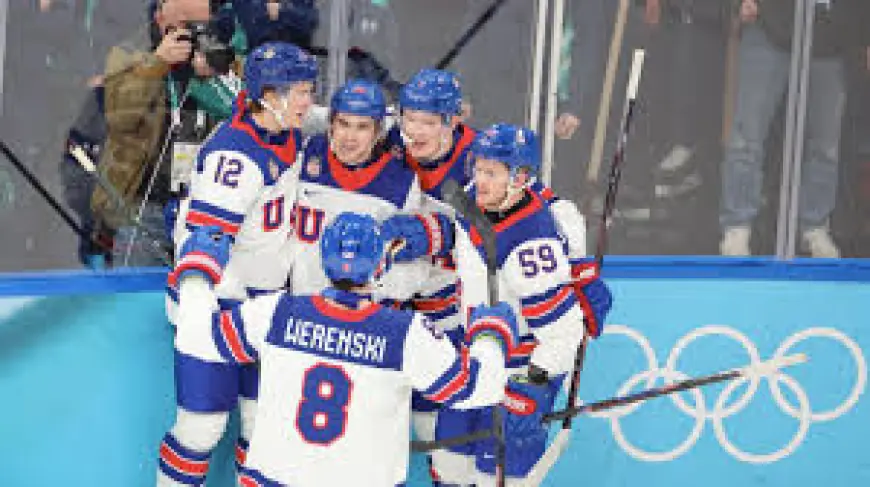
The Americans defeated Slovakia 6-2 in Milan, paced by a two-goal game from Jack Hughes and a performance in goal that allowed two goals on the night. That win followed Canada’s own dramatic semifinal, when Canada erased a two-goal deficit to reach the gold-medal match. The result sets an Olympic final between the North American neighbors, a rivalry with prior Olympic gold-medal meetings in which Canada claimed wins in Salt Lake City and Vancouver.
- Final score: United States 6, Slovakia 2.
- Key American contributors named in play: a two-goal game by a forward and a goaltender who limited scoring against the Slovaks.
- Canada reached the final after rallying from two goals down in its semifinal.
The Slovaks arrived in the semifinals as a surprise presence, having won a prelim group that included traditional heavyweights and then advancing past a favored opponent in the quarterfinals. For the Americans, the matchup provided a path to the final without needing to grind through a higher-tier opponent in that round, but U. S. players still emphasized that Slovakia was not to be underestimated.
A brief micro-timeline embedded in the flow: Slovakia won its prelim group to earn a quarterfinal bye; Slovakia then advanced a strong quarterfinal performance; the U. S. handled Slovakia in the semifinal to reach the gold-medal game. The final showdown with Canada follows those outcomes.
The bigger signal here is that the American roster’s balance — scoring depth plus top-level goaltending — may be a better fit for a single-game final than raw offensive star power alone. That dynamic frames coaching choices for both teams.
- U. S. roster momentum now centers on goaltending reliability and multi-line scoring.
- Canada’s comeback in its semifinal signals resilience and sets up a high-profile rivalry rematch.
- Slovakia’s path to the semifinals underscores the continued unpredictability of tournament hockey.
- Public interest in the matchup is amplified by historical context and recent high-viewership precedents for similar contests.
For readers tracking confirmation signals: watch which U. S. players log heavy minutes, whether the Americans deploy an aggressive forecheck strategy, and how Canada responds to pressure in the neutral zone. If special teams swing decisively for one side, that will likely determine the game flow.
It’s easy to overlook, but the semifinal win also shifts narrative stakes: the U. S. is now contesting its first Olympic gold since 1980, which adds historical weight and expectation to Sunday’s matchup.
If you’re wondering why this keeps coming up, consider that single-elimination tournaments magnify one-game performances — a dominant semifinal can be both a tactical advantage and a psychological catalyst heading into a final.