





















Antoinette Rijpma-de Jong’s 1,500m Gold and What It Means for Partners, Teammates and Young Dutch Skaters

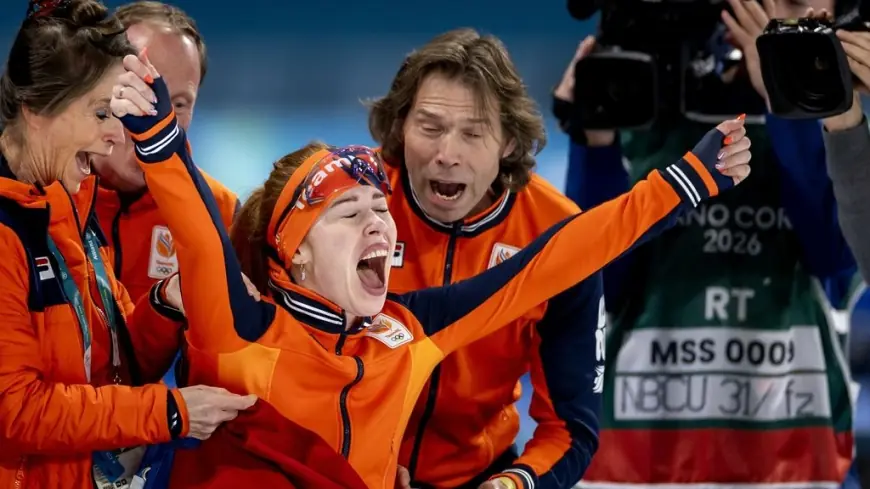
For partners, training networks and younger skaters the win lands like a playbook update rather than a single headline. antoinette rijpma-de jong’s surprise Olympic title on the 1, 500 metre underscores how off-ice choices — an apartment near the Olympic village, daily small comforts and deliberate escape routes from the competition bubble — can feed peak performance. The immediate ripple will be felt first by those who share an athlete’s daily routine.
Antoinette Rijpma-de Jong: immediate effects for partners, teammates and newcomers
Husbands, partners and close teammates now have a clearer, practical example of how proximity and small rituals can matter: Coen, who stayed nearby, baked pancakes, handled laundry and offered a quiet place away from the village, became part of the daily routine that helped create room for performance. That household-level support is likely to reframe conversations among athletes about logistics and mental space during concentrated events.
Here’s the part that matters for coaches and athletes plotting a Games: creating options to step outside the high-intensity environment — even briefly — is not just comfort, it can be a tactical decision. antoinette rijpma-de jong’s approach of early arrival to get extra ice time and a private nearby base points to a model teams may copy.
What’s easy to miss is how this win also validates long-term accumulation: Rijpma-de Jong entered these Games with multiple podiums behind her, and the gold looks like the product of persistence plus deliberate daily support rather than a single breakthrough sprint.
Event details and immediate competitive context
The gold came in a time of 1: 54. 09, set in the penultimate pairing; that mark finished 0. 06 seconds ahead of the Norwegian Ragne Wiklund, who posted 1: 54. 15. Valérie Maltais took bronze. Rijpma-de Jong had already added a silver earlier at these Games on the team pursuit, bringing her Olympic medal tally to six across four editions of the Games.
- Gold: Antoinette Rijpma-de Jong — 1: 54. 09
- Silver: Ragne Wiklund — 1: 54. 15
- Bronze: Valérie Maltais
Rijpma-de Jong produced her margin largely through a very fast opening lap (25. 26) that created an early advantage; after middle laps of roughly 28. 0 and 29. 8 seconds, her final circuit was surprisingly stronger than her closest rival’s, producing the narrow but decisive lead. She watched the final pair, including the pre-race favourite Miho Takagi, fail to beat her time.
Other Dutch results of note in the same distance included Femke Kok finishing fifth in her Olympic 1, 500m debut with 1: 54. 79 after skating in the first heat without a direct opponent; Kok’s season had lacked world-level starts but she arrived after a late-season track improvement and a narrow second at qualification behind Rijpma-de Jong. Marijke Groenewoud finished tenth in 1: 55. 16 after earlier disappointments at longer distances this Games; she had meanwhile won silver with the pursuit team and is scheduled for the mass start.
Competitive backdrop: the reigning world champion, Joy Beune, did not qualify for the Games, which helped position Miho Takagi as favourite; Rijpma-de Jong had been a podium contender this season but was not the outright top pick, having taken second twice in the World Cup this season and silver at last year’s world championships.
Mini timeline embedded in the context of the 1, 500m at recent Games:
- 2010 — Dutch gold on the distance.
- 2014 — Dutch winner Jorien ter Mors.
- 2018 and 2022 — Ireen Wüst secured back-to-back golds.
- Now — Rijpma-de Jong continues the Dutch sequence with Olympic 1, 500m gold.
Stakeholders most immediately affected include partners who travel or live near events, teammates who plan logistics and mental breaks, and selection teams weighing the value of extra pre-Games ice time. The real question now is whether other athletes will adopt similar personal arrangements at future Games or whether teams will formalize those support roles into planning.
Rounding up: this gold is both a competitive result and a case study in daily support and strategic preparation. It reframes small, private choices as part of the architecture of Olympic success.