























Wrexham Standings: How a Rapid Rise Is Recasting Promotion Odds and Cup Ambitions

Why this matters now: the current wrexham standings are not just a table position — they’re a re-pricing of the club’s short-term trajectory. A team that climbed three divisions in three seasons now sits inside the Championship playoff conversation, forcing bookmakers, algorithmic models and local stakeholders to update forecasts and plans. Fans, investors and the squad will feel the first effects if momentum holds or stalls.
Wrexham Standings as a market signal — momentum, valuation and predictive models
Market- and performance-focused observers are treating the club’s league position as an input that changes odds and expectations. A supercomputer model has been used to project playoff and promotion chances; that algorithmic view now sits alongside real-world indicators: recent draws that cost points, a strong FA Cup run to the last 16, and heavy midseason investment in new players. Here’s the part that matters: when on-field results shift, the ripple reaches transfer strategy, commercial planning and betting markets almost immediately.
- Key short-term signals: league position inside the playoff zone, FA Cup progress to the last 16, and two dropped points in recent league matches against Millwall and Bristol City.
- Investment view: the club has spent heavily on new signings this season and completed a club-record transfer for one forward.
- Modeling note: algorithmic projections are being used to quantify promotion probability; those projections change rapidly with small swings in results.
It’s easy to overlook, but the combination of algorithmic forecasts and visible spending creates competing narratives — one where momentum is self-reinforcing and another where the margin for error is tiny.
Event details and the composition behind the standings
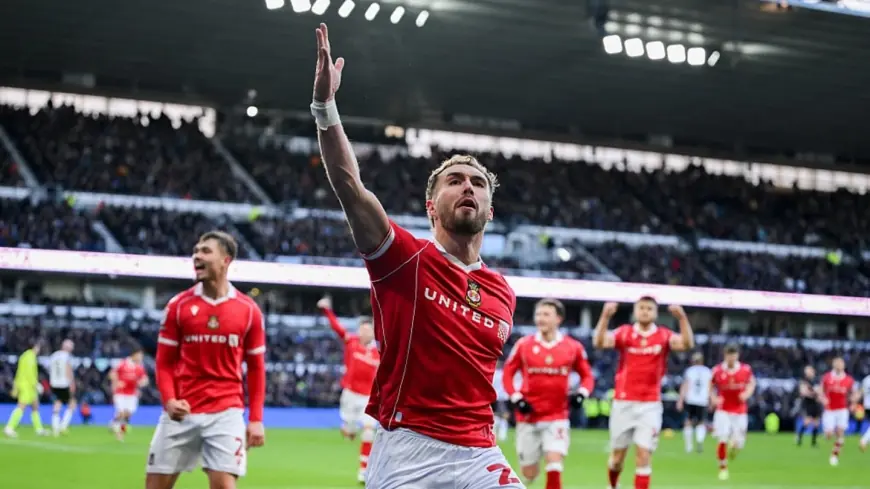
On the field, the club sits seventh in the Championship table and is in the hunt for one of the four playoff places. Manager Phil Parkinson’s side advanced to the FA Cup last 16 after victories over top-flight Nottingham Forest and a fellow second-tier promotion challenger, Ipswich Town. The season has seen targeted recruitment: the club spent around £38 million on new signings this season, including a club-record £10 million transfer for Nathan Broadhead last summer.
Some signings have underdelivered while others have anchored the team. Kieffer Moore leads the attack with 10 goals in 29 Championship appearances; Dominic Hyam has started every league match since his September debut and is a consistent presence in the back three. Homegrown continuity remains important: Max Cleworth has logged the most league minutes this season (2, 700), Arthur Okonkwo continues as first-choice goalkeeper, and George Dobson—signed the previous summer—remains central in midfield.
Recent form shows friction: dropped points in consecutive league fixtures at Millwall and Bristol City have slowed the climb and tightened the playoff chase. At the same time, a predictive model has been cited as estimating Wrexham’s playoff and promotion probabilities, amplifying attention on marginal gains in the run-in.
- Micro timeline: Feb 2021 (ownership change noted as starting point for the recent rise); three consecutive promotions followed; current season includes heavy investment and progression to the FA Cup last 16.
Here’s the practical calculus for different groups: players and coaching staff need to manage minutes and form across league and cup; club leadership must weigh further transfer spending against sustaining the current squad; and local businesses are already adjusting to increased visibility tied to the club’s success and cup progress.
- Projected confirmation signals: stringing together consecutive league wins, advancing further in cup competition, or a measurable lift in the algorithmic playoff probability.
- Stakeholders affected include matchday staff, transfer planners, and commercial partners reacting to shifting exposure and risk.
The real question now is whether the current blend of investment, experienced arrivals and academy continuity can convert a promising table position into a historic fourth straight promotion. Recent updates indicate that predictive outputs and on-field outcomes will keep evolving; details may change as matches are played and models are refreshed.
Key takeaways:
- Wrexham’s place in the Championship playoff conversation has altered short-term probability estimates across multiple forecasting methods.
- Heavy transfer spending and a high-profile club-record signing have reshaped squad expectations this season.
- Progress to the FA Cup last 16 adds exposure and pressure but also a tangible chance to validate the club’s upward trend.
- Small swings in results — like the recent dropped points — have outsized effects on both market odds and algorithmic predictions.
What’s easy to miss is that the season’s narrative is being written simultaneously on the pitch, in algorithmic forecasts and in financial commitments; any one of those can flip the broader story in a matter of weeks.