























Hockey: Keller’s overtime winner and Knight’s record cap U.S. Olympic gold over Canada

In a dramatic gold-medal game at the Milan Cortina Olympics, Megan Keller scored in overtime to lift the United States past Canada, and Hilary Knight became the all-time U. S. goal-scoring leader at the Games. The results matter now because they combined a headline-winning moment with a historic individual milestone in a rivalry that has defined this sport at the highest level.
Hockey: Development details
The deciding play came in overtime when Megan Keller netted the game-winning goal to secure the gold for Team USA over Canada. Earlier in regulation, Hilary Knight, 36, deflected a shot to tie the game 1-1 with two minutes remaining. That goal marked Knight’s 15th career Olympic goal, making her the all-time leading goal scorer in U. S. women’s Olympic hockey history and pushing her past the previous mark held jointly by Natalie Darwitz and Katie King.
Knight had tied the earlier goals mark on Feb. 7 with a goal against Finland and said at that time she had not realized she had matched the milestone. Across her Olympic appearances she had reached 14 goals in 15 career Olympic games at one point, compared with Katie King’s 14 goals in 16 games. The tournament also extended Knight’s record for career Olympic appearances for the United States; the material states this was her 27th career Olympic appearance. Knight additionally set the U. S. Olympic career points record, finishing with 33 points and surpassing the mark she had previously shared with Jenny Potter.
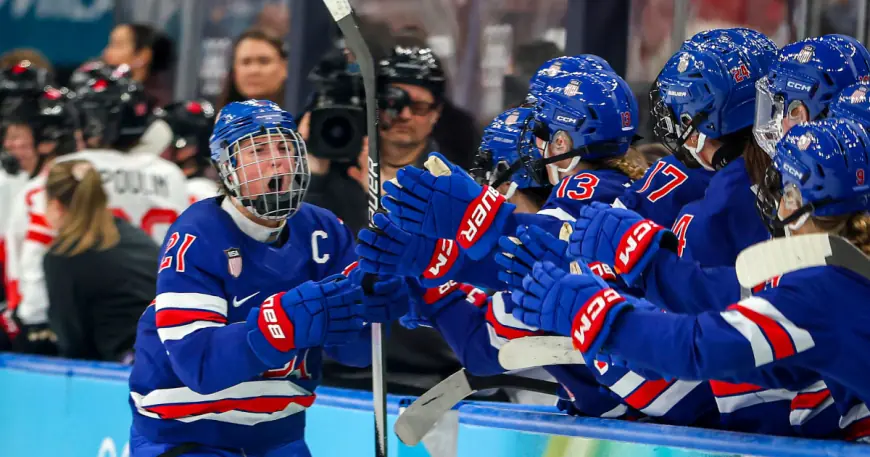
Moments after Knight’s tying goal earlier in the game at Santagiulia hockey arena, U. S. teammates rushed toward her and patted her helmet with their gloves. Keller’s overtime strike followed those late-game dramatics and completed the turnaround that began with Knight’s equalizer.
Context and pressure points
The U. S. -Canada matchup arrived as another installment in a rivalry that has dominated women’s international play. Across 31 major tournaments in women’s hockey history, including seven Olympics, the United States and Canada have combined to win every title, and the two nations have met in six of seven Olympic finals. That backdrop elevated both the stakes and the scrutiny on individual moments: Knight’s record-breaking goal was not only a personal achievement but a pivotal contribution in one of the sport’s highest-pressure settings.
What makes this notable is the timing: Knight’s milestone came late in the championship game, converting an individual record into a momentum swing that directly set the stage for the gold-winning overtime play. The recent pattern in world championships — with the United States winning in 2023 and 2025 and Canada taking the title in 2024 — further framed the encounter as part of an ongoing competitive exchange rather than an isolated event.
Immediate impact
The consequences are immediate for players and the rivalry. Knight’s records — all-time U. S. goals and the Olympic career points mark — are now part of the official record, and Keller’s overtime goal delivered the tournament’s ultimate prize for the United States. For teammates and supporters, Knight’s late-game equalizer and the visible celebration at Santagiulia hockey arena reinforced her leadership on the ice; for Keller, the winning strike will be remembered as the defining play of the gold-medal game.
On a personal front, the tournament carried an added layer for Knight: the milestone run came days after she became engaged to her longtime partner, Brittany Bowe, a U. S. speedskater. After the victory, Knight said she had been more nervous proposing than playing in the gold-medal game; teammates were unaware of the proposal plan until after the events had unfolded.
Forward outlook
The immediate, confirmed milestones now standing are Knight’s new U. S. goal-scoring record and career points total, and Keller’s status as the scorer of the gold-medal overtime winner. The provided information does not list upcoming tournament dates or schedules. Attention will naturally turn to how these results are recorded in Olympic history and to the next official international competitions where the United States and Canada will again meet, continuing a rivalry that has shaped the sport.
The timing matters because Knight’s record-breaking goal arrived in the championship moment, amplifying its significance both for her personal legacy and for the outcome of the game. The broader implication is that individual milestones and decisive plays can coincide to alter the narrative of a rivalry long defined by repeat finals and a near-duopoly of titles between these two nations.