

















Alysa Liu Mother searches and an art-first Olympic return that rewired expectations

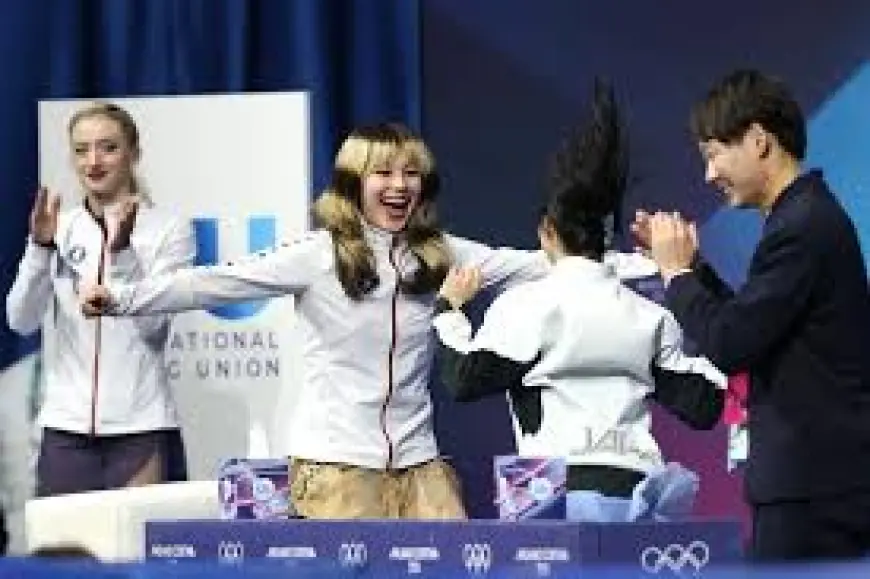
Why this matters now: alyssa liu mother appears among the fragments of attention surrounding an Olympic moment that wasn’t defined by one jump or a scoring line but by unmistakable artistry. For fans, emerging skaters and coaches, the gold-medal free skate recast what success can look like when performance and personal joy come first. That subtle shift will shape how programs are built and talked about moving forward.
Alysa Liu Mother and the audience takeaway: what fans and young skaters felt
Here’s the part that matters: the performance put emotional clarity before competitive anxiety. Viewers saw a 20-year-old who returned to competition on her own terms, skating with looseness and a kind of buoyant nonchalance that came across as deliberately joyous rather than defensive. That tone matters most to the groups who follow her closely — the next generation of skaters who model program choices and the wider audience that votes with attention and conversation.
- Fans drawn to personality over pure difficulty found a clear exemplar in this free skate.
- Coaches and choreographers now have a high-profile case for prioritizing flow and expression in program construction.
- Public curiosity — tracked in searches phrased like "alyssa liu mother" — sits alongside discussions of technique, showing that interest in an athlete’s life often travels with appreciation of their art.
- The performance reframed the Olympic win as a result of artistic intention, not only technical execution.
Event details embedded: how the free skate illustrated that artistic shift
The free skate at the Milan-Cortina Games wrapped its first notes around a familiar disco suite and set the tone immediately: a poised smile, a relaxed preparatory gesture, then sustained, flowing movement. The skater who had stepped away from competition at 16 and returned by age 20 delivered a program described as fluid and expressive, with a mixture of spinning, sliding and jumping that read as part of a coherent performance rather than a string of isolated feats.
Specific elements underscored the point: open-armed landings that emphasized continuity, a double axel integrated into playful choreography, a layback spin and a Biellmann-style finish that served as an exclamation rather than a technical afterthought. Costume and hair — including a striped ponytail that punctuated motion — operated as extensions of the program’s liveliness. The result was a gold medal at the Winter Games, achieved with a clear emphasis on expressing warmth over manifesting competition-driven tension.
- Micro timeline (verifiable points):
- Retired from competition at age 16.
- Returned to competitive skating and, at age 20, produced the gold-medal free skate at the 2026 Winter Olympics in Milan-Cortina.
- The free skate opened to the opening notes of a well-known disco suite and closed with a Biellmann-style finish.
It’s easy to overlook, but the bigger signal here is less about a single victory and more about a template for sustainable performance: an athlete who chose joy and self-expression as the primary engines of elite output. The real question now is how coaches, judges and program creators will respond to a gold medal that feels earned through artistry as much as athleticism.
What’s easy to miss is how small stylistic choices — a smile, a relaxed arm, a looping edge — can shift public perception of what elite skating can be. For readers following the story, that change will likely show up in program composition and in which performances gain lasting attention.
As interest spreads and conversations include side inquiries like the phrase "alyssa liu mother, " the central takeaway remains: this Olympic moment was a reminder that skating is a performance art as well as a sport, and that returning on one’s own terms can produce a gold-medal result that reshapes expectations.