



















Alysa Liu Mother: What Her Carefree, Gold-Medal Free Skate Signals for Fans and Young Skaters

If you typed the phrase alysa liu mother while catching up on the Olympics, here's the part that matters: the public moment at the Milan-Cortina Games was less about technical one-upmanship and more about a model of skating rooted in artistry and joy. That shift affects fans who watch for expression and young skaters who may now see an alternative path back into competition focused on performance over pressure.
Alysa Liu Mother — Why a gold-medal, joy-first approach matters to fans and young skaters
For audiences, the free skate that clinched the gold medal reframed how excellence can look on the ice: loose, playful and deliberately expressive. For young skaters, the visible choice to return to competition with an emphasis on artistry offers a practical example that success need not mean giving up the pleasure of performance. Here's the part that matters: viewers witnessed a champion who prioritized feeling the music and moving with abandon even under Olympic stakes.
What’s easy to miss is how deliberate that looseness appeared; the program read as both carefree and carefully chosen. The wider implication is immediate for coaching and choreography conversations — programs that foreground character and flow can still land at the sport’s highest podium.
Inside the free skate: moves, music and a deliberate return
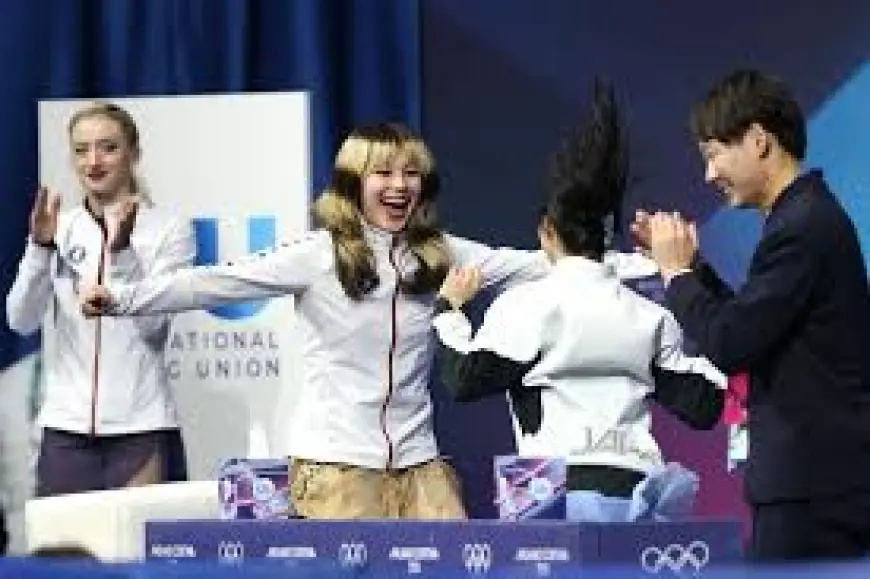
The skate itself used a propulsive disco selection that began with the opening notes of Donna Summer’s “MacArthur Park Suite. ” The performance featured signature elements that underlined the artistic case: fluid edges, a playful double axel, a layback spin and a Biellmann-style finish. Visual details — a striped ponytail, expressive hand gestures, and stretches that read like dance — reinforced a program built to communicate joy as much as technical skill.
The athlete at the center of this moment returned to competitive skating on her own terms after stepping away earlier in her career; the comeback was explicitly framed as a renewed focus on joy. The result was a gold-medal performance at the Milan-Cortina Games that many described as transcendent because it relaxed the usual fight with the ice and let movement feel effortless.
- Key takeaway: the gold-medal performance foregrounded artistry over the frantic chase of technical margins.
- How audiences felt: the program read as joyful and nonchalant, while clearly skilled.
- Practical signal for skaters: choreography that privileges flow and self-expression can still win at the highest level.
- Visual signature: a mix of athletic jumps and dance-forward transitions created a seamless narrative on the ice.
If you're searching 'alysa liu mother', keep in mind the central thread of the coverage: this Olympic moment was notable because it prioritized performance feeling and a love of skating. The broader scene at the Games also included other competitors who shed pressure and delivered artistically driven programs, suggesting a small stylistic shift among those skates on the highest stage.
The real question now is whether this emphasis on joyous artistry alters program construction and judging conversations going forward. Coaches and choreographers watching the Milan-Cortina free skate have a concrete example they can point to when advising skaters torn between maximizing technical risk and cultivating expressive strength.
Micro timeline of relevant points embedded in coverage:
- Return to competition after an earlier retirement.
- Free skate at the Milan-Cortina Games built around a disco suite and expressive choreography.
- Performance culminated in a gold-medal result that many characterized as joyful and artistically focused.
It’s easy to overlook, but the performance’s success also underscores a tactical reality: judges and audiences can reward programs that blend high-level athleticism with a clear artistic identity. For fans and aspiring skaters, the lasting image is of an athlete who trusted artistry and enjoyment on the ice and was rewarded at the sport’s biggest moment.