













Carl Froch Accepts John Fury Challenge After Father's Tirade at Tyson Fury Press Conference

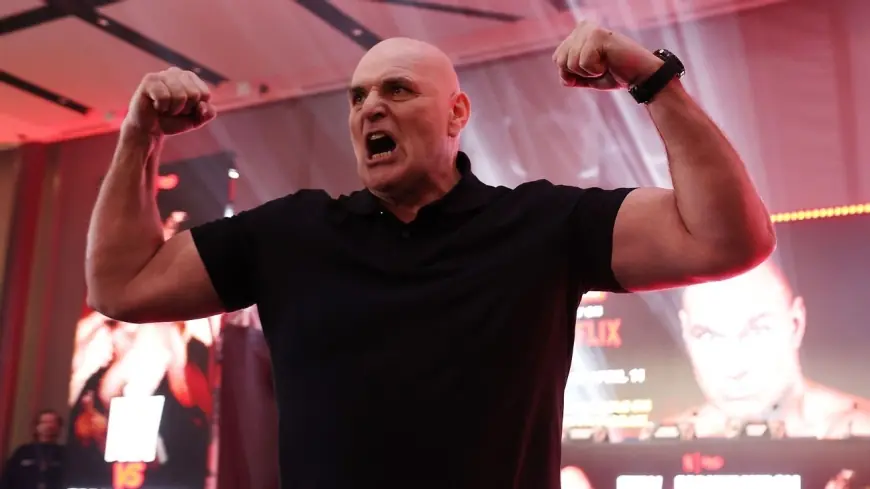
Carl Froch has said he will accept a challenge to box John Fury after the elder Fury erupted at a press conference promoting his son's return to the ring. The exchange adds an unexpected subplot to the build-up for an upcoming heavyweight comeback scheduled at Tottenham.
What happened and what’s new
On Feb. 19, John Fury staged a loud confrontation at a press conference held to promote Tyson Fury's comeback fight, confronting a pundit present at the venue and publicly challenging Carl Froch to a bout on his son's undercard at Tottenham.
The following day, Feb. 20, Carl Froch said he would accept that challenge. Froch, a retired former world champion aged 48, noted the offer after John Fury's outburst; John Fury is described as being 60, making Froch roughly 12 years younger. Froch's response to the provocation was recorded and shared in an Instagram video in which he addressed the earlier confrontation and affirmed his willingness to take the fight.
The press conference where the exchange began was promoting Tyson Fury's return against Arslanbek Makhmudov, a fight that is slated to take place at Tottenham on April 11. John Fury raised the prospect of staging his proposed bout with Froch on that same event's undercard, suggesting a timeline of roughly eight weeks from the challenge.
Behind the headline: Carl Froch responds
The incident brings together several figures central to the current heavyweight narrative: Tyson Fury, his father John Fury, and Carl Froch, the veteran pundit and ex-champion. John Fury's intervention at a promotional appearance shifted attention away from his son's comeback and onto a personal feud with Froch. Froch's acceptance, delivered publicly on social media, turns a verbal confrontation into an explicit fight offer.
In the Instagram remarks, Froch criticized the conduct shown at the press conference, described the interaction he experienced there, and outlined how he would approach a match if it were to be arranged. He also referenced the kind of crossover promotional platform often used for high-profile novelty bouts when considering where such a fight might be staged.
Who gains and loses: John Fury's challenge and Froch's acceptance keep the spotlight on the Fury family and the promoted comeback, potentially increasing attention around the April event. Froch, despite retirement, stands to draw interest by engaging publicly; organizers and promoters face the choice of sanctioning an unexpected pairing or keeping the undercard focused on scheduled heavyweight business.
What we still don’t know
- Whether promoters or event organizers will formally schedule a Froch–John Fury bout as part of the April event.
- Whether governing bodies or sanctioning authorities would approve a match between the two men.
- Weight, ruleset, medical clearances and licensing details for such a fight.
- Whether Tyson Fury or his team endorse staging the bout on the undercard.
- Exact timing, contractual terms, and any broadcast or promotional arrangements for the proposed matchup.
What happens next
- Match scheduled on Tottenham undercard: Promoters agree, clearance is obtained and the fight is formally added to the April 11 card. Trigger: promoter confirmation and regulatory approval.
- Crossover-style bout arranged separately: The fight is placed on a different promotional platform known for novelty matchups rather than the official undercard. Trigger: discussions with crossover promoters and an agreed ruleset.
- No fight materializes: The exchange remains verbal and the bout never receives formal backing. Trigger: lack of promoter interest or regulatory hurdles.
- Alternative resolution: A public confrontation or media appearances replace an actual fight, with both parties moving on. Trigger: mutual decision to decline a sanctioned bout.
Why it matters
In the near term, the public spat and Froch's acceptance amplify attention around an already high-profile comeback fight, creating additional headlines and debate. For event organizers, the episode presents both an opportunity for increased interest and a logistical question about whether an impromptu bout fits the event plan and regulatory framework. For fighters and fans, the offer underscores the blurred lines between promotional theatre and competitive scheduling in modern boxing build-ups.
Observers should monitor whether promoters or sanctioning authorities move to formalize any bout and whether the proposed matchup appears on a confirmed card. Until paperwork, approvals and promotional commitments appear, the exchange remains a live storyline built on a public challenge and a subsequent acceptance.