

























Solar Eclipse Dates: Who Sees the Feb. 17 Ring of Fire and Why It Matters for Antarctic Crews and Astrology Followers

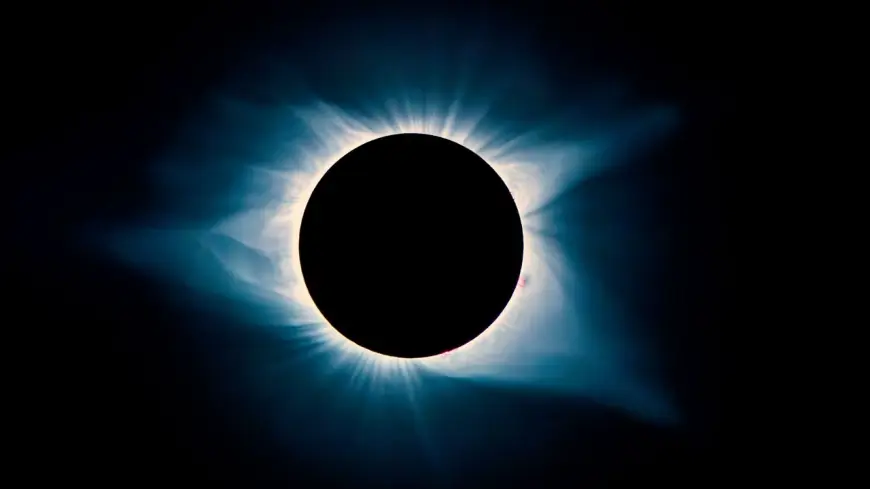
For people stationed on the Antarctic interior and for those tracking astrological shifts, the solar eclipse dates around Feb. 17 carry both an extremely narrow physical window and a broader symbolic ripple. The annular event falls on February 17, 2026 and aligns with the second new moon of the year in Aquarius — a rare overlap with the start of a new lunar/solar cycle that astrologers link to long-range change. If you follow solar eclipse dates, this one matters differently depending on where you are.
Solar Eclipse Dates — immediate impact for two distinct groups
Here’s the part that matters: the annular phase will be visible in practice to only a tiny human population and yet its timing has been read as a major turning point by astrology observers. For Antarctic researchers at isolated stations such as Concordia the eclipse is an actual, time-sensitive event — a brief annularity low on the horizon that will darken the sky. For people who follow astrological cycles, the coincidence of an Aquarian eclipse on the same day as the traditional Chinese New Year and the Fire Horse association frames a period of endings, beginnings and slow developments unfolding over the next 18 months.
Astrological notes tied to the date include the new moon occurring in Aquarius and the idea that this is the first eclipse in that sign since mid-2018, signalling a shift in long-term themes for that sector. Plutonian transformation already underway in the sign is cited as intensifying the effect, while planetary alignments at the time are described as deepening emotional and desire-driven responses for many. A short window of post-eclipse planetary activity a few days later is also highlighted as a moment where clarity between fantasy and reality may be hard to find.
It’s easy to overlook, but the practical and symbolic impacts operate on very different scales: one is a roughly two-minute atmospheric spectacle at specific coordinates, the other a purportedly gradual 18-month pattern of change.
Event details and timing (embedded)
- Global start of the eclipse (first contact): 4: 56 a. m. ET on Feb. 17 — the moon begins to move across the sun's disk.
- Start of annularity along the path (second contact): 6: 42 a. m. ET — the moon's silhouette fits entirely within the sun's disk as the annular path sweeps across Antarctica.
- Point of maximum eclipse at Concordia: 6: 47 a. m. ET on Feb. 17, with annularity lasting a shade over two minutes at that station.
Only a handful of human outposts on the Antarctic interior will experience the full ring-of-fire effect. Elsewhere along the planet the eclipse will be partial, and some regions farther away will not see any occultation at all. The visible annular phase is brief and dependent on precise location and local horizon conditions; schedule is subject to change for individual stations.
- Most immediate consequence for Antarctic crews: a narrow observation window and rapidly changing light conditions; special eye protection is required for any direct viewing.
- Most immediate consequence for astrology followers: a symbolic reset tied to Aquarius themes and a suggested 18-month arc of developments.
- Secondary practical point: the annular phase at Concordia is only just over two minutes, so timing and conditions will determine whether the ring is clearly visible.
- Secondary interpretive point: planetary alignments near the eclipse are read as amplifying emotional and desire-related impulses, and a nearby planetary conjunction is noted as causing potential confusion between illusion and reality in the days after.
The real question now is whether the narrow physical spectacle will amplify broader interest in the date: for most people, solar eclipse dates will register as a striking calendar coincidence; for a very small group it will be an actual sky event, and for others it will mark the start of an interpreted period of personal change.
What’s easy to miss is how compressed the live viewing window is for those in the path; that limits who can experience annularity firsthand and makes timing the single most important practical factor.