

























Jordan Stolz Takes 1500m Silver as Ning Zhongyan Breaks Games Record at Milan Cortina

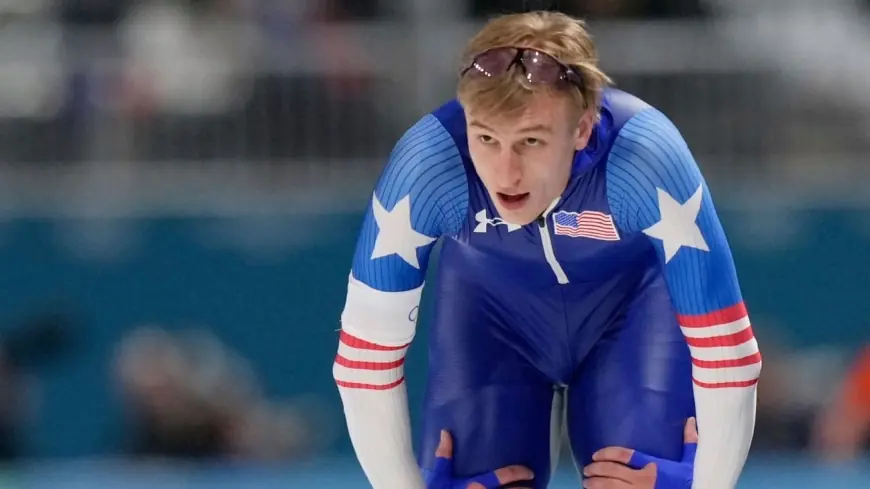
jordan stolz, the 21-year-old speedskater from Wisconsin who had won Olympic-record golds in the 500 and 1, 000 meters earlier in Milan, slipped to silver in the men's 1, 500 meters on Thursday when Ning Zhongyan posted a Games-record time. The result ended Stolz's bid to keep extending a rare multi-distance gold streak and reshaped the medal picture late in the speedskating program.
What happened and what’s new
The 1, 500m final at the Milan Cortina Games produced a Games record and an upset of expectations. Ning Zhongyan skated in the 13th of 15 heats and posted a time of 1 minute, 41. 98 seconds to take gold. Stolz finished with a time of 1: 42. 75, which was 0. 77 seconds slower than Ning and nearly a half-second better than the previous Olympic record but not enough for gold.
Stolz trailed early, falling behind by 1. 35 seconds at the first checkpoint with one lap to go. He mounted his customary late charge but could not close the gap. Kjeld Nuis finished closely behind Stolz and took bronze, 0. 07 seconds back.
Stolz said he did not have his best race and was surprised that his streak of Olympic victories ended. His coach wrote in a text message that he expected Stolz to beat Ning by about half a second and that Stolz simply did not perform at his best that day. Ning, who had earned two earlier medals in Milan, celebrated a third podium finish and gave a visible victory lap with a flag.
Jordan Stolz: Behind the result
Stolz entered the 1, 500m as the heavy favorite after recording Olympic-record winning times in the 500 and 1, 000 meters earlier at the same venue. Those earlier wins left him well positioned to pursue a run of multiple golds in Milan and to contend in additional events later in the program. The 1, 500m outcome interrupted that momentum.
Key actors and confirmed details:
- Competitors: Jordan Stolz, Ning Zhongyan, Kjeld Nuis.
- Winning time: Ning Zhongyan, 1: 41. 98 (Games record).
- Stolz’s time: 1: 42. 75; he was 0. 77 seconds behind the winner and roughly 0. 5 seconds faster than the prior Olympic record.
- Race timeline: Stolz trailed by 1. 35 seconds at the first checkpoint with one lap remaining, then closed but remained short.
What we still don’t know
- Whether any specific physical issue or equipment problem affected Stolz’s early pace in the 1, 500m.
- Detailed split times beyond the noted checkpoint that would explain where the race swung decisively toward Ning.
- How Stolz and his coaching team will adjust strategy or preparation for his remaining events this Games.
- Any formal comment from event officials about conditions in the temporary Milano Speed Skating Stadium that might have influenced times.
What happens next
- Stolz rebounds and adjusts: Stolz competes in the mass start later in the program, seeks to recover momentum and add another medal; trigger: his performance in the mass start.
- Strategic recalibration: Coaching staff alters race preparation and pacing plans for remaining events; trigger: team statements or changes in warm-up routines.
- Other competitors capitalize: Rival skaters build confidence from Ning’s performance and press Stolz in future races; trigger: tighter margins in subsequent heats and finals.
- Technical review: Team or event officials review ice or equipment factors if additional anomalies emerge; trigger: similar splits or unexpected times across multiple races.
Why it matters
The result has immediate implications for medal distribution in Milan and for Stolz’s trajectory within this Olympic program. For Stolz, a silver interrupts an extraordinary early run at these Games and raises questions about whether he can reclaim top form in remaining events. For Ning, the Games-record gold and third medal cement a breakthrough performance at these championships.
Near-term impacts include shifts in athlete momentum, adjustments to rival strategies, and attention on how Stolz and his team respond in the remainder of the competition. The outcome also reshapes narratives around dominance in multiple sprint distances and will be a focal point for coverage of the closing days of the speedskating schedule.
The field will watch closely whether Stolz can translate recent Olympic-record speed in the shorter distances into recovery and success in his remaining events, and whether Ning’s form continues to influence medal outcomes across the program.