























Trump gets his Board Of Peace and heads to Georgia after pledges

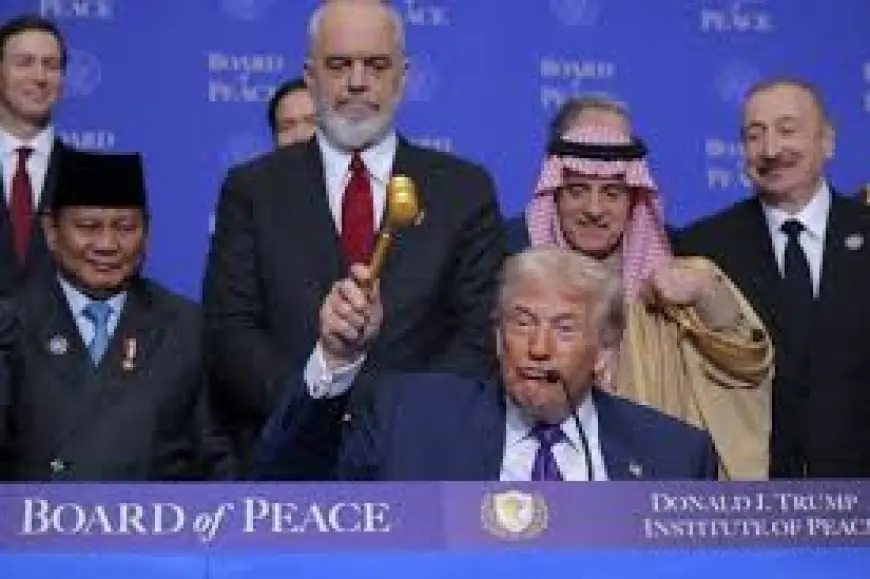
President Donald Trump opened the inaugural meeting of his board of peace Thursday, announcing combined pledges and troop commitments he said would support Gaza relief, then traveled to Georgia for a political visit focused on economic themes.
Board Of Peace inaugural pledges
At the inaugural session, Trump announced that nine members have pledged a combined $7 billion for a Gaza relief package and that five countries agreed to deploy troops for an international stabilization force in the war-battered territory. The board of peace framework was presented as a parallel effort intended to help with relief and stabilization work.
Officials at the meeting framed the pledges as an initial package, but the amount is a fraction of the estimated $70 billion believed to be needed to rebuild Gaza. The White House described the commitment as a start while noting longer-term funding and reconstruction needs remain substantial.
Georgia visit and tariff frustration
After the meeting, the president traveled to Georgia for a trip aimed at boosting his party's political standing ahead of the midterms and highlighting economic points. During a tour of a steel plant, he expressed frustration that many of his tariffs are being challenged in court and said he is waiting on a Supreme Court decision that could come as soon as Friday. During the tour, he reiterated his view that the presidency gives him the right to impose tariffs and voiced exasperation that the matter remains before the high court months after oral arguments.
At the steel plant visit, the president spoke directly with the owner while addressing reporters, emphasizing trade grievances and the administration's broader economic agenda.
Risks and near-term outlook
The inaugural pledges and troop offers provide a near-term policy headline, but several immediate uncertainties could shape outcomes. A shaky ceasefire deal looms over the board's ambitions to take on major relief and stabilization work. The $7 billion in pledges is materially smaller than the roughly $70 billion estimated rebuilding need, leaving a funding gap that will require further commitments or alternative plans.
On the diplomatic front, the president warned that "bad things will happen" if Iran refuses to make a deal on its nuclear program and said the world will find out "over the next, probably, ten days. " One senior regional government official said he has urged Iranian interlocutors to take the president's rhetoric seriously and suggested focusing near-term negotiations on nuclear issues while postponing demands on missiles and proxy activity. That same official cautioned that a limited strike intended to pressure Iran could backfire and risk pulling Iran's leadership out of talks.
Policy watchers should watch three near-term markers: whether additional donors increase pledges beyond the initial $7 billion, any concrete timeline for deployment of stabilization forces by the five committed countries, and the Supreme Court's pending decision on tariffs. Each of those developments could materially affect the board's capacity to deliver relief or the administration's domestic political messaging in the coming days.