

























Trump Orders Government Files After Debate Over Obama Aliens Comments, Calls Remarks a Major Error

The conversation around obama aliens intensified after President Donald Trump publicly criticized former President Barack Obama’s recent podcast remarks and directed federal agencies to release related records. The exchange has pushed questions about classification, disclosure and public appetite for information back into the forefront of national conversation.
What happened and what’s new
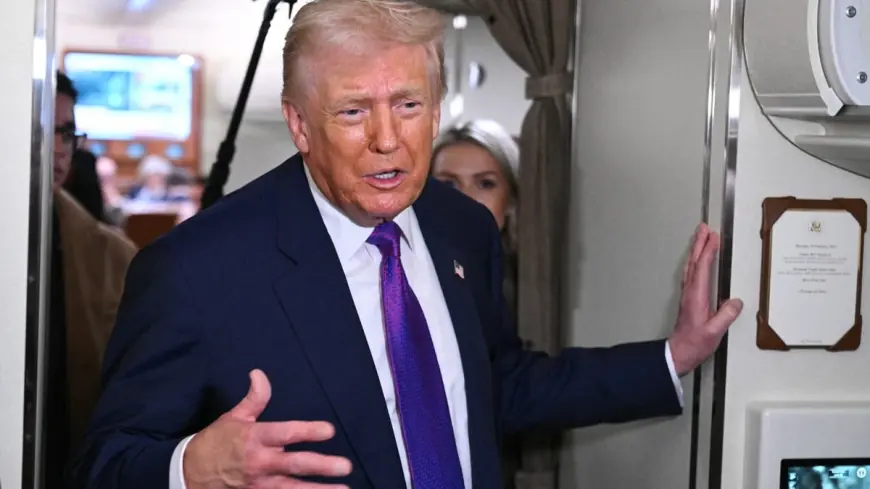
On Feb. 19, President Trump told reporters aboard Air Force One that he believed the former president had disclosed classified information by suggesting extraterrestrial life could exist. During a gaggle on the aircraft, Trump said he viewed those comments as a significant mistake and questioned whether the remarks had revealed secrets about possible non-human visitors.
The comments followed a podcast interview published Feb. 14 in which Barack Obama answered a rapid-fire question about whether life beyond Earth exists by saying that life elsewhere is statistically plausible, but that he had not seen evidence of contact during his presidency. Obama also dismissed the idea that extraterrestrials were being held at a secret underground facility, and later sought to clarify his brief podcast remarks on social media emphasizing the distinction between statistical probability and evidence of contact.
After criticizing the former president, Trump wrote on social media that, because of widespread public interest, he was directing the Department of Defense and other agencies to disclose government records related to alien and extraterrestrial life, unidentified aerial phenomena, unidentified flying objects, and any other information connected to those matters. Trump was also pressed during the Air Force One gaggle about whether he had seen evidence of non-human visitors; he said he did not know.
Behind the headline: Obama Aliens
This exchange sits at the intersection of public curiosity, national security protocols and political messaging. The immediate catalyst was a short podcast exchange that prompted a public clarification; the response from the sitting president transformed a conversational remark into a public directive for document disclosure. Stakeholders include the White House, federal agencies responsible for sensitive records, the former president and the public, which has shown renewed interest in aerial phenomena and potential extraterrestrial life.
Incentives and constraints are clear. For the president, directing agency disclosure answers public curiosity and signals responsiveness. For agencies, classification rules and national security concerns constrain how much can be released. For the former president, clarifying remarks reduces the risk of unintended disclosure claims. For the public and lawmakers, demand for transparency competes with established processes for handling classified material.
What we still don’t know
- Whether the former president’s podcast comments included classified details beyond the general position he later clarified.
- What specific documents the Department of Defense and other agencies will identify for release, and the timing of any disclosures.
- How agencies will balance transparency with classification and national security obligations when responding to the presidential direction.
- Whether further presidential or former presidential statements will change the scope of the request or the public narrative.
What happens next
- Agencies comply and publish records: The Department of Defense and other agencies identify and disclose a set of documents responsive to the directive, offering varying levels of redaction and triggering follow-up public scrutiny.
- Limited or classified release: Agencies determine many records remain classified and provide only a limited or heavily redacted set of materials, prompting renewed political debate over transparency.
- Further clarifications from principals: The former president issues additional clarifying remarks to narrow public interpretation of the original podcast exchange, or the president provides more specifics about what he expects released.
- Congressional interest intensifies: Lawmakers seek briefings or hearings to examine what agencies can and will release and to assess whether classification rules were observed.
Why it matters
The directive and surrounding exchange matter for several reasons. Practically, any release of government records could reshape the public record on unidentified aerial phenomena and government awareness of unusual sightings. Politically, the confrontation reframes a casual podcast exchange as an issue of classification and executive responsibility, with implications for how former and current leaders communicate on sensitive topics. For agencies, the moment tests the procedures used to balance public transparency with national security safeguards.
Near-term implications include heightened public attention to government handling of aerial phenomena and potential pressure on agencies to move faster in disclosing what they can. The development also creates a short-term political dynamic in which remarks made in informal settings can trigger formal policy responses and document releases.