

















Maria Becerra’s bold Lo Nuestro entrance, a dance-off with Marko and two conflicting red‑carpet looks

Maria Becerra made multiple headlines around the 38th Premios Lo Nuestro: she staged an attention‑grabbing arrival in Miami accompanied by four alter egos tied to her latest album, is slated to perform during the ceremony and is a nominee in a female collaboration category — and separately drew attention for a lighthearted dance challenge with Marko. These developments matter because they combine a promotional moment, a public advocacy push and an on‑screen娛樂 moment that together shape how the artist is presented this awards season.
Maria Becerra’s entrance, stage plans and nomination
The artist traveled to Miami ahead of the 38th edition of the awards and entered the magenta carpet accompanied by four performers embodying characters from her album. The appearance tied directly to her recent record and was noted as an intentional, stylized arrival. She is also a nominee in the female collaboration category for the track “Pa’ qué volviste?” featuring Elena Rose, and she is scheduled to appear onstage during the ceremony.
In the days before the show, Maria Becerra engaged in public animal‑welfare activity while in Florida: she participated in an adoption event at two local locations and used the visit to encourage adoption of rescued animals. During that visit she received a microrrealism tattoo honoring her pets and has been described as currently caring for seven dogs and four cats.
Red‑carpet contradictions and a separate dance challenge
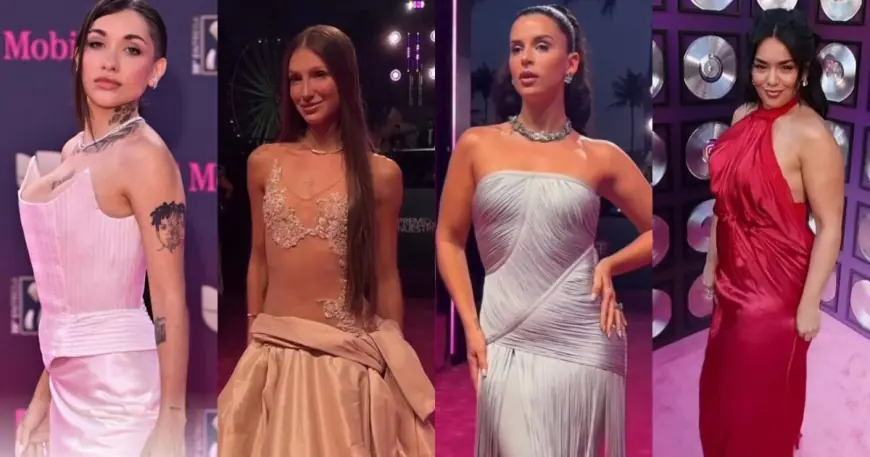
Coverage of the awards night includes two distinct descriptions of Maria Becerra’s red‑carpet fashion. One account describes her in a pale pink, structured gown with a corset and satin skirt, styled with a wet side‑part and minimal jewelry, the artist’s visible tattoos noted as part of the look’s urban edge. Another description depicts her in a silver ensemble: a satin corset with a pronounced neckline and crossed ribbon detailing at the back, paired with a straight satin skirt and side‑parted dark hair tucked behind the ear, with tattoos visible on the neck, clavicle and left arm.
Separately, a lighter moment surfaced in which Maria Becerra and Marko challenged each other in a dance‑style face‑off. Details of that confrontation are limited in available coverage, but the item stands apart from the awards reporting as a social or promotional exchange highlighting performance and personality.
What remains unclear and immediate items to watch
- Which red‑carpet outfit is the definitive look for the night, or whether both descriptions refer to different moments during the event.
- Results of the nomination in the female collaboration category and any award outcomes tied to her performance.
- Full details of the dance challenge with Marko, including whether it was staged as promotion or part of a live segment.
- Follow‑up on the adoption event metrics: number of animals rehomed and ongoing advocacy plans.
Next realistic scenarios and triggers
- Performance impact: Maria Becerra’s on‑stage presentation elevates streaming and social engagement for her album; trigger — televised or widely shared live performance clips.
- Award outcome: she wins or loses the nominated category; trigger — announcements during the ceremony.
- Public conversation about the entrance: the alter‑ego arrival becomes a talked‑about creative moment that drives media and fan attention; trigger — viral images or videos from the carpet.
- Expanded animal‑welfare activity: the adoption event leads to additional advocacy events or partnerships; trigger — follow‑up appearances or organized campaigns tied to her name.
- Dance challenge momentum: the exchange with Marko evolves into a broader social media trend or a staged collaboration; trigger — a posted video or a mutual performance clip.
Why this matters: the combination of a theatrical red‑carpet entrance, an awards‑stage slot and visible advocacy efforts packages Maria Becerra’s public image as both a pop creative and an engaged public figure in this awards cycle. The differing visual descriptions of her look underscore how single events are filtered through multiple narratives, while the dance challenge adds a performance angle that can extend reach beyond traditional awards coverage. Near term, her stage presence and any award result will likely shape streaming and publicity in the immediate aftermath, and the adoption activity may influence how fans and partners view her offstage commitments.