























Artemis 2 SLS Moon Rocket Fuelling Test Successfully Completes Launch Countdown

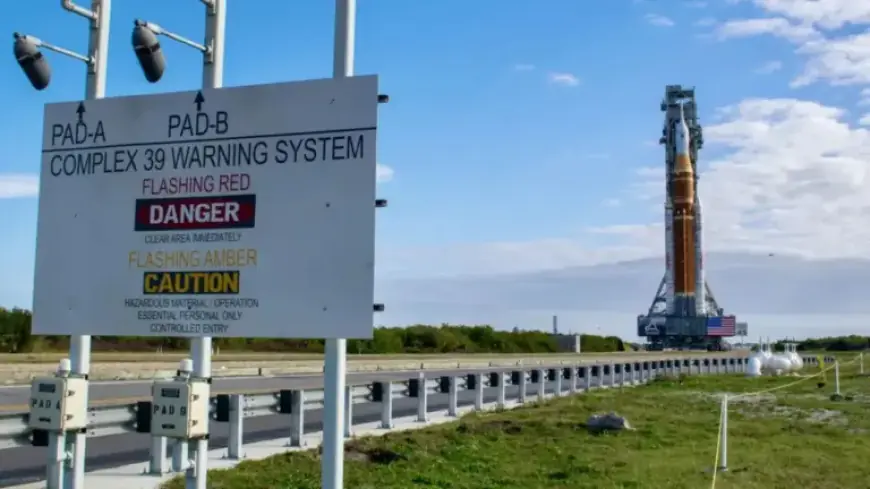
The Artemis 2 wet dress rehearsal has marked significant progress as NASA completed its second planned terminal countdown. This final countdown simulation reached T-29 seconds at 10:16 p.m. EST on February 20, 2026. Following this, a media briefing will be held by NASA at 11 a.m. EST, where they will discuss the outcomes of this critical test.
Key Details from the Artemis 2 Wet Dress Rehearsal
The rehearsal faced initial challenges, including a temporary halt of the countdown due to a “booster avionics system voltage anomaly.” Nevertheless, the countdown was successfully resumed, allowing the team to reach the designated recycle point.
Countdown Progression
- Initial countdown to T-0 was set for 8:42 p.m. EST.
- Automated systems took charge at T-10 minutes for the terminal count, confirming readiness for launch conditions.
- A hold at T-1 minute and 30 seconds was implemented, allowing for checks before moving forward.
Launch director Charlie Blackwell-Thompson emphasized that this process simulates real-world conditions, including scenarios where launches may be scrubbed due to technical issues or adverse weather. Accurate execution of these countdown procedures is essential to verify all systems before the actual mission.
The Closeout Crew’s Role
The Artemis 2 closeout crew departed Launch Pad 39B after successfully closing both the Orion crew hatch and the launch abort system hatch. This step is crucial for ensuring the launch pad’s safety and verifying the Orion spacecraft and SLS rocket’s flight readiness.
Recent Milestones
- The hatch on the Orion spacecraft “Integrity” was successfully closed on February 19, 2026.
- The Artemis 2 closeout team operated within the White Room to secure the spacecraft before its simulation procedures.
- NASA’s teams reached the final fueling configuration, preparing all cryogenic propellant tanks for the countdown.
The Artemis 2 mission is a pivotal phase in NASA’s lunar exploration goals, aiming to send four astronauts on a ten-day journey around the moon. If all goes according to the current timeline, an actual launch could take place as early as March 6, 2026.