






















Board Of Peace Pledges Shift Aid and Diplomatic Pressure — What Changes Next

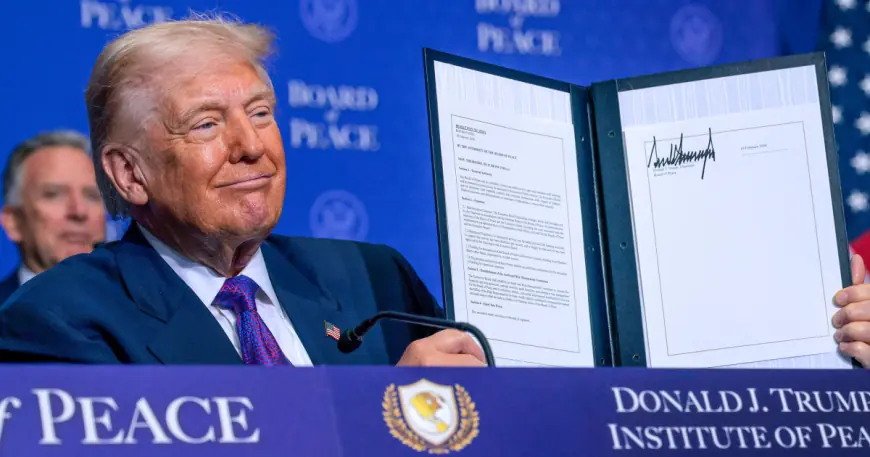
The first meeting in Washington of the newly formed board of peace has already changed the practical terms of international involvement: cash pledges and troop offers were announced, and a U. S. funding claim surfaced that could reshape reconstruction and pressure tactics in the region. What happens next will turn on whether the announced commitments hold up and how other governments react to a parallel diplomatic body.
Board Of Peace commitments alter the immediate resource picture and diplomatic dynamics
Here’s the part that matters: meeting participants announced collective money and stabilization pledges aimed at Gaza, and several countries signaled readiness to put troops into a stabilization force. Those moves shift humanitarian and security calculations from distant planning into actionable commitments, tightening timelines for reconstruction and for any coordinated regional pressure campaigns.
What’s easy to miss is that some high-level funding numbers named at the event are not uniformly corroborated across the available accounts; that gap matters because it leaves the scale and source of promised aid partly unresolved. The White House did not respond to an inquiry about one high-profile U. S. figure mentioned at the meeting, leaving certain details developing.
Meeting details and the contested figures
The gathering in Washington was presented as the inaugural meeting of the initiative and centered on the next stage of a fragile ceasefire in Gaza. Participants included dozens of international officials and heads of state; a subset of attendees were explicitly identified as allies of the convening political leader. Delegates were given promotional items at the event, and U. S. representation included senior administration figures and trusted advisers.
Key, verifiable points from the meeting as reflected in the available material:
- Delegates pledged funds specifically designated for Gaza reconstruction and relief; a combined total of seven billion dollars was cited by more than one account as a committed sum from board members.
- Several countries agreed to deploy troops for an international stabilization force in Gaza, the coverage of the meeting.
- A ten-billion-dollar U. S. commitment was announced at the meeting; that figure appears in one of the briefings but has not been corroborated across the other pieces of coverage and should be treated as developing.
- The convenor warned of potential escalation tied to ongoing negotiations with Iran and suggested a near-term timeline for revealing further plans.
The real question now is how other governments and international institutions will respond to the new commitments and to the possibility of a parallel body exercising pressure or oversight on ongoing diplomatic frameworks.
- Collective pledges have created an immediate pool for relief and rebuilding, but the total still falls short of larger, previously discussed reconstruction estimates.
- Military stabilization offers add a security component that could speed reconstruction if coordinated, or complicate it if they overlap with other actors on the ground.
- Allies raised concern that the new board could complicate the role of established international institutions; that unease is likely to be a key diplomatic friction point.
Micro timeline: the initiative convened its first meeting on a Thursday in Washington; pledges and troop commitments were announced at that meeting; follow-up declarations and potential implementation steps are expected in the near term, with some participants signaling an expedited planning horizon.
The bigger signal here is that this initiative is attempting to convert political theater into deliverable commitments quickly; whether that succeeds will depend on transparent accounting of funds and concrete timelines for troop deployments. If you’re wondering why this keeps coming up, it’s because commitments made in public forums raise expectations that require rapid follow-through.
Key takeaways:
- Board members publicly pledged about seven billion dollars for Gaza relief and reconstruction.
- Several countries offered troops for an international stabilization effort.
- A U. S. ten-billion-dollar figure was announced at the meeting but remains uncorroborated in the other available material and is therefore developing.
- Allied concern about institutional overlap suggests diplomatic tensions that could shape implementation.
- Near-term signals to watch for: formalized funding channels, troop deployment timelines, and clarifications on where any U. S. commitments would be sourced.
The real test will be whether the announced money and military offers translate into coordinated programs on the ground rather than remaining declarations at a high-profile gathering.