




















Trump’s board of peace launches with 20,000-troop plan and $10bn U.S. pledge amid allied wariness

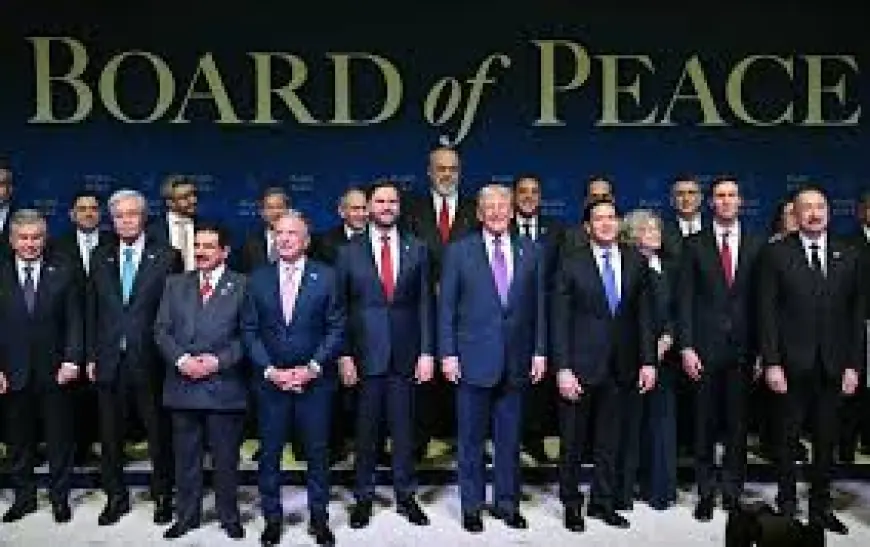
President Donald Trump presided over the inaugural meeting of a new board of peace in Washington, unveiling an ambitious package that pairs a proposed multinational stabilisation force for Gaza with billions in reconstruction funding — even as several major partners declined to participate and questions remain over the plan’s political feasibility.
Troop commitments and an international stabilisation force
Senior U. S. officials put forward a blueprint for a future international stabilisation force (ISF) that would deploy as many as 20, 000 soldiers divided into five sectors across Gaza, beginning with Rafah. A U. S. officer named to command the force outlined intentions to follow that initial deployment with a long-term presence of roughly 12, 000 police officers, with training commitments from regional partners such as Egypt and Jordan.
Trump-aligned leaders at the summit signalled concrete troop offers. Indonesia’s president indicated readiness to provide as many as 8, 000 troops “or more if necessary, ” while several smaller states were named as potential contributors, including Albania, Kazakhstan, Kosovo and Morocco. Organisers also flagged plans for a sizeable on-the-ground infrastructure footprint: contracting records tied to the initiative envisage a military base for roughly 5, 000 personnel on more than 350 acres inside Gaza.
Key operational details remain unresolved. The ISF’s remit, rules of engagement and legal framework were not finalised at the meeting, and reconstruction planners emphasised that any deployment would be conditional on the full disarmament of Hamas — a condition that could limit cooperation from stakeholders focused on political arrangements and civilian governance.
Billions pledged, grand redevelopment vision and political friction
The financial package presented at the summit pairs a headline U. S. commitment with a broader, if uneven, pool of contributors. The United States pledged $10 billion toward reconstruction efforts in Gaza, while a group of regional states were cited as committing roughly $7 billion collectively. The United Nations was referenced as providing $2 billion, and a private partnership tied to global football governance pledged a smaller but symbolic contribution.
Ambitious redevelopment plans were sketched out alongside the funding pledges. Board planners described an effort to clear more than 70 million tonnes of rubble and unexploded ordnance, rebuild the Gaza coastline with major hotel development and other private-sector projects, and reposition the territory as a regional tourist and commercial destination. A billionaire backer leading reconstruction plans framed the proposal as transforming Gaza into a new Mediterranean-style riviera with hundreds of hotels and even potential island developments.
Yet the gathering exposed notable unease among traditional Western partners. Several major European governments declined invitations to join the new body, and the Vatican announced it would not participate. Israel’s prime minister did not attend the event, reflecting domestic political pressures and divergent priorities in Tel Aviv. Critics cautioned that the board’s ad-hoc structure risks duplicating or undermining established international mechanisms unless clearer political and legal roadmaps are put in place.
Board organisers framed the initiative as a rapid-response mechanism to stabilise and rebuild areas scarred by conflict. Supporters argued the combination of security deployments and targeted investments could jump-start recovery. Skeptics, however, warned that without a political agreement to address disarmament, governance and accountability in Gaza, the plan’s security and reconstruction elements could falter or inflame regional tensions.
The board of peace’s first meeting closed with pledges and plans on the table but without the final political architecture that many analysts say will be needed to translate those commitments into durable peace and rebuilding on the ground.