
























Iftar Dua and Global Timetables as Ramadan 2026 Begins: Saudi Arabia Sets Feb. 18 Start After Crescent Sighting

The start of Ramadan 2026 has been confirmed following a national crescent sighting, with Saudi authorities naming Wednesday, February 18, 2026 (ET) as the first day of fasting. As communities worldwide prepare for dawn-to-dusk abstention, practical questions about suhoor and iftar timing — and the moment to recite the traditional iftar dua — are rising as families and mosques publish schedules for local observance.
Crescent sighting sets the calendar: what changed this week
Moon sighting committees announced the visible crescent this week, prompting Saudi Arabia to declare that Ramadan will begin on Wednesday, February 18, 2026 (ET). The announcement follows the long-established practice of using the lunar cycle to determine the start of Ramadan and Eid, a system that makes the holy month shift earlier by about 10 to 12 days each solar year. This seasonal drift means Ramadan moves through different climates and day lengths over decades; planners and worshippers alike treat each year’s start as a moment that depends on visible astronomy as much as calculation.
Ramadan will last either 29 or 30 days depending on the next crescent sighting, and communities will track the moon again at the month’s end to fix the date for Eid. The crescent confirmation this week has triggered the immediate rollout of local suhoor and iftar timetables across many cities, enabling mosques and families to schedule prayers and communal meals.
Fasting hours, suhoor and iftar times — where durations will differ
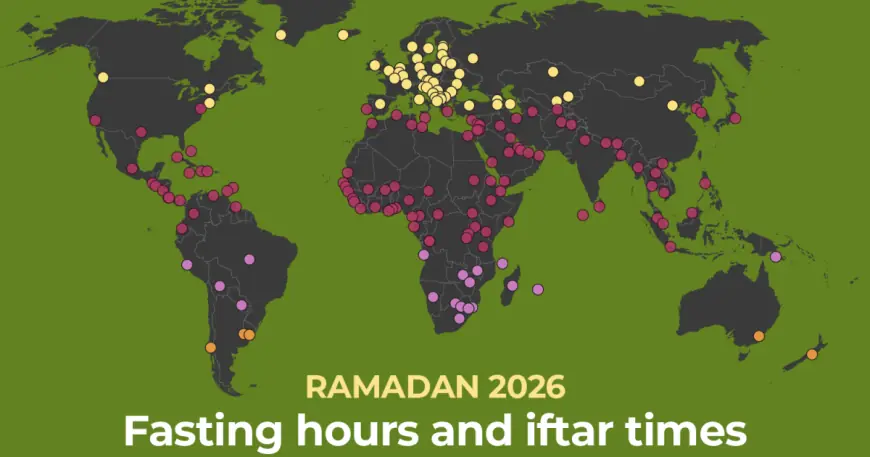
This year’s global span of daylight fasting ranges roughly from 11. 5 to 15. 5 hours depending on latitude. For nearly 90 percent of the world’s population in the Northern Hemisphere, fasting hours are shorter this year; many locations will observe about 12 to 13 hours on the first day, with day lengths slowly increasing through the month. By contrast, communities south of the equator — in countries such as Chile, New Zealand and South Africa — will face longer fasts on the opening day, roughly 14 to 15 hours.
Practical timetables issued by local religious authorities show precise suhoor cut-off times (dawn) and iftar moments (sunset) tailored to individual cities. Many communities emphasize confirming those local times before planning pre-dawn meals and evening gatherings. The difference in fasting duration also affects work and school schedules in some regions, where employers and institutions often provide guidance on shift adjustments and prayer accommodations during Ramadan.
With the lunar calendar shorter than the solar year by about 11 days, Ramadan’s timing will continue to cycle through seasons; in fact, Ramadan will occur twice in 2030, beginning once in early January and again in late December. For now, families and mosques are focusing on the coming weeks and circulating timetables that list suhoor and iftar for both the first and last days of Ramadan 2026 to help observers plan.
Timing the iftar dua and communal practices
Breaking the fast at sunset is a widely observed moment of communal and spiritual significance. The iftar dua — the short invocation many Muslims recite just before or as they begin to eat — is traditionally timed to the actual moment of sunset marked on local timetables. With local iftar times now available, worshippers are being reminded to coordinate the dua and initial bite of food with the clearly marked sunset minute on their city’s schedule.
Community centers and mosques will often have the maghrib prayer immediately following iftar, and many households plan small gatherings that respect public health and local regulations. Observers are also being reminded of the core rules of the fast — abstaining from eating, drinking, smoking and sexual relations from dawn to dusk — and of Ramadan’s spiritual intent to increase taqwa, or consciousness of God, throughout the month.
As Ramadan unfolds, families will watch the night sky again to determine whether the month lasts 29 or 30 days, and the routine of suhoor and iftar timetables will help communities align their daily rhythms with the lunar calendar’s pace.