
























bbc news: Pupils' SEND support to be reviewed at secondary transfer under leaked overhaul


Leaked government plans indicate that children in England with legally recognised special educational needs and disabilities will face formal reviews of their entitlement to specialist support when they transfer from primary to secondary school. The proposals form part of a wider overhaul that would introduce school-led Individual Support Plans for many more pupils while reserving formal Education, Health and Care Plans for those with the most complex needs.
What the proposed changes would do
Under the proposals, children with an Education, Health and Care Plan (EHCP) would be reassessed at the end of primary school and again at later phase changes, such as from secondary to college. New-style EHCPs are planned to be introduced from around 2030, with reassessments starting for pupils moving into secondary from 2029. The intent is to concentrate statutory EHCP entitlement on children with the most severe and complex needs while extending a different form of legally backed support to a much larger group.
Every child identified with additional needs would have a school-drawn Individual Support Plan (ISP) that carries legal status. The new ISP framework could extend promises of support to an estimated further 1. 28 million children who do not currently hold an EHCP, though the precise legal rights attached to ISPs remain undefined. The system redesign places greater emphasis on measurable outcomes alongside specific support interventions.
Impact on families, schools and budgets
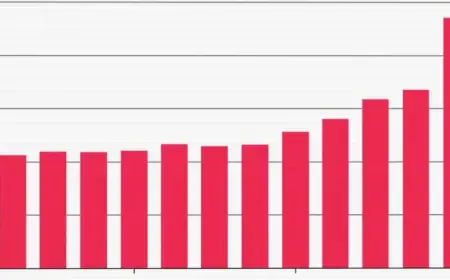
The changes aim to tackle sharply rising costs of high-needs provision. Current figures show hundreds of thousands of children hold EHCPs; when those up to age 25 and those not in school are included, the number rises substantially. Ministers are seeking to control expenditure by narrowing the EHCP cohort, while giving schools commissioning budgets to purchase support locally and partnering more closely with health services to determine needs.
For families, the proposals could shorten waits for help in some cases, with schools offering support sooner through ISPs rather than lengthy processes to obtain an EHCP. However, the reassessment process is likely to be a source of worry for many parents who bought assessments or mounted tribunal challenges under the current system. Some commentators warn that re-evaluation at transition points could result in fewer pupils retaining EHCPs, particularly as the government looks to curb rising costs.
The reforms also propose enhanced roles for health and social care in planning and delivery, and a national framework intended to ensure consistency of practice and independent verification of support decisions. Officials emphasise that children already placed in special schools would not lose their places and that transitions off EHCPs would not occur until the new legal framework is operational.
Next steps and political outlook
The full blueprint for the SEND overhaul is expected to be published shortly as part of a new Schools White Paper. The proposals are politically sensitive and could face substantial opposition in Parliament. Proponents argue the current system is unsustainable and often fails to deliver timely, appropriate help; critics call for caution, warning that reshaping legal entitlements must not reduce support for vulnerable children.
Ministers frame the package as an expansion of rights delivered in a different way: retaining statutory protection for those with the highest needs while extending legal backing for school-based plans that can be actioned more promptly. Senior leaders in education stress the need for proper resourcing and clear guarantees so schools can meet obligations without further burdening families or local services.
As the next parliamentary session begins, parents, school leaders and health partners will be scrutinising the detail of the white paper to assess how the proposed balance between fiscal control and guaranteed support will operate in practice.