









boyle: Why Benfica Champions League tie is pivotal moment for Alvaro Arbeloa

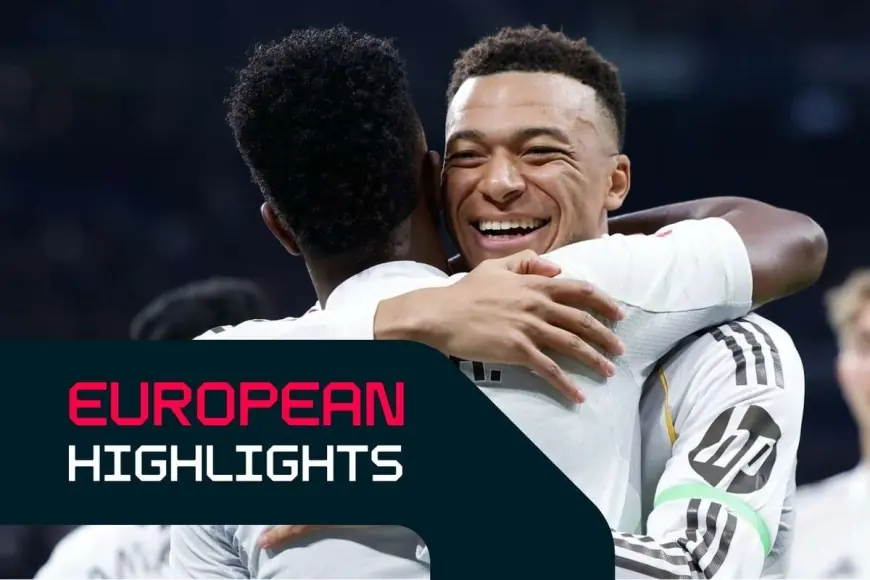
Alvaro Arbeloa's brief tenure at the Real Madrid helm has moved from experimental to existential in the space of weeks. The Champions League playoff first leg in Lisbon against Benfica and the return match at the Santiago Bernabéu on Wednesday, February 25 (ET) will tell whether the 43-year-old's early measures are enough to steady a club that expects European success as standard.
From risky appointment to a fragile calm
Real's decision to hand the job to a coach with no top-level managerial résumé was always acknowledged as high risk inside the club. Arbeloa replaced Xabi Alonso last month, and people close to the club and the coach indicate his deal runs until the end of next season. That breathing room has been offset by a frosty reception from parts of the fanbase and immediate contingency planning by the hierarchy, who quietly examined other options while Arbeloa found his feet.
The immediate returns have been encouraging: six wins in seven matches have lifted Real to the top of La Liga and eased some boardroom nerves. Still, the blemish in that sequence is deeply significant — a 4-2 defeat at Benfica during the group phase that left Real needing a playoff to stay in Europe. That loss is the reason Tuesday's trip to the Estádio da Luz already carries so much weight.
Tactical tweaks, personnel and the revenge narrative
Arbeloa has altered shape and personnel since the Lisbon defeat. The team abandoned the 4-3-3 used in that 4-2 loss — which had Franco Mastantuono, Kylian Mbappé and Vinícius Júnior as a front three — and shifted towards a 4-4-2. Mastantuono has been redeployed into midfield, giving the side more bodies in the centre while allowing Gonzalo García, Vinícius and Mbappé to rotate as forward options.
Defensively, Arbeloa says the change aims to close the midfield corridor and build compactness that both blunts opposition attack and allows counter-attacking transitions. The move has coincided with improved results: Real have looked more cohesive and difficult to break down in La Liga, and the return to form of some key figures — combined with the intermittent spark of younger attackers like García — gives the coach tangible tools for the two-legged scrap with Benfica.
Beyond tactics, the psychological edge is enormous. Benfica's late, dramatic comeback in the decisive league-phase meeting left Real's pride wounded. That memory guarantees both intensity in Lisbon and a boiling atmosphere back in Madrid. Failure to progress would be the club's first absence from the last 16 in more than three decades — an outcome that would instantly reset the expectations around Arbeloa and invite renewed calls for change.
How Arbeloa can keep this job
Practical steps are clear. First, limit the chaos that cost Real in Lisbon by maintaining midfield density and disciplined pressing. Second, manage minutes for the club's frontline — Mbappé and Vinícius are match-winners but must be deployed when their impact is maximised. Third, exploit the squad depth: the emergence of young options like Gonzalo García and the attacking contributions from full-backs add tactical variety that Benfica must prepare for.
Finally, use the Santiago Bernabéu. Even if the tie is tight after Lisbon, the home leg on Wednesday, February 25 (ET) will be decisive not just tactically but politically. A strong performance there would convert the recent run of domestic form into European redemption and convert a fragile calm at the club into confidence. A failure to at least reach the last 16, however, would make Arbeloa's situation precarious again, and the brief honeymoon that followed a promising run of victories could evaporate overnight.
This tie is therefore about more than qualification. It is a referendum on whether a club willing to gamble on a relative novice can see a plan through under pressure — and whether Arbeloa, a former player-turned-coach, can translate those early training-ground adjustments into nights that matter on Europe's biggest stage.