

























nasa asteroid threat: Agency has no ready defense for city-killer rocks

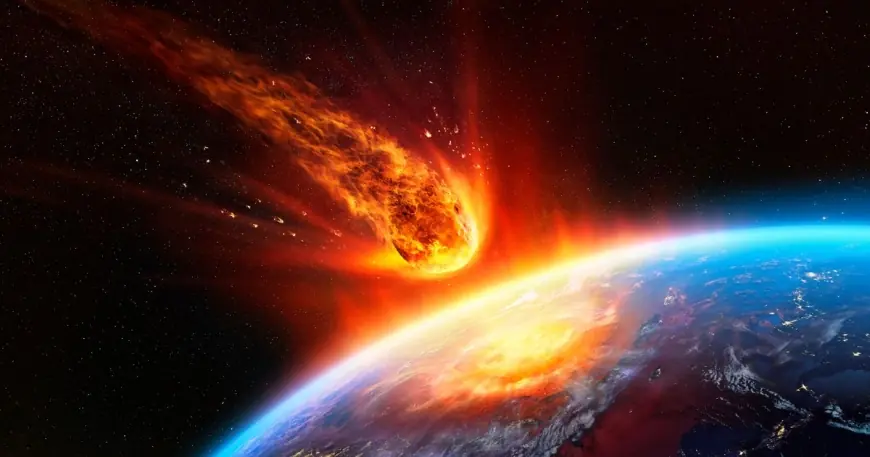
Senior planetary defence officials warned that humanity remains vulnerable to medium-sized asteroids capable of destroying cities or regions, and that the agency has no standing, ready-to-launch system to deflect such an object. The caution came amid renewed attention to gaps in detection and funding shortfalls that leave response options theoretical rather than operational.
How big is the blind spot?
Experts singled out asteroids roughly 140 metres (about 460 feet) and larger as the most worrying class. These are too small to cause global extinction but large enough to obliterate a city or trigger widespread regional devastation. Mission leaders estimate there may be tens of thousands of these mid-sized objects in near-Earth space, and current surveys have located only a fraction.
DART mission chief Dr. Nancy Chabot warned that about half of the 140-metre class are unlocated and that the capability demonstrated by the 2022 Double Asteroid Redirection Test — in which a spacecraft intentionally impacted an asteroid to nudge its orbit — exists only as a proof of concept, not as a standing, ready-to-use system. Planetary Defense Officer Dr. Kelly Fast highlighted that small meteors strike frequently and large, extinction-level bodies are largely mapped; it is the intermediate-sized objects that keep experts awake at night.
Finding these objects takes time even with advanced telescopes. The process of cataloguing, tracking, and characterising a potential threat requires sustained observing campaigns, follow-up measurements, and investment in both ground- and space-based assets. Without that investment, officials say lead times for detection could be too short to mount an effective deflection campaign.
Why there is no standby deflection fleet
The successful impact demonstration in 2022 proved the principle of kinetic deflection, but it did not create a ready-made rapid-response capability. Building and maintaining a fleet of spacecraft that could be launched on short notice would require continuous funding, dedicated infrastructure, and prepositioned technology — elements that are not in place.
Officials pointed to budget constraints and competing priorities as the principal reasons the capability remains dormant. Even if a threatening object were identified with enough warning, designing, building and launching a mission to alter its trajectory can take years. That timeline is why detection is critical: find a hazardous object early enough and there is a realistic path to prevent an impact. Detect it late, and options narrow to evacuation and civil defence rather than interception.
In addition to deflection hardware, tracking systems need expansion. Larger surveys and faster follow-up are necessary to close the detection gap. Investments in upgrades to telescopes, additional dedicated survey instruments, and more automated processing to flag newly found objects would accelerate the discovery rate and increase warning times.
The broader picture: more than asteroids
The worry about undiscovered mid-sized asteroids is joined by attention on rare but large visitors from the outer solar system. A recently observed comet has rekindled debate about unpredictable, distant objects that brighten rapidly as they approach the inner solar system. While long-period comets are easier to spot when they become active, they can still present surprise threats if their orbits are poorly constrained.
Officials urged that planetary defence be treated as an ongoing, funded element of space activity rather than an episodic response to public concern. The technical tools for deflection have been proven, but the organisational backbone — a funded, ready force of detection and response — has yet to be built. Without that, a potentially preventable catastrophe could arrive with little warning.
For now, the message is stark: the science is advancing, the options for action exist in principle, but the combination of incomplete surveys and a lack of standing response capability leaves a gap between knowledge and safety.