










FCC Chair Brendan Carr says media were 'lied to' in Stephen Colbert spat over james talarico

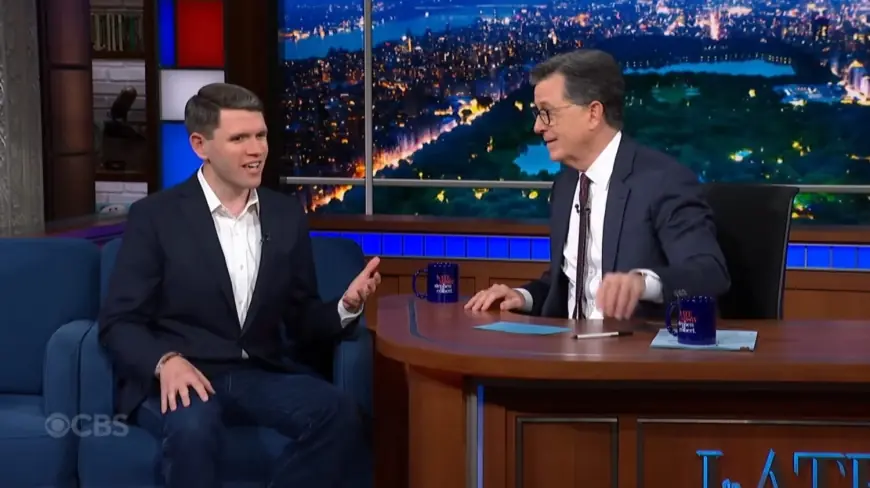
Federal Communications Commission chair Brendan Carr on Wednesday (ET) blasted journalists for what he called being misled over a late-night host's claim that a network blocked an interview with james talarico. Carr defended the agency's enforcement of longstanding equal-time rules and confirmed an enforcement action into a separate daytime talk appearance by the Senate candidate. The episode has produced millions of online views and a surge in campaign donations.
Carr: enforcement, not censorship
Speaking at an agency meeting, Carr rejected the notion that the regulator or the federal government had censored the interview. He said the FCC is simply applying the equal-time provisions of the Communications Act of 1934, which require broadcasters to offer comparable airtime to other legally qualified candidates when a station gives significant broadcast time to one contender.
"If you have a legally qualified candidate on, you have to give comparable air time to all other legally qualified candidates, and we're going to apply that law, " Carr said. He characterized the media narrative around the host's complaint as misleading and chastised journalists for running with those claims without fuller context.
Carr added that broadcasters can seek exceptions for bona fide news interviews, but said the network involved had not requested such a waiver. He also warned that individual stations and licensees remain responsible for programming choices that fail to comply with FCC rules and could face potential liability.
Political fallout: fundraising and viewership surge
The controversy quickly translated into political momentum for james talarico. His campaign announced it raised $2. 5 million in the 24 hours after the interview became public, and the conversation around the episode drove millions of views for the segment that was published online rather than aired in the late-night broadcast.
The host later aired the full interview online, where it amassed a multiyear-large audience in a matter of days. Campaign officials framed the fundraising haul as a defense of free speech, and the episode has injected fresh attention into a Democratic primary that will determine who challenges the eventual Republican nominee in November.
Another candidate in the same primary weighed in, saying the federal government had not shut down the segment and that an internal decision — not a direct government order — had shaped how the interview was handled. That remark underscored the continuing dispute over where responsibility lies: with networks' legal teams, broadcasters' risk calculations, or the regulator's interpretation of its rules.
Investigations and partisan divisions at the FCC
Carr confirmed the agency opened an enforcement action into a daytime talk program over an appearance by talarico earlier this month, but he declined to provide further details about the nature of the inquiry. His comments came alongside a sharper partisan split inside the commission.
The agency's lone Democratic commissioner criticized the focus on equal-time mechanics and framed the episode as part of a wider pattern of the current administration using the regulator to go after content it dislikes. That dissent signals the dispute may not end with a single enforcement action and could become another flashpoint in broader battles over media oversight and political speech.
For broadcasters, the debacle highlights renewed uncertainty about long-standing practices: late-night and daytime shows had operated under an assumption that host-driven interviews with political figures would generally qualify for exceptions. The dispute now raises questions about whether those informal norms will persist or whether broadcasters will change how they handle candidate appearances ahead of the 2026 midterm contest.