


















Aftermath of tony clark’s Exit: Candidates Vie to Lead Players Union

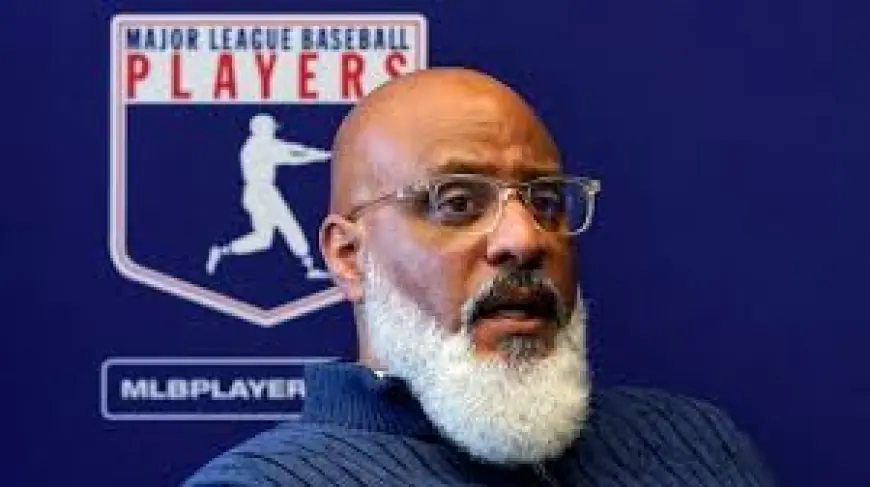
Tony Clark’s sudden resignation on Tuesday has triggered rapid, often contentious, maneuvering within the players’ union as leaders and player representatives weigh interim options. While deputy executive director Bruce Meyer is widely viewed as a front‑runner, a number of players and agents are pushing for a more deliberate search for the next leader with the collective bargaining agreement not set to expire until Dec. 1 (ET).
Front‑runners and contested choices
Bruce Meyer emerged immediately as a top candidate, but the players’ executive board stopped short of formally naming him interim head after a conference call Tuesday. That hesitation highlighted the depth of division over his suitability: admired by some for his aggressive negotiating posture, criticized by others for a perceived lack of charisma and consensus‑building skills.
Beyond Meyer, the field includes the union’s general counsel, Matt Nussbaum, and a familiar figure from an earlier era, Don Fehr, who led the union for more than two decades. Active former players who served in union roles — including Daniel Murphy and Andrew Miller — have also been mentioned as possible options, reflecting a desire among some members for a leader with recent playing experience and internal credibility.
Agent influence is a central factor in the debate. A high‑profile agent has publicly backed Meyer, arguing that the union’s bargaining preparation has been continuous and that existing legal counsel and leadership can maintain long‑standing positions. That endorsement has, in turn, driven concern among some players and agents that promotions could be rushed under external pressure rather than arriving from broad player consensus.
Meyer, who was hired in August 2018 to add toughness to the union’s negotiating team, made his first public comments since the resignation while at the Kansas City Royals’ camp in Surprise, Ariz., on Wednesday (ET), declining to directly answer whether he seeks the top job. His reluctance to stake out a clear position may both ease and inflame tensions: it gives the board room to deliberate, but it also leaves open questions about succession planning and leadership continuity.
Power dynamics and next steps
The union’s decision process is playing out amid a flurry of meetings. Several teams called meetings Wednesday morning (ET) ahead of a possible vote later that day, underscoring the urgency felt by some player representatives to resolve leadership quickly. Yet many players and agents argue there is time for a wider search given that the next bargaining deadline does not arrive until Dec. 1 (ET).
Internal governance adds complexity. The union’s eight‑player executive subcommittee includes clients of powerful agents, and those ties are shaping alignments. Two high‑profile pitchers who are represented by a prominent agent are members of that subcommittee, and other clients of the same agent serve as club player representatives, creating natural blocs of influence within the union’s decision structure.
Clark’s resignation capped a four‑day sequence that began when an internal inquiry uncovered an inappropriate relationship with his sister‑in‑law, who had been a union employee since 2023. That finding prompted a rapid leadership vacuum and a scramble to stabilize operations, particularly around bargaining preparation and member relations.
The path forward will require balancing competing priorities: the desire for continuity in bargaining posture and legal strategy, the need for a leader who can unify a fractured membership, and the political reality of agent and club allegiances. Some players favor elevating an experienced in‑house lawyer to ensure technical continuity; others want a visible former player or a veteran executive who can re‑establish trust and consensus across the membership.
For now, the union remains in interim mode, with decisions about leadership likely to be driven as much by internal politics and coalition building as by calendar. With months until the next collective bargaining deadline, the debate over process — hurried appointment versus extended search — may matter as much as the final choice of leader.