

























Su Yiming marks 22nd birthday with gold in 2026 winter olympics men's snowboarding slopestyle

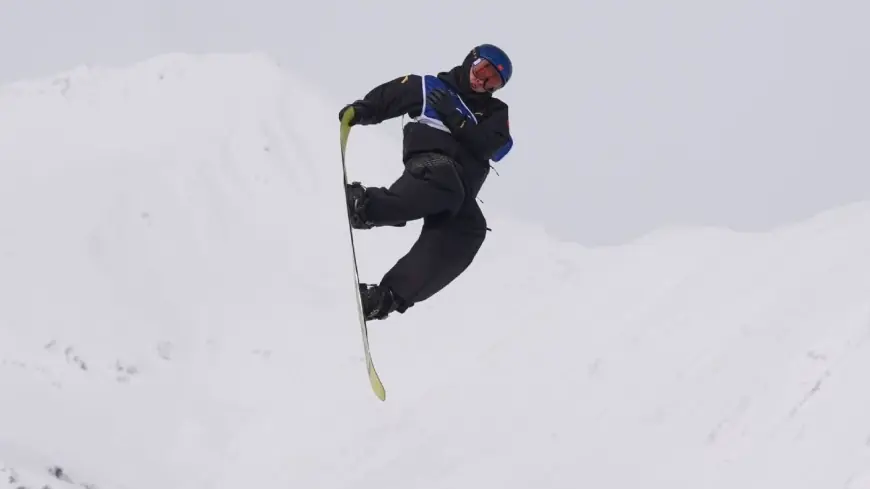
LIVIGNO, Italy — Wednesday, February 12, 2026 (ET) — Su Yiming delivered a birthday performance to remember, claiming gold in the men's slopestyle final at Livigno Snow Park and delivering China its first gold of the Milan Cortina Games. Su's opening run of 82. 41 held up across the field, and the 22-year-old celebrated on the podium after a clean, controlled day on the rails and jumps.
Gold on his birthday: a composed, clean campaign
Su, who turned 22 on Wednesday, converted his first run into a winning mark and remained the only finalist to complete three full runs without major mistakes. His score of 82. 41 proved just enough after several challengers pushed the field but failed to better it. Overcome with emotion at the bottom of the course, Su wiped away tears as he watched the final riders attempt to displace him.
The victory is Su's fourth Olympic medal across two Games. He added this slopestyle gold to a recent big air bronze from earlier in the Livigno competition and to his Beijing 2022 gold in big air and silver in slopestyle. Reflecting on the moment, Su called the outcome the perfect birthday gift and praised the support of family and coaches who were in attendance.
Podium battles, breakthrough bronze and veteran setbacks
Japan's Taiga Hasegawa edged into the silver position with an 82. 13, finishing narrowly behind Su after establishing a strong early mark. The final podium spot was claimed by 22-year-old American Jake Canter, who produced a late, aggressive run that vaulted him up the leaderboard. Canter landed a massive backside 1980 on the final jump — a trick he had not practiced in more than a week — and posted a 79. 36 to take bronze, his first Olympic medal.
Several headline riders fell short of the podium. A decorated veteran, Mark McMorris of Canada finished eighth after a difficult build-up that included a concussion during training and a hard fall in the final. McMorris acknowledged the emotional toll but expressed gratitude simply to have competed. Former Olympic champion Red Gerard of the United States put together a solid first run that held for sixth after later mistakes, while other finalists produced scattered highs and lows across their three attempts.
The Livigno slopestyle course tested competitors with three rail features followed by three large jumps. Judges evaluated riders on creativity, execution and overall flow, with each competitor taking three attempts and only the top score counting toward the final standings. Early strong opening runs from Su and Hasegawa set the tone and left the remainder of the field to chase them under increasing pressure.
Beyond the medals, the event delivered storylines of comeback, risk and youth rising. Canter's willingness to attempt a technically demanding backside 1980 under Olympic pressure underscored a willingness among the next generation to push boundaries. For Su, the result was both a personal milestone and a moment of national significance: the first gold for China at these Games and confirmation that his Olympic legacy continues to grow.
Final standings highlighted a mix of established stars and emerging talent. Su Yiming stood atop the podium, Taiga Hasegawa took silver, and Jake Canter completed the podium with bronze — a dramatic finish to a slopestyle final that combined precision rail work and high-risk aerials under Livigno's winter light.