





















New Orleans revels on fat tuesday as Carnival season reaches a raucous finale

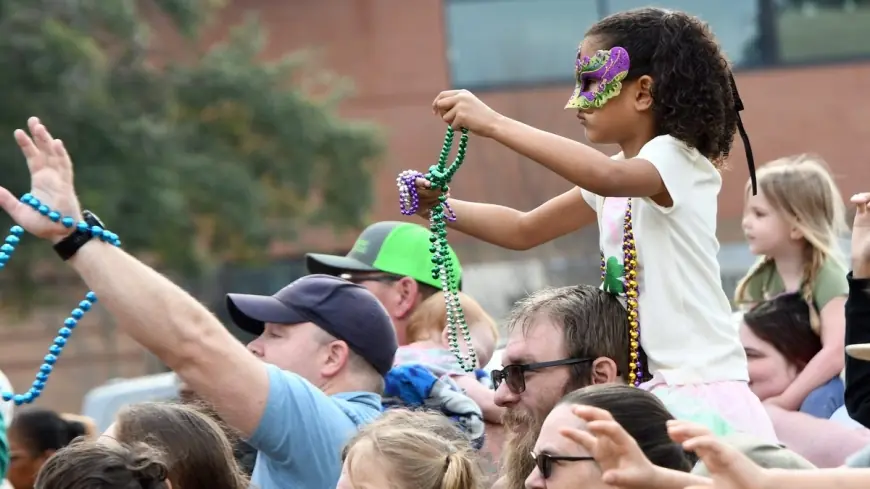
On Tuesday, Feb. 17 (ET), New Orleans erupted in color, music and crowds for Mardi Gras — commonly known as fat tuesday — as the weekslong Carnival season closed with a final day of indulgence before Ash Wednesday. The city’s historic parade routes filled early with costumed revelers, ladders and coolers in place for a long day of throws, floats and pageantry.
Scenes from the streets of New Orleans
People leaned from wrought-iron balconies and shouted the familiar plea, "Throw me something, Mister, " as floats rolled down St. Charles Avenue. Marching bands, majestic floats and krewe riders moved through neighborhoods while dancers and musicians kept the city vibrating with brass and percussion. Crowds arrived at sunrise, staking out spots with chairs and ladders to get higher vantage points for the coveted throws: plastic beads, doubloons, stuffed animals, cups and toys that have become central to the day’s ritual.
One parade tradition drew particular attention: Zulu coconuts, hand-decorated and glittering, remain one of the most sought-after items. A reveler dressed as a crawfish, claws and all, caught a coconut and waved it high as gold glitter on the husk flashed in the sun. Costumes ranged from sequined show-stoppers to elaborate homemade ensembles; a woman in an Egyptian-inspired outfit, complete with a gold headpiece and translucent cape, described the day as a break from the everyday. "The world will be here tomorrow, but today is a day off and a time to party, " she said, speaking to the spirit that brings residents and visitors back year after year.
Tradition, food and statewide celebrations
Fat Tuesday is the climax of Carnival, a final day of feasting and revelry before the Christian observance of Lent. In New Orleans, elaborate masked Indian costumes and beaded, feathered headdresses paraded through the French Quarter, while private balls and community events kept the festivities moving across the city.
Beyond the urban spectacle, Carnival traditions unfold across the state. Rural Central Louisiana hosts the Courir de Mardi Gras, a folkloric run where costumed participants go house to house begging for ingredients and chasing live chickens for a communal gumbo. Gulf Coast cities and towns mark the day with parades and parties, and worldwide counterparts carry on their own customs — from samba in South America to pancake races and competitions elsewhere that echo the idea of using rich foods before a period of fasting.
Notable incidents and public safety on a high-energy day
High-energy celebrations also bring incidents that draw attention. Footage captured an arrest involving an actor during the day’s events, a reminder that crowds and alcohol can complicate public-safety efforts. Officials and parade organizers have long balanced the freewheeling spirit of fat tuesday with crowd control, medical stations and law-enforcement presence to keep processions moving and spectators safe.
Despite the occasional disturbance, the mood remained overwhelmingly jubilant. Longtime residents and newcomers alike described Mardi Gras as a magnetic event — a day when ordinary routines pause and the city’s centuries-old culture is put on full display. "Once you have experienced Mardi Gras, how do you not come back?" one reveler asked, capturing the recurring pull that keeps Carnival alive each year.
As float lights dim and confetti settles, New Orleans and other communities across the region shift from celebration to preparation for Ash Wednesday, marking the end of Carnival and the start of Lent. For now, the streets echoed with one clear message: let the good times roll.