












Macron-Modi Bombay Meeting Elevates Rafale Talks as India Pushes for Higher Local Content

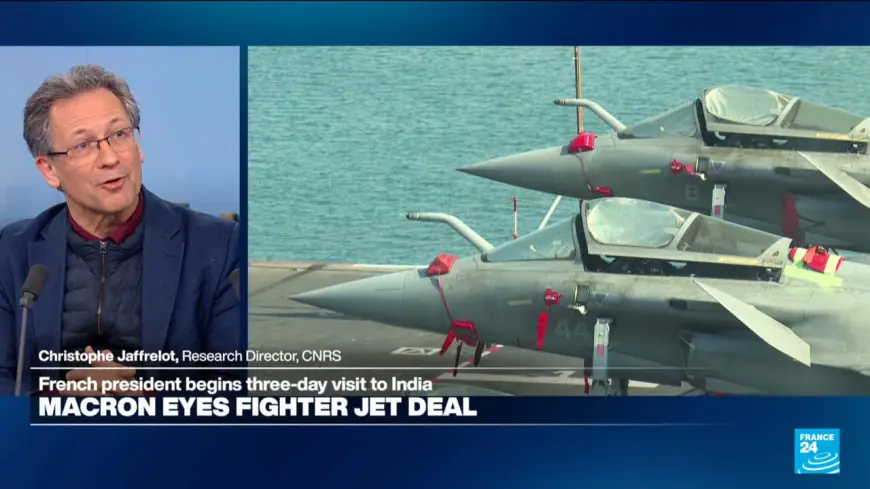
French President Emmanuel Macron's visit to India on Feb. 17, 2026 (ET) tightened the spotlight on defence cooperation, with New Delhi pressing Paris for greater India-made content in any future Rafale fighter-jet deal. The summit in Mumbai underscored a broader push to deepen economic and strategic ties, from aerospace assembly lines to multibillion-dollar defence negotiations.
Rafale negotiations and the India-made component demand
Defence talks during the visit centered on the possibility of a substantial follow-on Rafale purchase and a clear Indian demand: raise the percentage of components manufactured in India. India's defence leadership has made localisation a central condition for future procurements, aiming to expand domestic supply chains and capture higher value from any expanded jet deal.
French and Indian officials discussed options for industrial offsets, local production lines and transfer-of-technology arrangements that could anchor follow-on aircraft work on Indian soil. Conversations touched on the scale of a potential package under consideration — figures that would reshape industrial partnerships and sustain domestic aerospace employment — and how best to integrate Indian suppliers into the Rafale supply chain.
Observers note that a pivot away from traditional suppliers would require careful balancing of strategic relationships. That recalibration includes finding ways to address existing defence relationships with other countries while accelerating new procurement channels. The defence minister conveyed clear expectations that future contracts ought to deliver not just aircraft but an expanded ecosystem of India-made components and long-term maintenance hubs.
Industrial cooperation and new assembly initiatives
The visit also celebrated tangible industrial progress. Leaders jointly inaugurated a final assembly line for H125 helicopters, marking the country’s first private-sector helicopter manufacturing facility. The facility is a milestone for aircraft manufacturing in India and a diplomatic signal that economic cooperation is moving beyond transaction-level sales to deeper production partnerships.
Macron framed the relationship as accelerating in response to global uncertainty, while New Delhi emphasized its aim to attract capital and strengthen supply chains. For France, an expanded industrial footprint in India offers a strategic foothold in the Indo-Pacific and a long-term role in regional security and technology collaboration. For India, the priority is clear: secure high-technology projects that boost domestic manufacturing and create jobs.
Strategic implications and next steps
Strategically, the deepening Franco-Indian engagement reflects wider shifts in global alignments and an Indian effort to diversify defence partners. Any large-scale Rafale order that includes significantly higher India-made content would signal a closer defence-industrial relationship and could accelerate transfer-of-technology arrangements across other platforms.
Officials from both capitals signaled plans to continue technical-level talks and to refine industrial commitments in the weeks ahead. Negotiations will need to resolve commercial questions — pricing, timelines, offset obligations and certification pathways for locally produced components — before any formal contract is announced. Diplomats and defence planners will also weigh the geopolitical dimensions of a major deal that reshapes regional procurement patterns.
The outcome of these discussions will be watched closely by domestic industry and international partners alike. For New Delhi, the priority remains leveraging major procurements to build a sustainable defence-industrial base. For Paris, the goal is to convert diplomatic momentum into enduring industrial partnerships that strengthen both nations’ presence in a more contested global landscape.