
























pam bondi Criticized for Conduct, DOJ Failures After House Hearing on Epstein Files

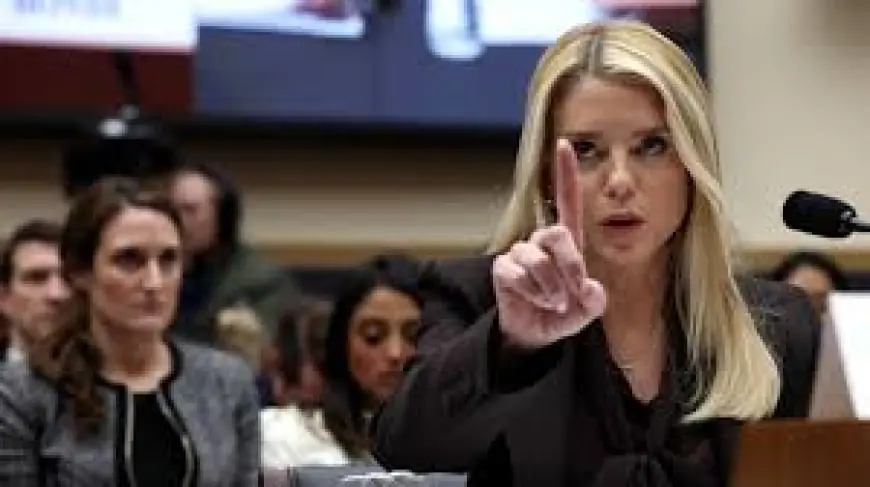
The Attorney General’s appearance before the House Judiciary Committee this week devolved into a spectacle that compounded anger over how the Justice Department handled the release of files tied to Jeffrey Epstein. Survivors who attended the hearing were left demanding accountability as lawmakers and observers weighed in on a mix of personal attacks, procedural failures and apparent protection of elite interests.
Confrontation in the hearing
At the hearing, the Attorney General declined to apologize to victims who have pursued clarity and justice for years, and instead struck an aggressively partisan tone toward committee members. She traded barbs with lawmakers from both parties, at one point using a schoolyard taunt to describe a ranking member as a “washed-up, loser lawyer” and deriding another lawmaker as a “failed politician. ” In an odd aside, she pointed to stock-market figures during a line of questioning she rejected.
The exchange left victims in the gallery — many of whom have said they were already betrayed by the legal system — visibly unsettled. Survivors and advocates at the hearing argued that the department’s public posture and demeanor did little to restore trust after a controversial file release that many view as careless at best and damaging at worst.
Mishandled releases and damage to victims
The department’s release process has been widely criticized for failing to protect privacy. In the course of publishing previously sealed records, the Justice Department uploaded dozens of unredacted images, including nude photographs of young women who may have been underage at the time the pictures were taken. The presence of explicit imagery in publicly accessible documents was immediately condemned by survivors and legal advocates as a profound breach of the duty to safeguard victim dignity.
Officials had a clear mandate: make documents available where appropriate while shielding victims, ongoing investigations and legitimate security concerns. Instead, the release has been described by observers as chaotic and negligent, producing fresh harm to people who had already endured years of trauma. The mishap weakened claims that transparency was the guiding principle behind the disclosure and fueled accusations that the process prioritized spectacle over survivor protection.
Redactions, privilege and lingering questions
Beyond the unredacted images, the released materials also raised questions about selective withholding. Reviewers who examined the files found that a large portion of potentially relevant content remains redacted, including names tied to wealthy and powerful men. Approximately four in five pages of sensitive material were still obscured, leaving the public with an incomplete picture and prompting skepticism about whether redactions are being used to shield influence rather than to protect privacy or ongoing probes.
The mix of careless exposure of victims and careful protection of certain identities has led critics to call the disclosure a weaponized document dump: an exercise in appearing transparent while preserving the privileges of a merited few. Lawmakers who pushed for the release argued that it was a step toward accountability; survivors and some oversight members say the execution betrayed that purpose and deepened mistrust in the department’s intentions.
In the wake of the hearing, questions remain about internal controls, review processes and who within the Justice Department authorized the release in its present form. Calls for a thorough, victim-centered review of the release procedures are likely to grow louder as advocates press for reforms designed to prevent similar breaches. For now, the episode has become another flashpoint in a broader debate about how institutions handle sensitive material and whom they ultimately serve.