
























Chiefs Face Multiple Risks if They Pursue tyreek hill Reunion

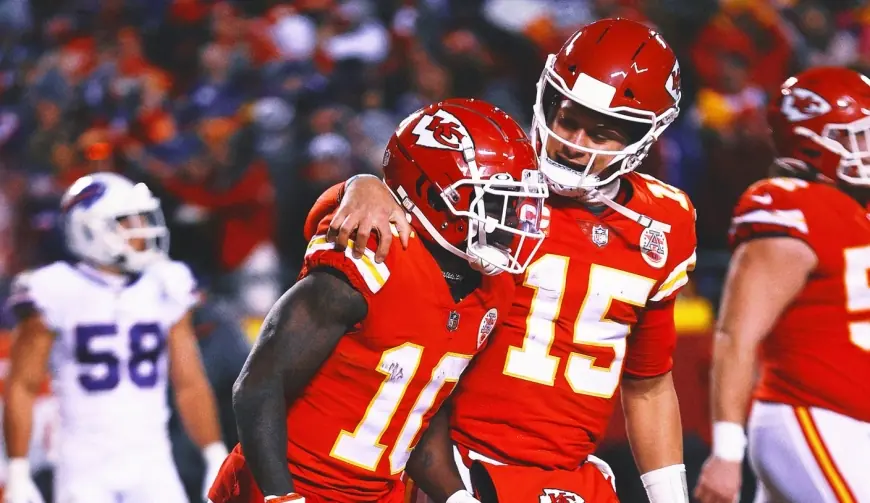
The sudden availability of veteran wide receiver tyreek hill reignited questions about a potential reunion with the Kansas City Chiefs. But with a major knee injury, an open league review of his conduct and a significant salary-cap shortfall, analysts and former players are urging extreme caution. Reuniting with a former star may feel right emotionally, but the move carries several practical and reputational risks that could complicate the Chiefs' offseason priorities.
Injury and contract uncertainty create a high-risk proposition
Hill is recovering from an ACL tear and a dislocated knee — injuries that raise legitimate doubts about how quickly, and how fully, he will return to prior form. He will be entering his 32nd year, an age when recovery timelines and performance ceilings become more unpredictable for elite skill players. One analyst estimated that the market value for Hill next season might land around $18 million, a far cry from his previous top-tier earnings but still a substantial investment for a player coming off a significant knee reconstruction.
Even if Hill is willing to accept a reduced salary, the question for the Chiefs is whether that contract buys them a reliably explosive playmaker or another roster uncertainty. The club’s receiving corps underperformed last season: no wide receiver on the roster cleared 600 receiving yards, and the group contains several open questions about consistency and upside. Betting on a formerly elite veteran returning to peak form is inherently speculative and could crowd out opportunities to invest in younger, more durable options.
Salary-cap pressure and roster priorities point elsewhere
Estimated figures place the Chiefs roughly $55 million over the salary cap entering the offseason, leaving little room for headline signings without significant restructuring. That fiscal reality forces difficult choices: pursue a high-profile reunion that could demand immediate cap relief and future guarantees, or prioritize re-signing core contributors who underpin the roster’s balance.
Team-building experts argue the safer path is to focus on retaining key pieces and addressing needs with cost-controlled additions. The Chiefs face important free-agent decisions at positions that may offer higher return on investment, including a star tight end whose future will dramatically affect offensive planning. Losing fight for depth or overpaying for a single veteran receiver could hobble flexibility across the roster when cheaper, dependable options exist.
Off-field review adds a complicating layer
Beyond the on-field and financial considerations, the league has an ongoing Personal Conduct Policy review involving Hill. The probe remains open, and prior incidents in his past — including a 2015 guilty plea to a domestic assault charge that resulted in dismissal from a college program — would be factored into any disciplinary decision. New allegations emerged last year that prompted the current review.
Any team that signs Hill would inherit the possibility of future league discipline, which could result in missed games and distracting media attention. That risk is not just a short-term availability issue; it can affect team culture, public relations, and the allocation of resources during the season. For an organization managing a tight cap and several pending roster decisions, adding an asset with potential suspension risk compounds uncertainty.
Putting the pieces together, the calculus is clear: bringing back an iconic former player can generate excitement, but nostalgia alone is a poor substitute for strategic roster planning. With medical, financial and conduct-related question marks all stacked against a reunion, the prudent approach for the Chiefs appears to be focusing on stabilizing core contributors, protecting salary-cap flexibility and targeting lower-risk upgrades at receiver rather than chasing a headline reunion.