























Why the Chiefs Should Think Twice About a tyreek hill Reunion

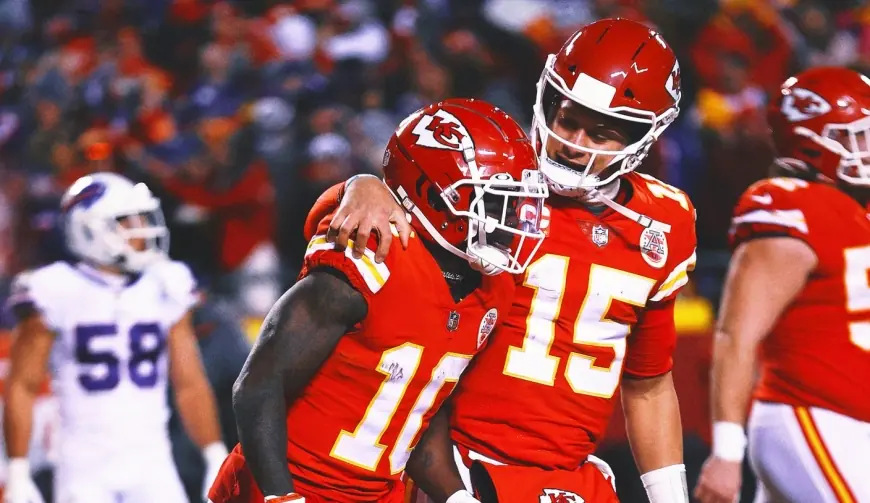
Tyreek Hill’s sudden availability has reignited reunion chatter, but multiple factors make a return to Kansas City a risky proposition. Between a serious knee injury, an active league conduct review and tight salary-cap math, the move would be far from a straightforward solution for a team already wrestling with depth and contract questions.
Medical and conduct clouds: two big unknowns
Hill is recovering from an ACL tear and a dislocated knee, an injury profile that typically prompts caution from teams weighing long-term investments. He’s set to turn 32 in March, and while his resume includes elite production, the post-injury projection is uncertain. Some evaluators estimate a one-year market value near $18 million for next season, a figure well below his recent earnings but still a meaningful commitment for a player coming off major knee surgery.
Compounding the medical uncertainty is an ongoing Personal Conduct Policy review by the league. That investigation remained open as of Tuesday (ET), and its outcome could lead to disciplinary measures that would affect availability. Any team that signs Hill would be accepting multiple layers of risk: whether he returns to peak form and whether he could face league discipline during the season.
There’s also a painful history that factors into any personnel calculus. An earlier off-field incident from 2014 led to a 2015 guilty plea for domestic assault and battery by strangulation, and recent allegations brought new scrutiny and prompted the current probe. Those elements add reputational and roster-availability considerations teams must weigh before offering a contract.
Cap realities and the Chiefs’ roster picture
The financial landscape is another hurdle. The Chiefs enter the offseason carrying significant salary-cap pressure—roughly $55 million over the limit—leaving little room for high-profile additions without difficult moves. Even if Hill accepts a steep pay cut from his last contract, committing anything near the projected mid-teens in millions would force the team to sacrifice depth or restructure deals elsewhere.
Kansas City’s wide receiver room is admittedly thin on dependable production. No receiver on last year’s roster topped 600 receiving yards, and several veterans are headed for free agency. Yet that thinness may push the team toward lower-risk, lower-cost targets rather than gambling on an impact player whose availability and performance are both in question.
Front-office priorities may also center on stabilizing veteran core pieces. A tight end who has served as a security blanket and a young linebacker emerging as a defensive building block are both set to reach free agency, and keeping proven contributors could offer more immediate return on investment than chasing a reunion driven by nostalgia.
Why nostalgia shouldn’t drive the decision
There is a powerful emotional case for a reunion: Hill was a game-changing playmaker during his previous tenure and brought a unique threat to the offense. But nostalgia can obscure cold roster math. The quarterback is returning from significant lower-body surgery himself, and surrounding him with too many unknowns could hamper consistency.
Analysts advising the franchise stress that the organization should prioritize certainty—retaining proven teammates and targeting affordable, dependable additions—over chasing a headline reunion. For a team balancing cap constraints, pending free agents and the need to shore up multiple positions, the prudent path may be incremental, not dramatic.
Ultimately, signing Hill would be a high-variance play. If he returns to form and the conduct review produces no long-term impediment, the upside is obvious. But the combined medical, disciplinary and financial risks make a reunion a gamble the Chiefs may be better off avoiding as they try to reset a roster that finished 6-11 last season.