

















New Orleans crowds celebrate fat tuesday as Carnival reaches its climax

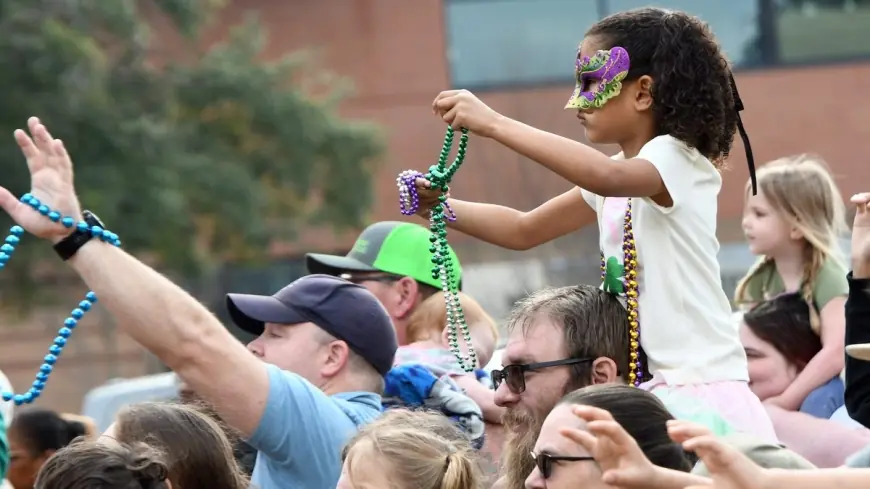
On Tuesday, Feb. 17 (ET), revelers packed New Orleans streets for Fat Tuesday, the final, indulgent day of Carnival before the start of Lent. Wrought-iron balconies overflowed with people calling out the familiar plea, floats rolled down St. Charles Avenue, and costumes in purple, gold and green turned the city into a moving tableau of music, spectacle and tradition.
Parades, throws and costumes dominate St. Charles Avenue
From sunrise, crowds staked out vantage points with chairs, coolers and ladders to get the best view. Marching bands provided a soundtrack while massive floats passed by, showering the sidewalks with the parade’s signature “throws” — plastic beads, candy, doubloons, cups, small toys and stuffed animals. One of the most sought-after items, hand-decorated coconuts from a historic krewe, glittered as a costumed reveler waved his prize overhead.
Costumes ran the gamut from sequined showpieces to homemade creations that capture the city’s irreverent spirit. Black masking Indian-style regalia, with beaded costumes and towering feathered headdresses, shared space with more whimsical outfits — a celebrant dressed as a crawfish, complete with red fabric claws, was just one of the colorful sightings. Makeup and glitter were as prominent as costume construction, with many attendees embracing full theatrical looks for the day.
The atmosphere was one of unapologetic celebration. People danced in the streets, raised drinks that ranged from morning cocktails to elaborate mixed concoctions, and traded shouts with riders on passing floats. The communal energy remained upbeat even as some moments briefly drew extra attention and brought a pause to the festivities.
Tradition and variety across the Gulf Coast and beyond
While New Orleans is the epicenter for Fat Tuesday revelry, celebrations ripple throughout the region. Rural parades follow long-standing customs, including the Cajun Courir de Mardi Gras, where costumed participants go house to house collecting ingredients and chasing live chickens that later become part of communal gumbo. Gulf Coast cities stage their own processions and parties, and Carnival-style events are observed in other countries with distinct local flavors.
The days leading up to Fat Tuesday are filled with related pageantry: exclusive balls, neighborhood parades and weekend parties set the stage for the grand finale. In smaller towns, quirky competitions and community rituals can attract international interest, highlighting the wide range of ways people mark the end of Carnival and prepare for the quieter season ahead.
A final day of indulgence before Lent
Fat Tuesday traditionally represents a last chance for indulgence before Ash Wednesday ushers in Lent, a period of fasting and reflection for many Christians. For longtime residents, the day combines ritual and celebration. One local attendee, wearing an Egyptian-inspired outfit and elaborate makeup, described Fat Tuesday as a break from everyday life — a day to revel before the world resumes its usual pace.
For tourists and first-time visitors, the day offers a concentrated experience of the city’s culture: elaborate floats, the cacophony of bands, and the communal hunt for throws. For locals who return year after year, the continuity of tradition — the same street corners, the same sounds, the recurring anticipation of coveted items — keeps them coming back. Once the final float rolls by and the beads stop flying, the city begins the transition from Carnival’s exuberance to the quieter, reflective weeks that follow.