





















When is Ramadan? 2026 start, end dates for Muslim holy month

Muslim communities worldwide are preparing for Ramadan, the ninth month of the Islamic lunar calendar observed with fasting, prayer and increased charity. This year’s observance is expected to fall in mid-February through mid-March 2026, though the exact start and end dates will depend on local moon sightings and declarations by religious authorities.
When Ramadan is expected to begin and end
Ramadan is likely to begin on Wednesday, Feb. 18, 2026 (ET) for many communities, with some areas marking the first fast on Thursday, Feb. 19, 2026 (ET). In some places the new crescent moon may be sighted on the evening of Tuesday, Feb. 17, 2026 (ET), which would mean the first day of fasting begins Feb. 18. Different nations and local communities may declare either Feb. 18 or Feb. 19 as the official start based on their moonsighting practices.
The month traditionally lasts 29 or 30 days and is expected to conclude on either Wednesday, March 18, 2026 (ET) or Thursday, March 19, 2026 (ET). Eid al-Fitr, the festival that marks the end of Ramadan and the start of the next lunar month, is therefore likely to fall on Thursday, March 19, 2026 (ET) or Friday, March 20, 2026 (ET), depending on the initial sighting.
Some countries in the Middle East have already declared a Feb. 18 start, while other nations have announced Feb. 19 as the first day. Local mosques and moonsighting committees will issue final guidance in many communities, so observant Muslims will follow announcements from their own local authorities.
How Muslims observe the holy month
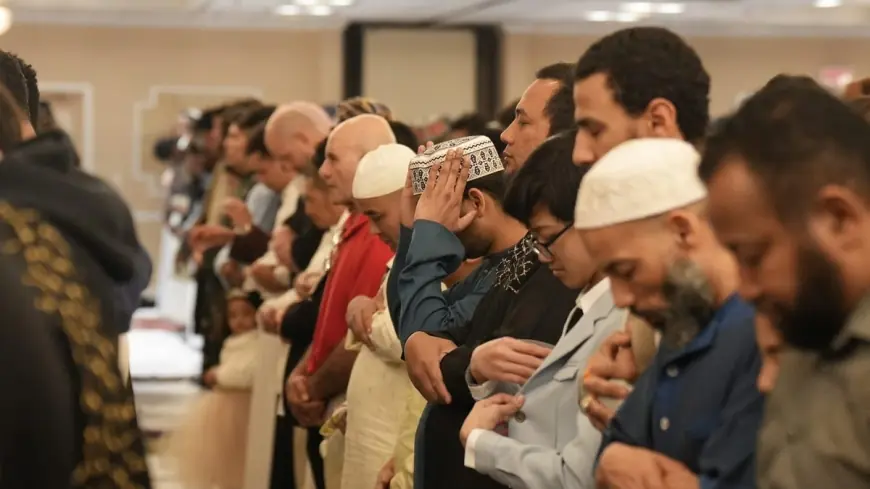
During Ramadan, healthy adult Muslims fast from dawn to sunset each day, abstaining from food and drink, including water. The daily fast is broken at sunset with a meal called iftar. Before dawn, those fasting eat suhoor to prepare for the day. In addition to the fast, Muslims increase prayers, recitation of the Quran and acts of charity.
Nights during Ramadan often include special congregational prayers and additional worship. Social and communal practices vary widely; some communities hold large iftar gatherings, distribute meals to those in need, or decorate homes and public spaces. Exemptions from fasting exist for those who are ill, pregnant, breastfeeding, elderly, or traveling; missed fasts are typically made up later when possible.
Why dates can differ and what to watch for
Ramadan’s timing follows the Islamic lunar calendar, which is based on the sighting of the new crescent moon. Because moon visibility can vary with geography and atmospheric conditions, different communities may observe different start dates. Some follow local sightings, others follow declarations from countries they regard as religious authorities, and some use astronomical calculations to predict the crescent’s visibility.
In 2026 the start of Ramadan will also coincide in some places with other cultural observances such as Mardi Gras and Lunar New Year, highlighting the overlap of diverse calendars and traditions. For the most accurate local guidance, residents should monitor announcements from nearby mosques and community leaders in the days immediately before the expected start.
Whether Ramadan begins on Feb. 18 or Feb. 19, the month remains a deeply significant period of spiritual reflection, communal life and charity for Muslims worldwide, culminating in the celebratory holiday of Eid al-Fitr in mid-March 2026 (ET).