






















Rupert Lowe launches new party, restore britain, aiming to unite local right‑wing groups

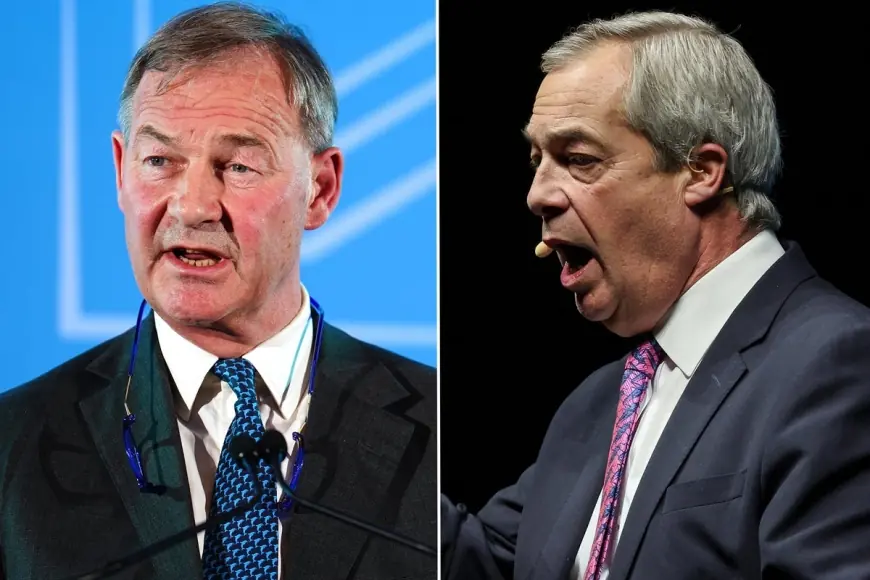
Rupert Lowe, the Great Yarmouth MP who now sits as an independent, formally launched Restore Britain on Friday night ET, moving the vehicle he first set up as a political movement into the status of a national party. The initiative aims to act as an umbrella for locally based groups and has already attracted a small band of former colleagues on a county council.
From movement to party: a bid to knit local outfits into a national force
Lowe created Restore Britain after his suspension from his previous party in March. What began as a local mobilisation around Great Yarmouth has been repositioned as a wider outfit designed to partner with grassroots organisations and borough-level formations. Lowe says the strategy is to offer a right‑of‑centre alternative that emphasizes local independence and practical responsiveness to voters.
The party is expected to work with local partners rather than absorb them outright. In his home constituency Lowe will stand with Great Yarmouth First as a partner organisation, while Restore Britain will also seek to replicate that model elsewhere. Analysts familiar with the campaign note Lowe has promoted the idea that mainstream politics has become detached from everyday concerns, arguing local partners can restore that connection.
Early wins and rapid defections: seven councillors form a Restore Britain group
Within days of the launch, seven former councillors who had been aligned with his previous party declared they were joining Restore Britain and will form a group on Kent County Council. The switch gives the nascent party an immediate elected presence beyond Norfolk and represents one of its first concrete organisational gains. Some of those councillors had previously been expelled from their former party, a point critics have highlighted as evidence the new grouping will be built from political cast‑offs.
Lowe framed the defections as proof there is momentum behind his vision. He said the Kent councillors will help establish local structures and provide a platform to contest further local contests. Observers note this kind of early council representation can help new parties with campaign infrastructure, candidate recruitment and name recognition ahead of any snap or scheduled national polls.
Controversy and shifting backers: challenges ahead for the new party
Lowe's political trajectory has been turbulent. He was elected in July 2024 as a member of his former party but later sat as an independent after a suspension tied to allegations of threats towards a party official. A prosecutorial review concluded there was insufficient evidence to bring charges. The episode and subsequent disputes with national figures contributed to his split and the creation of Restore Britain.
Several high‑profile Conservatives had been listed on an advisory board when Restore Britain was described as a movement. But the move to formalise as a political party prompted at least two senior figures to distance themselves and step away from active involvement. That retreat underscores the balancing act Lowe faces: translating local appeal and maverick credentials into credible national organisation while reassuring potential partners about governance and standards.
Political commentators in the region describe Lowe as a maverick who is not always collegiate, but who believes there is room on the right for a party that foregrounds independence of mind and localism. Private polling shared with campaign teams suggests he could perform well in his constituency if an election were held now, although national dynamics and competition on the right will be decisive factors in any wider ambitions.
Restore Britain now confronts practical questions about funding, candidate vetting and the establishment of local branches, all while navigating criticism from former party colleagues and a media environment that will scrutinise its claims. For now, the formation of a council group in Kent and the planned partnership with Great Yarmouth First give it immediate footholds to build on as it seeks to turn local momentum into a lasting political presence.