












wuthering heights movie Sparks Debate Over Strange Source Material and Sexed-Up Reimagining

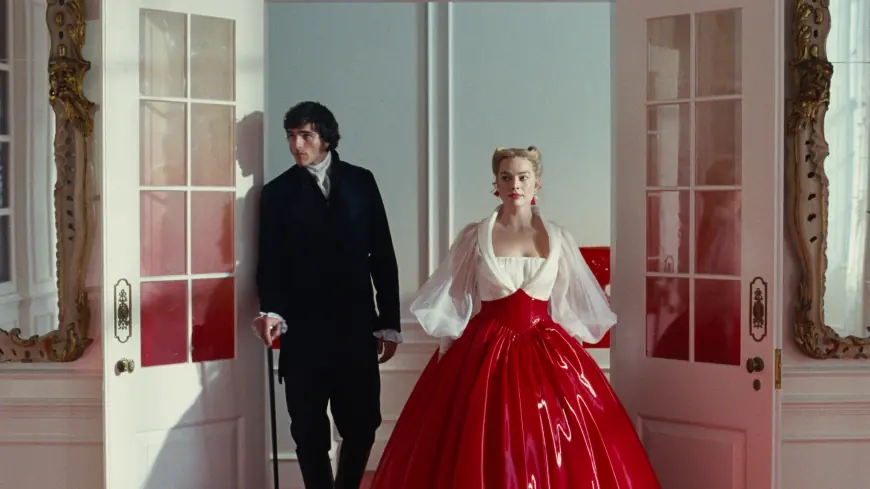
Emerald Fennell’s new take on Wuthering Heights opened this weekend and has ignited a fierce conversation about what an adaptation should do with a famously unsettling novel. Some critics fault the film for smoothing the novel’s jagged edges and downplaying its cruelty; other viewers, especially younger audiences at early screenings, have embraced the movie’s glossy, kinky aesthetic and star casting.
How the film reshapes Brontë’s strangeness and romance
Fennell has framed her project as a fantasia rather than a literal retelling, and that creative choice shows. The film zeroes in on a handful of visual and tonal flourishes: an opening sequence that confuses sexual ecstasy with death throes, striking production design that leans into fleshy textures and latex, and a contemporary pop-infused soundtrack. Those decisions push the movie toward a sensory, stylized experience rather than the raw, generational tragedy at the heart of the 1847 novel.
Observers who prize the novel’s moral ambiguity and emotional ferocity argue the adaptation trades complexity for spectacle. In the book, lovers who are also tormentors create an almost unbearable tension—love as both annihilation and redemption. The film’s approach has been characterized by some critics as softening the characters’ monstrous tendencies, turning feral, destructive figures into more conventionally alluring romantic leads. That shift alters the ledger of blame and responsibility that the novel carries across generations.
Audience enthusiasm, casting flashpoints and cultural pushback
Audience reaction has been emphatic at certain screenings. A private showing on Feb. 13, 2026 (ET) drew a raucous crowd who cheered the chemistry between the leads and applauded the film’s erotic charge. The casting of well-known performers in the central roles has amplified that response: Margot Robbie as Catherine and Jacob Elordi as Heathcliff have become focal points for both praise and critique. For many viewers, their star power and onscreen magnetism are precisely what make the film a must-see.
But the casting also reignited longstanding debates around the character of Heathcliff. Critics have questioned whether the film whitewashes the character’s ambiguous origins and the novel’s racial undertones by presenting a conventionally handsome, charismatic figure. There has also been scrutiny over whether the movie sanitizes or romanticizes abusive dynamics that in the book are intentionally brutal and morally fraught. For some, this retooling crosses a line from adaptation into reimagining that obscures the novel’s darker lessons.
What’s next for the adaptation in the public eye
The film’s polarizing reception suggests it will remain a subject of debate as it reaches wider audiences. Supporters point to its provocative imagery and contemporary sensibility; detractors say it drains the original of its strangeness and moral complexity. Awards season chatter and box-office returns will give further sense of how the film lands beyond opening weekend, but for now the conversation is less about fidelity to plot points and more about whether the movie preserves the emotional and ethical disturbance that made the novel unforgettable.
Whatever the outcome, this adaptation has accomplished one clear thing: it has refocused attention on the question that has always haunted Wuthering Heights—how can a story be both unbearably cruel and unbearably romantic, and what does it mean to reshape that balance for today’s screens?