

















Stephen Colbert: network pulled interview with james talarico over FCC equal-time fears

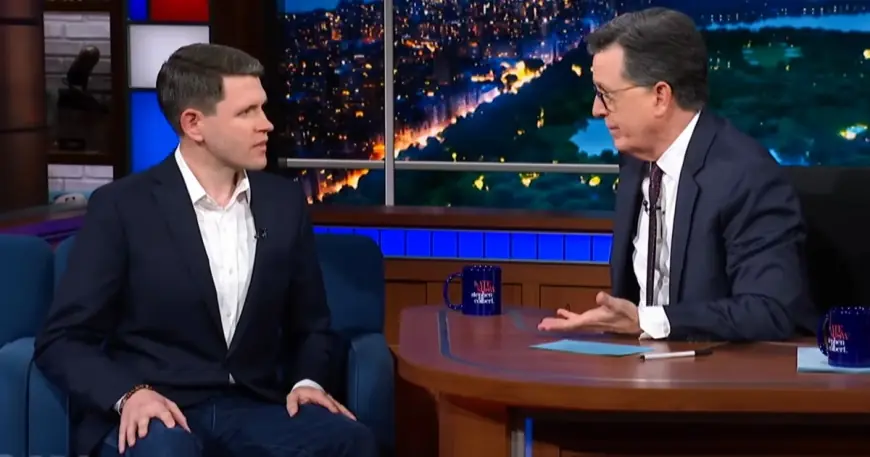
Stephen Colbert says his late-night program was prevented from airing an interview with Texas state representative James Talarico after lawyers warned the broadcast could trigger equal-time obligations under Federal Communications Commission guidance. The host published the unaired segment online and used his Monday night (ET) show to call out what he framed as censorship tied to the federal regulator's recent stance.
Host says lawyers intervened, interview released online
Colbert opened his Monday night (ET) broadcast by noting Talarico’s absence and describing a direct call from network lawyers telling the show it could not have the candidate on the broadcast. He added that he was also instructed not to mention the decision on-air, prompting him to highlight the matter publicly.
The segment that did not air on television was made available online by the show. In that conversation, Colbert and Talarico discussed the FCC’s heightened scrutiny of talk shows and the agency’s recent moves to open probes into programming that featured candidates. Talarico, who is running in a Democratic primary for the U. S. Senate, warned that the enforcement push threatens free expression if it is used to chill critical voices.
“A threat to any of our First Amendment rights is a threat to all of our First Amendment rights, ” Talarico told the host, arguing that the administration’s regulatory posture amounted to an attempt to control media content and silence critics.
Network, administration and critics weigh in
The broadcaster provided legal guidance that airing the interview on television could activate the FCC’s equal-time rule for other candidates in the same primary contest, and it outlined options for how any required reciprocity could be fulfilled. Rather than pursue those options on the broadcast, the show opted to present the interview through its online channel and promoted that posting during the program.
The administration released a pointed statement defending the FCC’s actions and leveling sharp criticism at Colbert, calling him a poor performer and framing the agency’s efforts as routine enforcement. The comments escalated the dispute into a political flashpoint, with the host and the candidate framing the episode as part of a broader campaign to intimidate media outlets and constrain dissent.
At a campaign event in Austin the following night, Talarico opened to enthusiastic applause as he described the interview’s suppression and framed it as evidence of media collusion with political pressure. The moment arrived on the first day of early voting ahead of the March 3 primary, amplifying its political resonance in the run-up to the contest.
Equal-time rule in the spotlight
The controversy spotlights the rarely invoked equal-time provision in the Communications Act of 1934, which can require broadcasters to offer comparable opportunities to opposing political candidates when one candidate appears on-air. The FCC’s recent guidance has emphasized that exempting certain entertainment programs from that rule is less automatic than it once seemed, placing daytime and late-night talk shows squarely under regulatory scrutiny.
Critics warn that aggressive enforcement or even the threat of enforcement could prompt broadcasters to self-censor, removing voices they fear will trigger legal obligations or political backlash. Supporters of the regulator’s approach say adherence to existing rules preserves fairness in election coverage and prevents uneven access to broadcast audiences.
For now, the immediate battle centers on the unaired interview’s circulation online and the political fallout it generated. With the primary approaching, the episode is likely to remain a talking point for candidates and commentators weighing where media, law and politics intersect on broadcast airwaves.